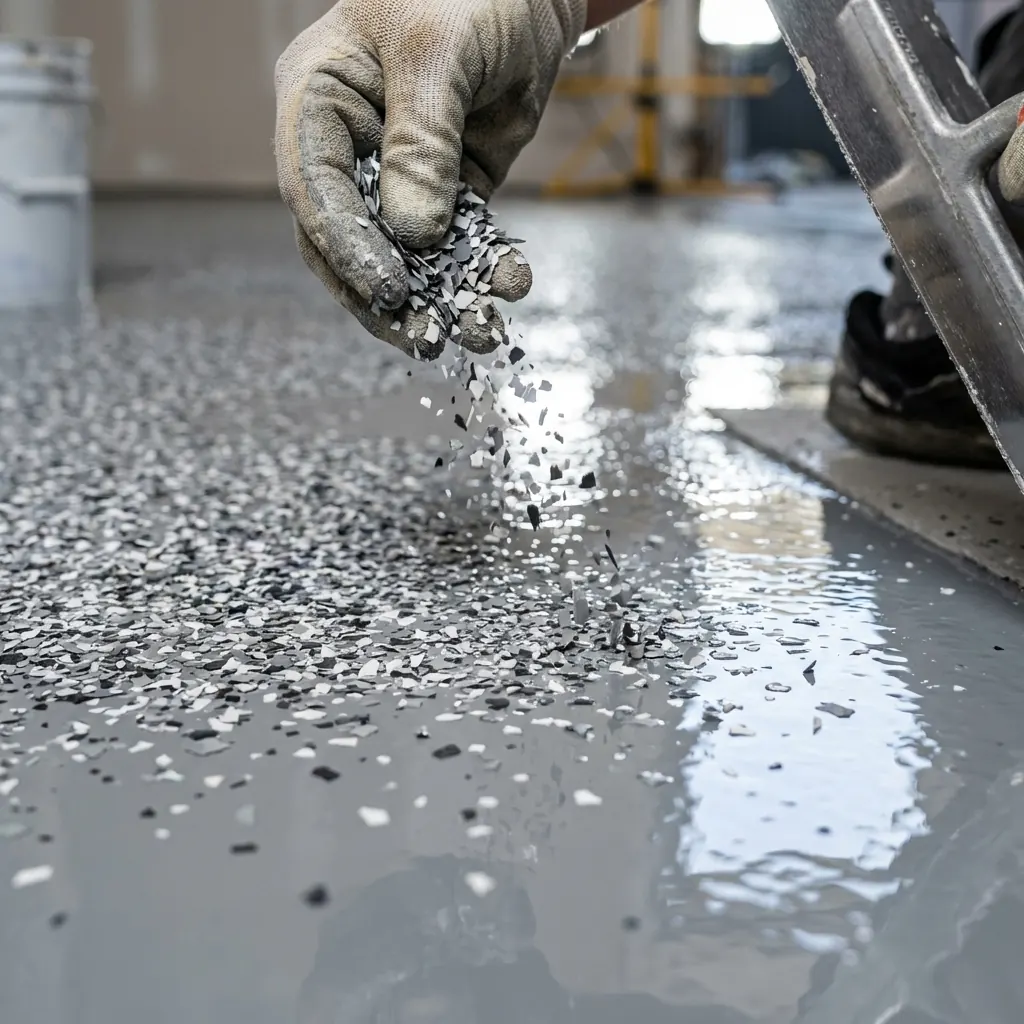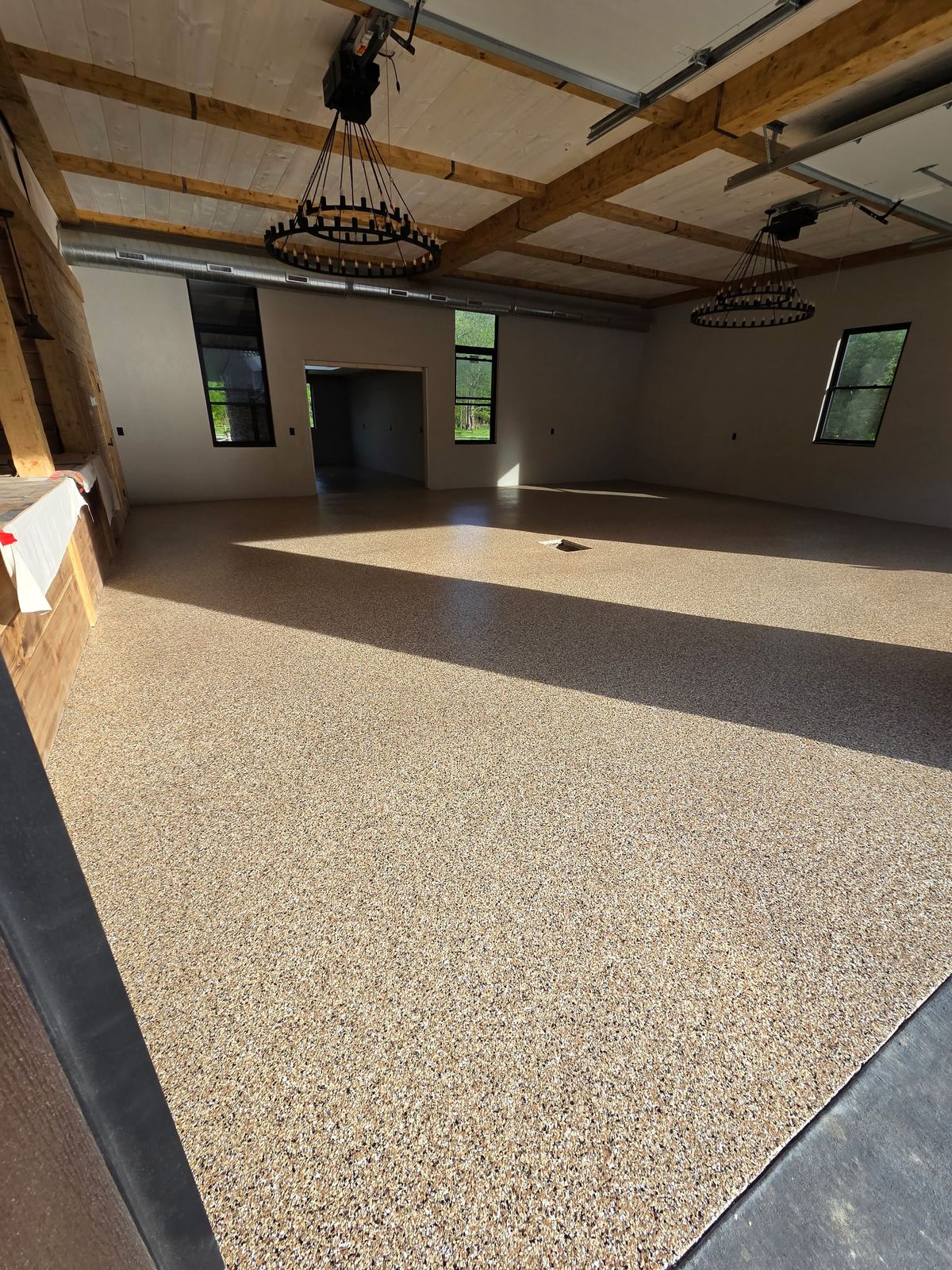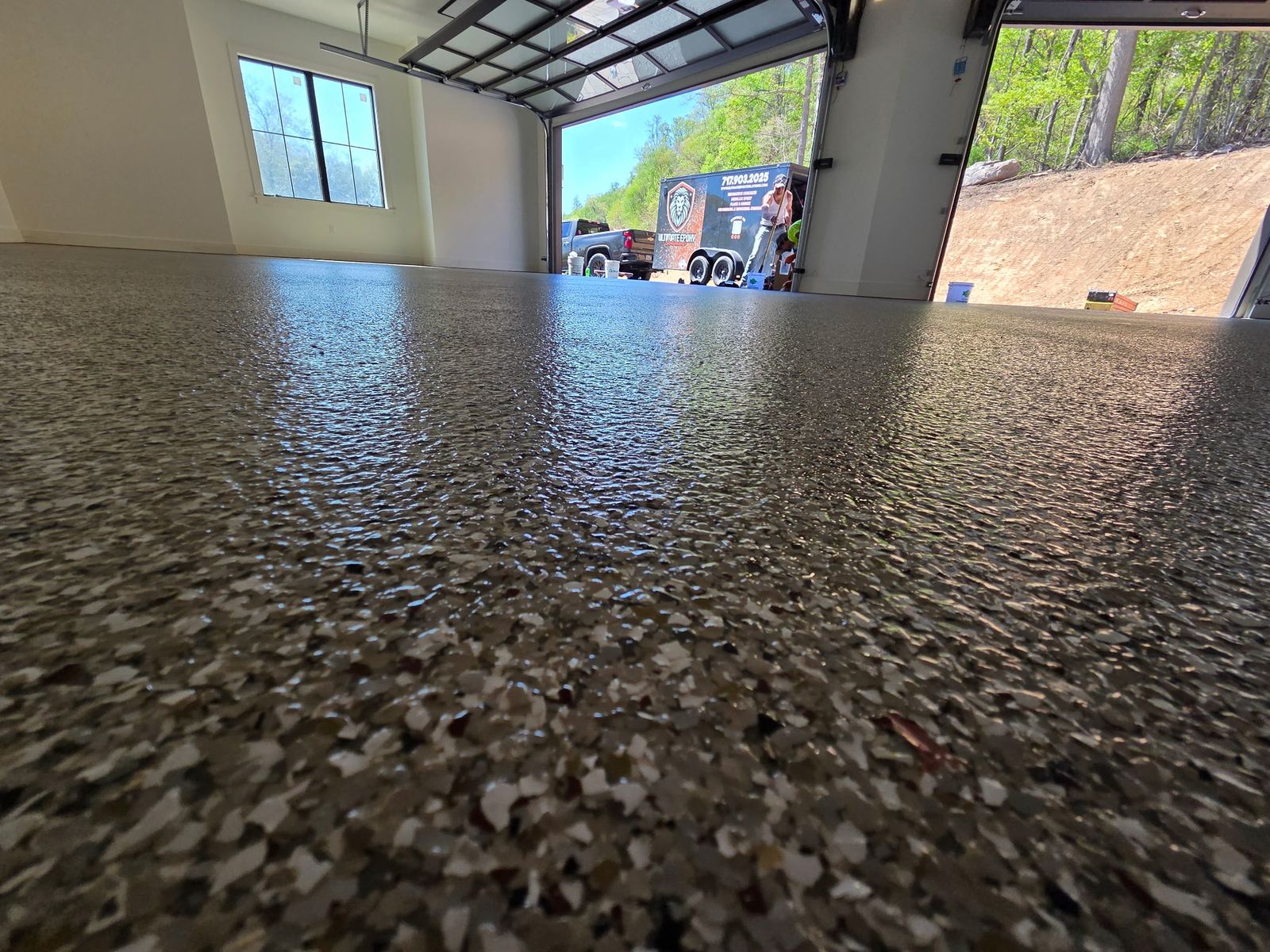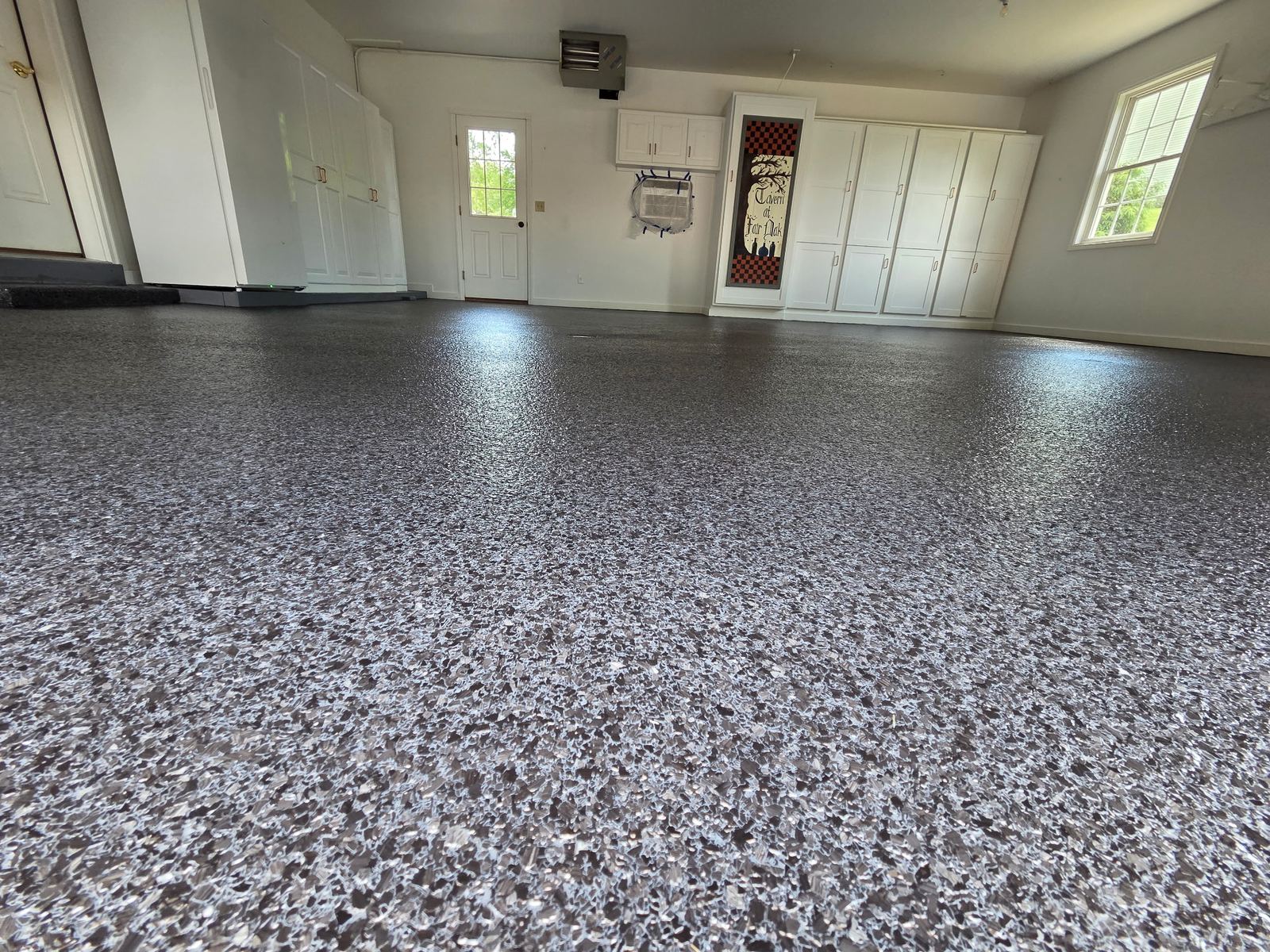
A poly base coat, a poly colour layer, a full broadcast of decorative flake, and a poly top coat — a 4-layer system that handles spills, hot tires and daily use, and looks good doing it. Most flake floors go down in a single day.
Traditional epoxy is brittle, yellows in UV light, and takes days to cure. Our systems start with a poly base coat that's more flexible and impact-resistant than epoxy — a moisture vapor barrier (MVB) base where the slab's moisture reading calls for it — and finish with a UV-stable polyaspartic clear coat that cures hard enough for foot traffic in hours, not days. The full-broadcast flake in between hides imperfections, adds slip resistance, and gives you a custom look you actually want to walk into.
Better chemistry, faster cure, more options than standard epoxy.
Hot tires, brake fluid, motor oil, dropped tools — our poly base coat is flexible enough to absorb impact without chipping, and the polyaspartic topcoat won't yellow or peel when it gets hot.
Most jobs are done in a single day. The polyaspartic topcoat cures fast enough for foot traffic in 6–8 hours and vehicle traffic the next morning — no week-long shutdowns.
Dozens of flake color blends — from subtle naturals to bold contrast blends. Solid color topcoats and metallic finishes are available too. We bring samples to every on-site consult.
Eight steps. Most flake jobs are done start to finish in one day.
Moisture vapor transmission is the number one reason floor coatings fail early. We test the slab with a Wagner C555 concrete moisture meter before committing to any system — if the numbers are off, we address it before coating.
We grind the entire surface with a planetary diamond grinder to achieve a CSP 2–3 concrete surface profile. This opens the pores of the slab so the base coat layer bonds chemically to the concrete rather than just sitting on top of it.
Cracks are chased out and filled with flexible epoxy filler. Any spalled or deteriorated areas get patched and leveled. The coating follows the contour of the slab — imperfections that aren't fixed now will show through later.
The base coat is rolled and back-rolled across the prepared slab. It bonds directly to the concrete and stays more flexible than standard epoxy. Where the moisture reading or the application calls for it — kitchens, bathrooms, and outdoor areas most often — this is a moisture vapor barrier (MVB) base coat, which blocks moisture vapor transmission at the source, the leading cause of coating failure.
While the base coat is still wet, vinyl flake is broadcast to rejection — meaning full, even coverage with no bare spots. The flake locks in as the base coat cures, creating the decorative pattern and adding built-in texture to the surface.
Once the base coat has cured, loose standing flake is scraped flat with a floor scraper and vacuumed clean. Any low spots in the flake layer are filled with a grout coat before the topcoat goes on.
The clear polyaspartic topcoat seals the flake and delivers the final protection: UV stability so it won't yellow, chemical resistance against oils and solvents, and the chosen sheen level — satin, semi-gloss, or high-gloss.
Foot traffic in 6–8 hours. Vehicle traffic the next morning. No week-long cure periods, no strong solvent smell lingering for days. The fast-cure chemistry of polyaspartic is one of its biggest practical advantages over traditional epoxy.