
Do You Need a Moisture Barrier Under a Floor Coating?
Only when the slab calls for it, and in Florida that question comes up a lot. Here's what a moisture vapor barrier (MVB) base coat is, why slabs push moisture up, the signs to look for, and how we decide on every floor we coat.
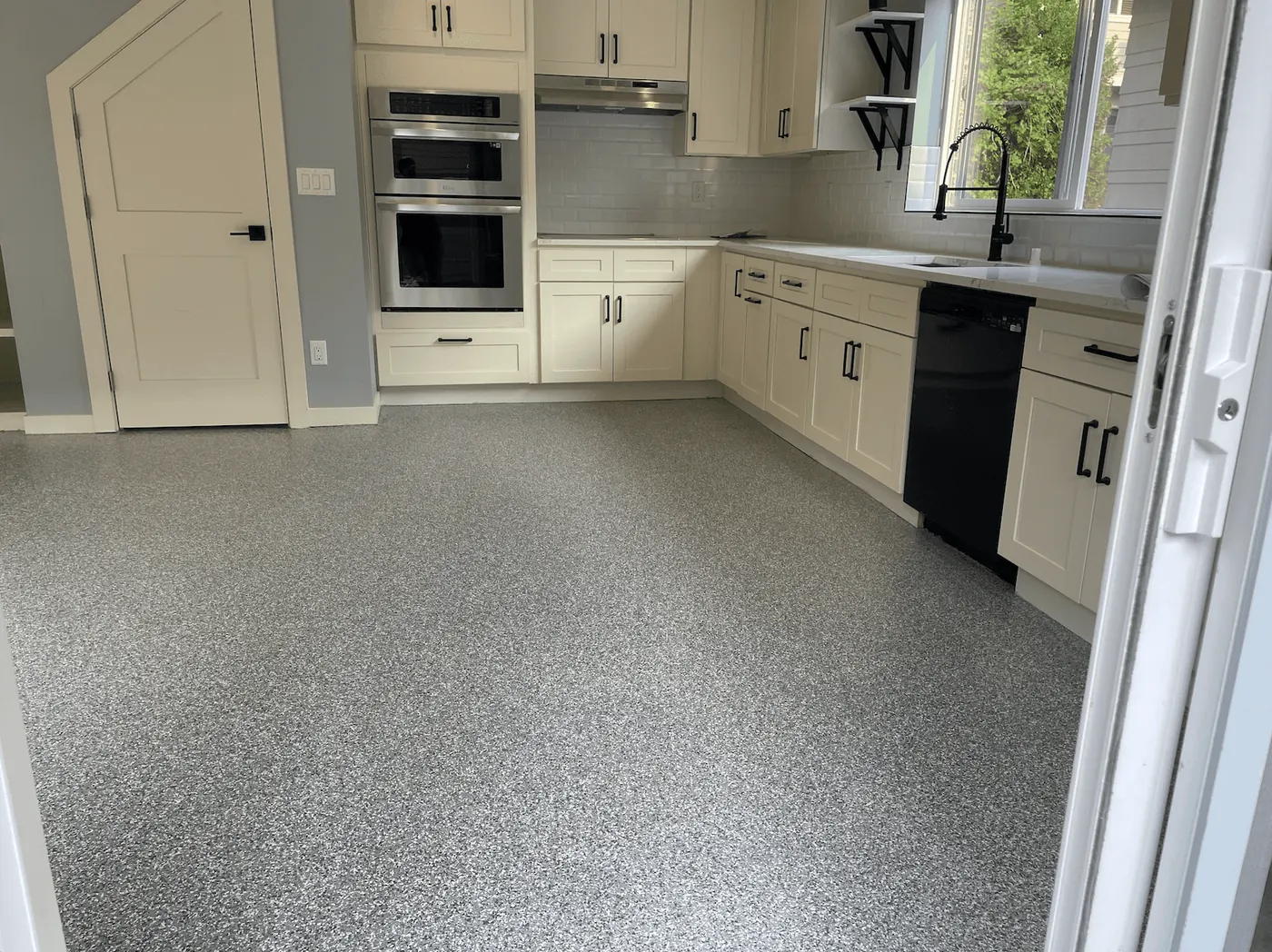
- Every slab tested with a Wagner C555
- MVB only where the slab needs it
- Most often: kitchens, baths, outdoors
- Goes on bare, ground concrete
The short answer
You need a moisture barrier under a floor coating when the slab's moisture reading or the room says so. In coating terms, a moisture vapor barrier is a low-permeability base coat applied to the bare, diamond-ground concrete as the first layer of the floor, so vapor rising through the slab stops there instead of building up under the coating.
It isn't standard on every job, and it shouldn't be. We test every slab with a Wagner C555 moisture meter and judge each floor and room on its own. The places we most often build on an MVB base are kitchens, bathrooms and outdoor areas.
No top coat stops moisture from below. The barrier is the one layer that does, and it's the step a lot of peeling floors skipped.
- Everyslab moisture-tested before we coat
- 3places MVB is most common: kitchens, baths, outdoors
- 1stlayer of the floor, on bare concrete
What a moisture vapor barrier actually is
It isn't a sheet of plastic, and it isn't a sealer you roll on later. It's a two-part coating with very low vapor permeability, applied directly to the ground concrete as the first layer of the floor. Many are 100%-solids epoxies: nothing in them evaporates, so nothing leaves pinholes on the way out, and the liquid soaks into the pores of the slab before it hardens.
Once it cures, the rest of the floor goes on top: the base and colour coats, the flake and the clear top coat, bonded to the barrier instead of to the raw slab. It never sees daylight, so it doesn't need to be UV-stable; the top coat handles the sun.
Because it has to be the first layer, it can't be added later. A floor that was coated without one and is now blistering has to come off before a barrier can go down. That's why the decision is made before the job, from a test.
Why a slab pushes moisture up in the first place
Concrete is porous. Water moves through it as liquid wicking up from damp ground, and as vapor moving from the damp soil toward drier air. A bare slab lets it pass. A coating seals the top, so pressure builds at the bond line until the coating blisters or lifts.
Dry rooms pull moisture up
In an air-conditioned Florida home, the room air is cool and dry and the ground under the slab is warm and damp. Vapor keeps moving toward the dry side, which is one reason kitchens and other rooms on a slab are prime MVB candidates.
Many slabs have nothing below
A plastic vapor retarder under a slab slows vapor from the ground. Many garage, patio and older slabs were poured without one, so there's nothing between the concrete and damp soil.
Rain, sprinklers and downspouts
Heavy summer rain, lawn sprinklers aimed at the slab edge and downspouts that empty against the wall all keep the ground wetter on one side. That side of the slab often reads higher.
Where we most often build on an MVB base
The reading decides it, floor by floor. These three are where the reading and the room most often say yes.
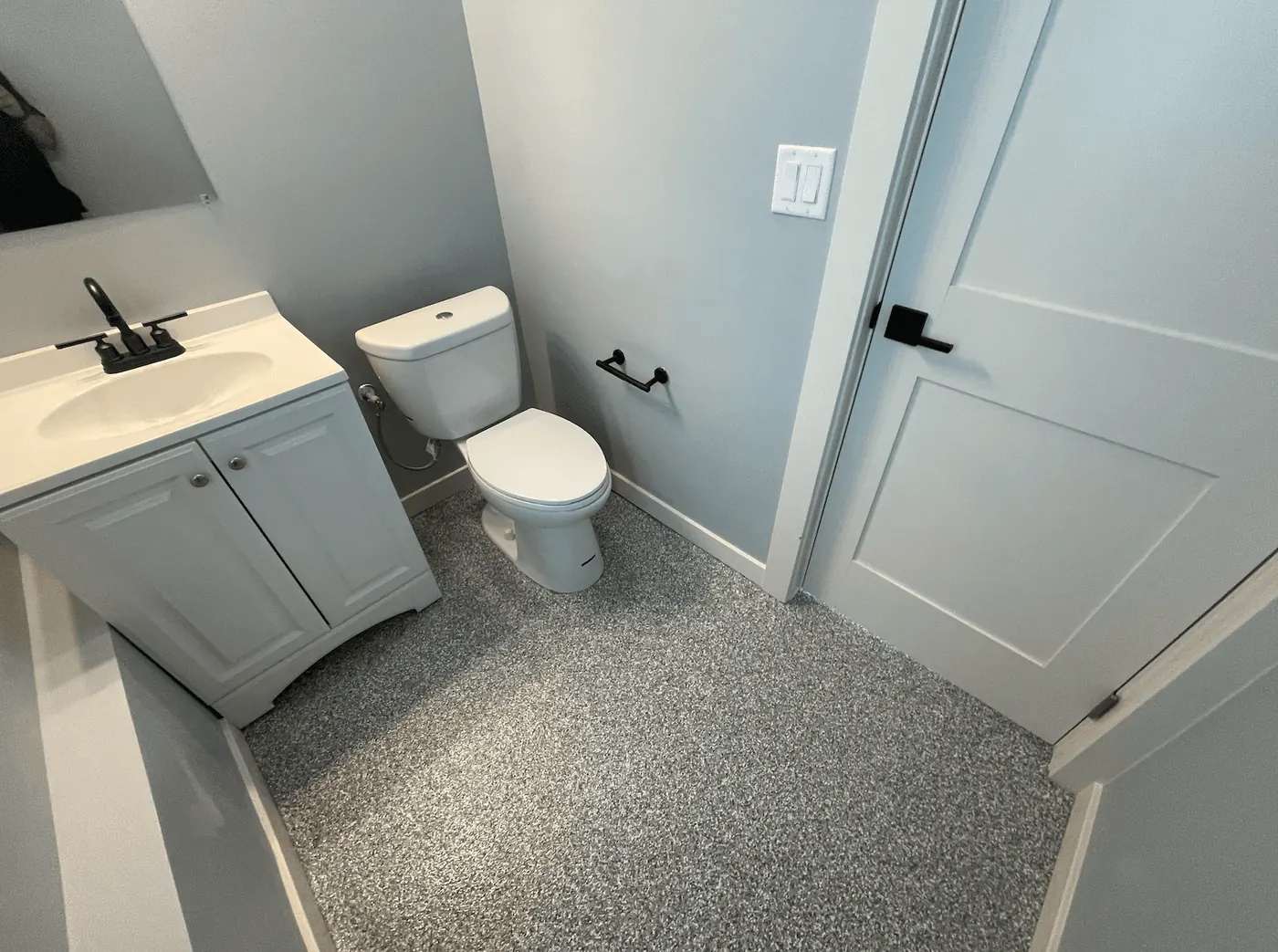 Bathrooms and laundry
Water from above and below
Wet rooms get water from showers, sinks and washers on top, and moisture from the slab underneath. A seamless floor over an MVB base handles both.
 Kitchens and living spaces
Air-conditioned rooms on a slab
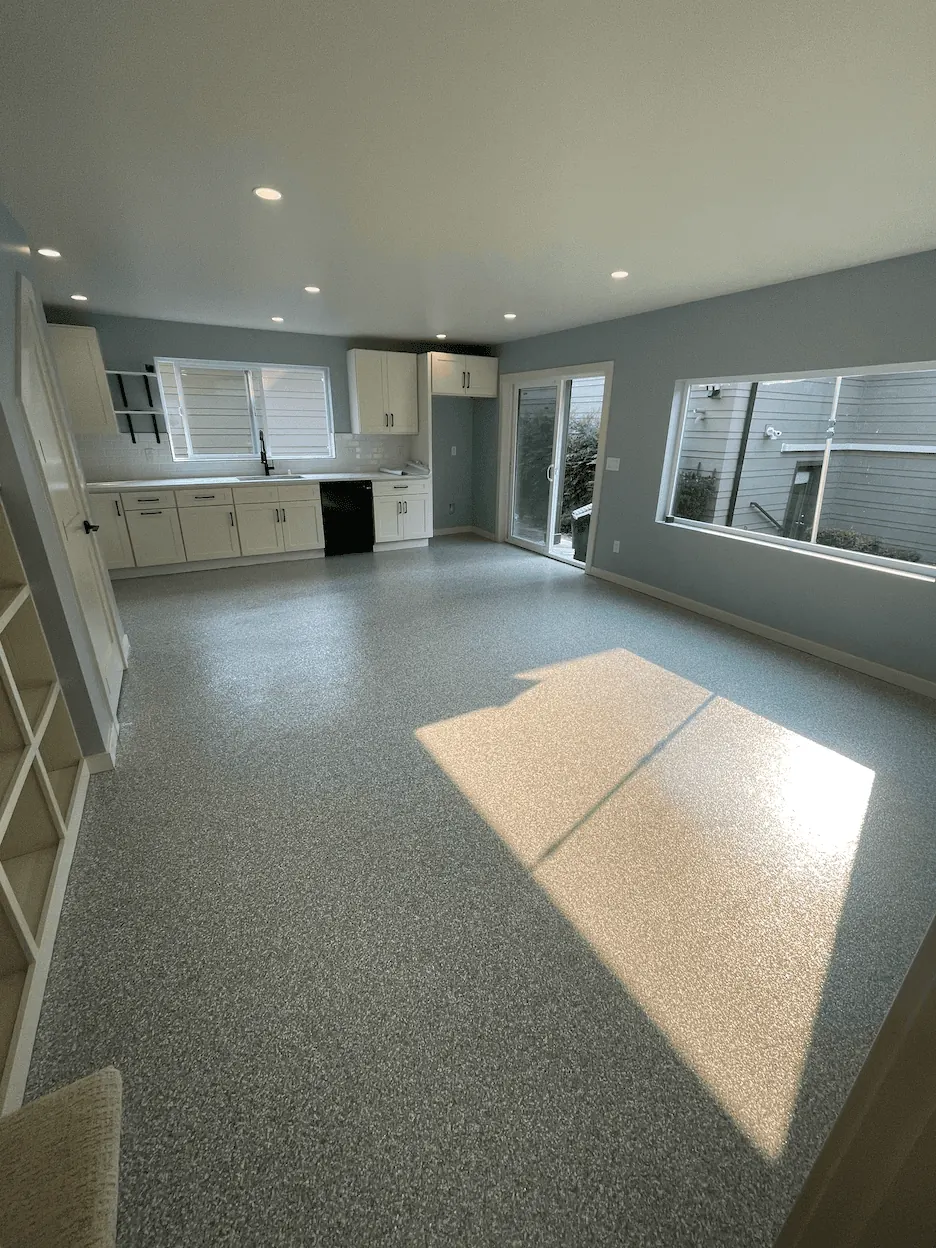
Interior floors sit over damp ground with dry, conditioned air above them. That steady upward drive is why a kitchen floor so often gets a barrier first.
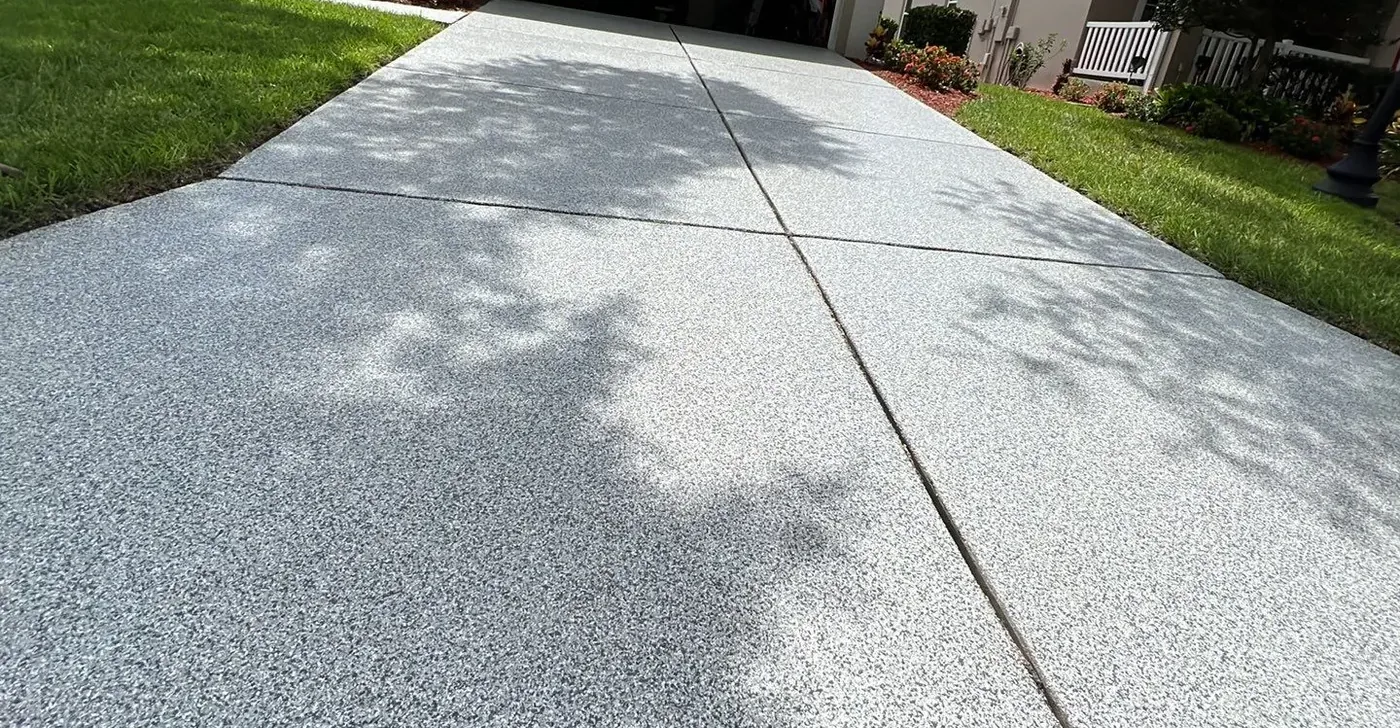 Outdoor areas
Patios, porches and pool decks
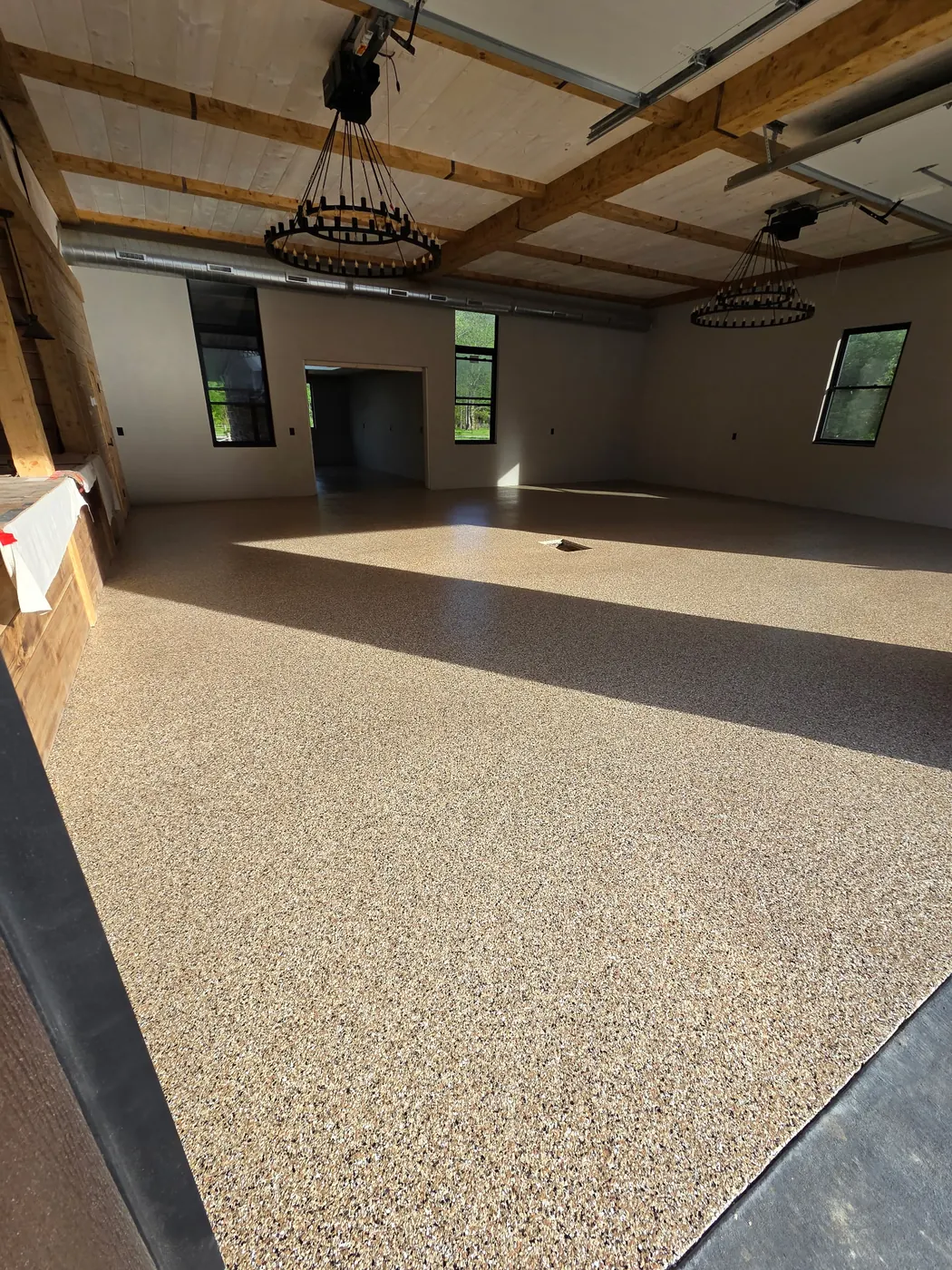
Outdoor slabs sit on ground that rain and sprinklers keep wet, usually with no plastic underneath. See patio and pool deck coating.
Signs your slab may need a barrier
The test decides it, but a slab usually drops hints first:
- White powder that comes back after you sweep it. That's mineral salt carried up through the concrete by water and left behind when it evaporated.
- Dark patches in the same spots when nothing was spilled.
- An old coating or paint that bubbled or peeled, especially if the back of a loose piece is damp or chalky.
- Rust on the feet of metal shelves, boxes gone soft at the bottom, or a musty smell after the room has been shut up.
Any of these is worth mentioning at your free visit. We'll take readings across the floor, not just in one spot.
How slab moisture is tested
Each common test sees a different slice of the slab. Here's what each one tells you.
-
Plastic-sheet test
Tape a square of plastic tightly to the slab and leave it overnight or longer. Dark concrete or fog under the plastic means moisture is moving. It's a quick yes-or-no hint you can do yourself (ASTM D4263).
-
Pinless moisture meter
A meter like our Wagner C555 reads the upper part of the slab in seconds without damaging it, so many spots can be checked across a floor. It's the kind of reading ASTM F2659 describes. We check every slab this way.
-
Calcium chloride test
A dish of drying salt sits under a sealed dome for a few days and is weighed before and after, to measure how much moisture leaves the surface (ASTM F1869).
-
In-slab humidity probe
Small holes are drilled part-way into the slab and read with a probe after the slab settles. Flooring makers often specify this test, and its limits, for their products (ASTM F2170).
What a barrier changes about your job
- It's the first layer, so it goes down on the bare, ground slab before the base coat.
- It's another product and more work, so it's part of the one clear price we write down after the visit.
- If it affects your schedule, you'll hear that at the free visit, not on install day.
Red flags when a quote talks about moisture
- No test and no reading, just a promise.
- "Our coating breathes, so you don't need a barrier." Decorative flake systems seal the slab; that's the point of them.
- A barrier promised on top of an existing coating. It has to touch bare concrete.
- A barrier pitched as standard on every floor, whatever the reading. The slab should decide.
Moisture barrier questions
Do I need a moisture barrier under a floor coating?
Only if the slab and the room call for it. We test every slab with a Wagner C555 moisture meter and decide floor by floor. Kitchens, bathrooms and outdoor areas are where we most often build on a moisture vapor barrier base.
Does every floor you install get an MVB?
No. A moisture vapor barrier is used where the reading or the application calls for it, not as a blanket add-on. A dry-testing garage slab often doesn't need one.
What is a moisture vapor barrier made of?
A two-part, low-permeability coating applied to the bare, ground concrete as the first layer of the floor. Many are 100%-solids epoxies that soak into the pores of the slab. The rest of the floor bonds to it instead of to the raw concrete.
Can a moisture barrier be added to a floor that's already coated?
No. It has to touch bare concrete. A coated floor that's blistering from moisture has to come off before a barrier can go down.
Can a moisture barrier stop water coming up through cracks?
Not running water. A barrier is made to hold back vapor moving through sound concrete. Water that comes up as liquid through a crack after heavy rain needs its source fixed first, like a downspout or ground sloping toward the house.
Is a moisture barrier the same as a sealer?
No. A sealer goes on the surface of bare concrete to shed water from above. A vapor barrier goes under a coating to stop vapor from below, and it's part of the floor system.
How do you test for moisture?
With a Wagner C555 pinless moisture meter on every slab, taking readings across the floor. Other tests exist, like the plastic-sheet test you can do yourself, a calcium chloride test and in-slab humidity probes; each sees a different slice of the slab.
Does a moisture barrier change the price?
It's another product and more work, so yes, it's part of the price. We test at the free visit and give you one clear price in writing that already accounts for it.
More on prepping a slab
See where the moisture test and the barrier fit in our installation process.
Find out what your slab reads
We'll test the concrete with a Wagner C555 meter, tell you whether your floor needs a moisture barrier, and give you one clear price in writing.