
Garage Floor Paint vs. a Professional Coating
We install coatings, so you'd expect us to call painting a garage floor a mistake. It isn't always. Sometimes a can of floor paint and a Saturday is the right amount to spend. The trick is knowing which garage you have. Here's the honest version, for a Florida garage.
- When paint is the right call
- How to paint a floor properly
- Paint, kit and coating compared
- 10-year delamination warranty on ours
Should you paint your garage floor?
If you're selling the house soon, or you just need the dust knocked down in a garage nobody parks in, sure. Paint it, and follow the prep steps further down this page.
If you're staying and a car lives in that garage, think twice. Painted garage floors in Florida tend to fail the same ways: hot tires soften the paint and pull it up, moisture from the slab lifts it in patches, and the strip by the open door fades in the sun.
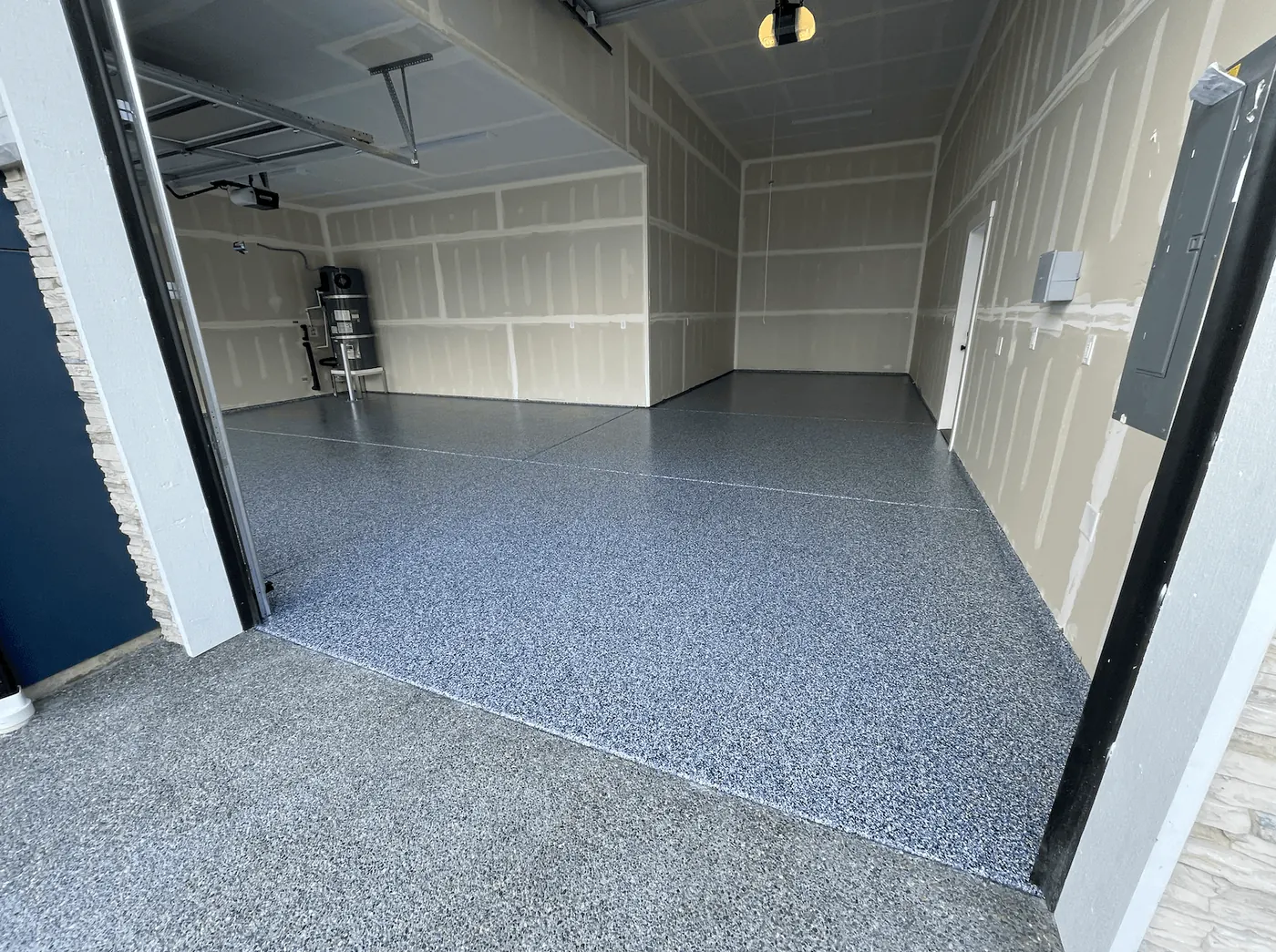
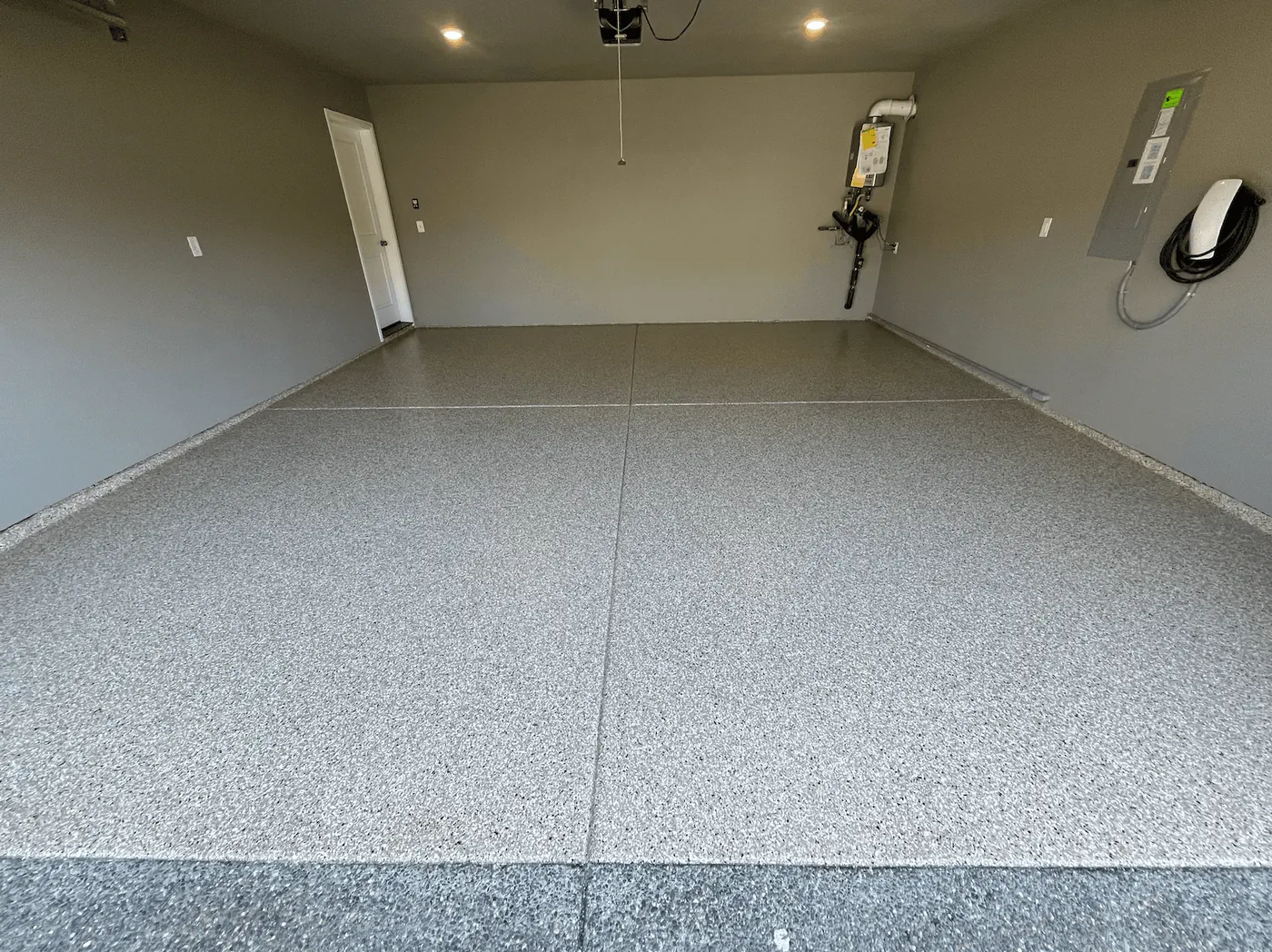
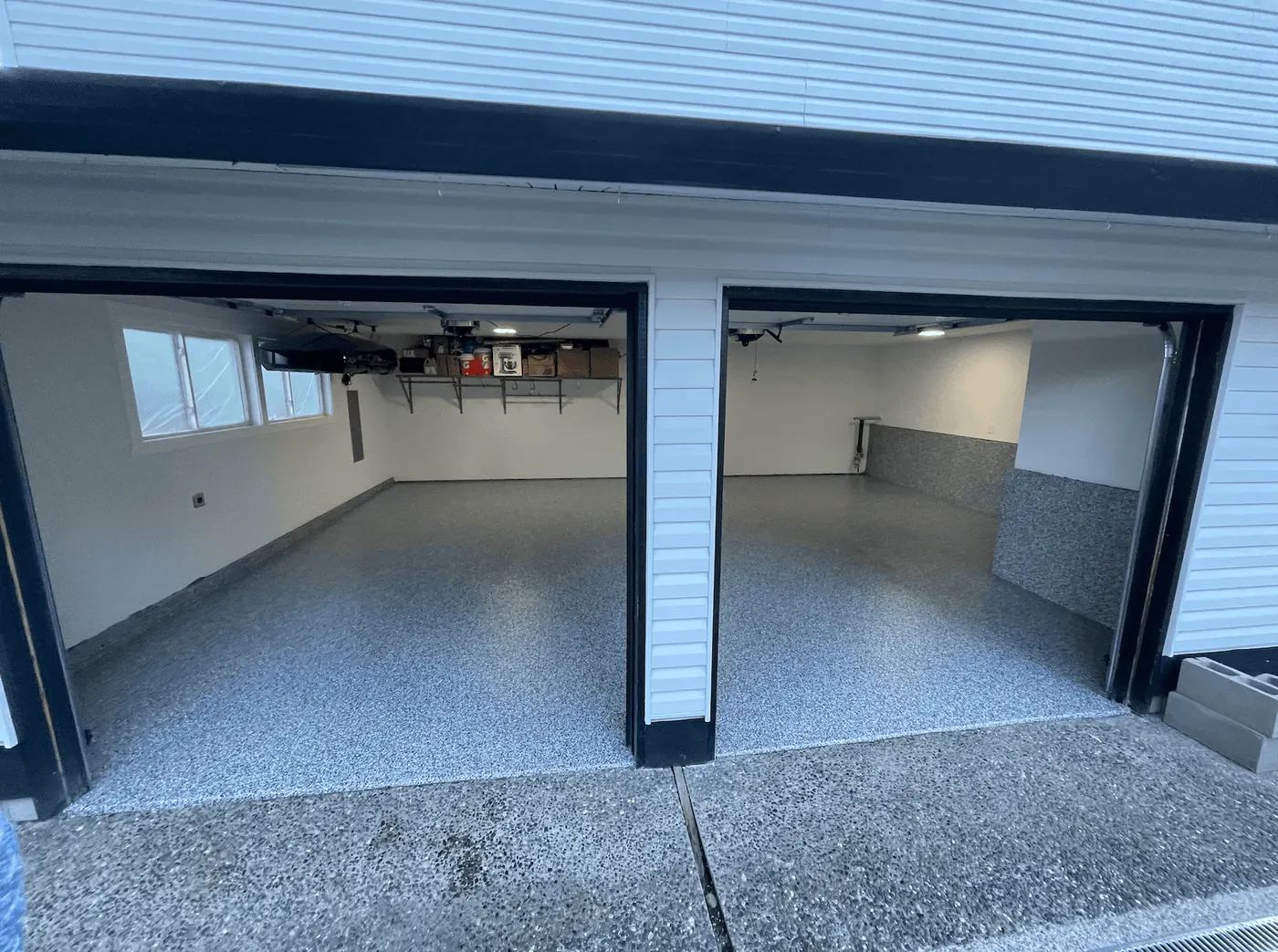
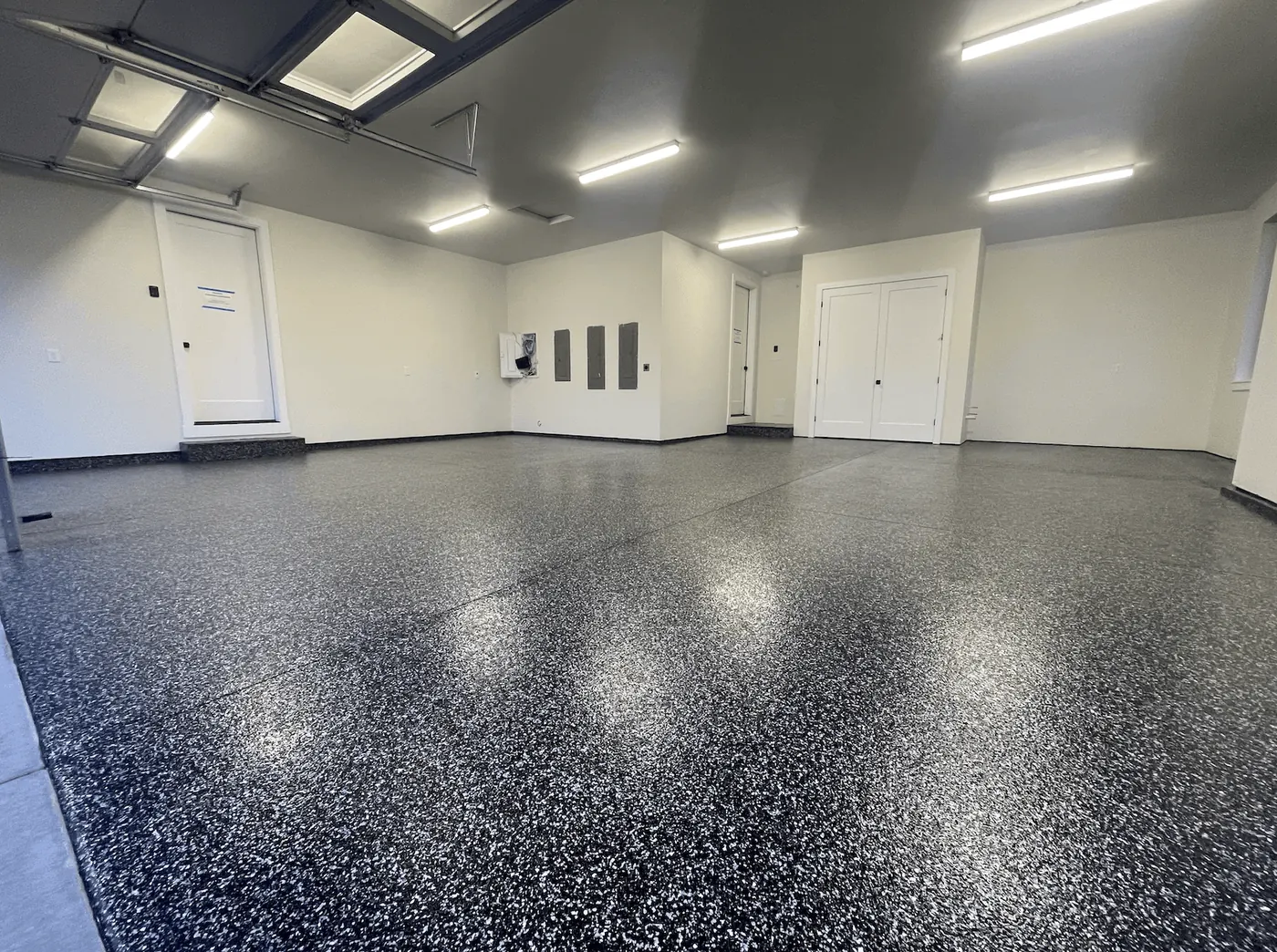
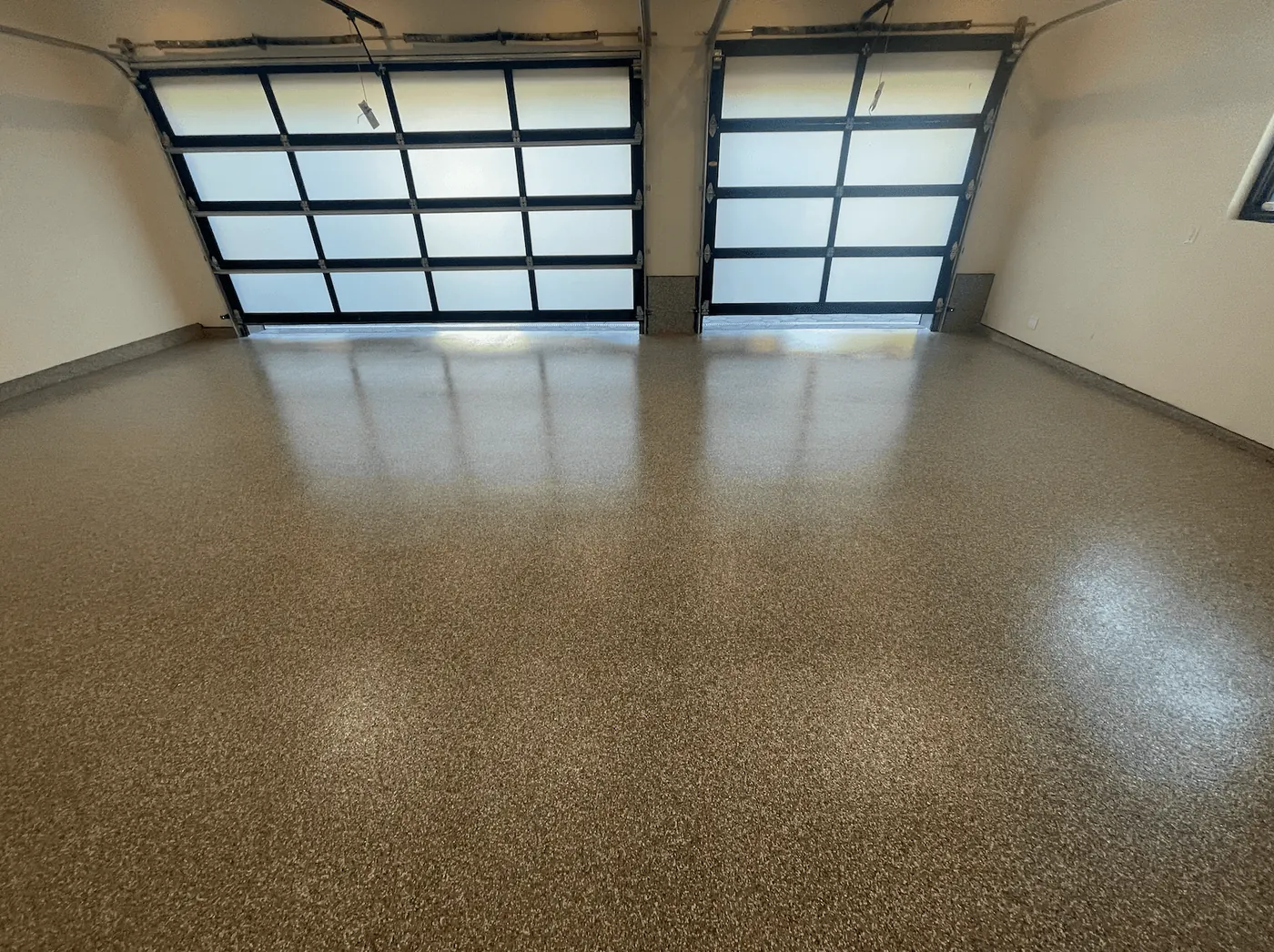
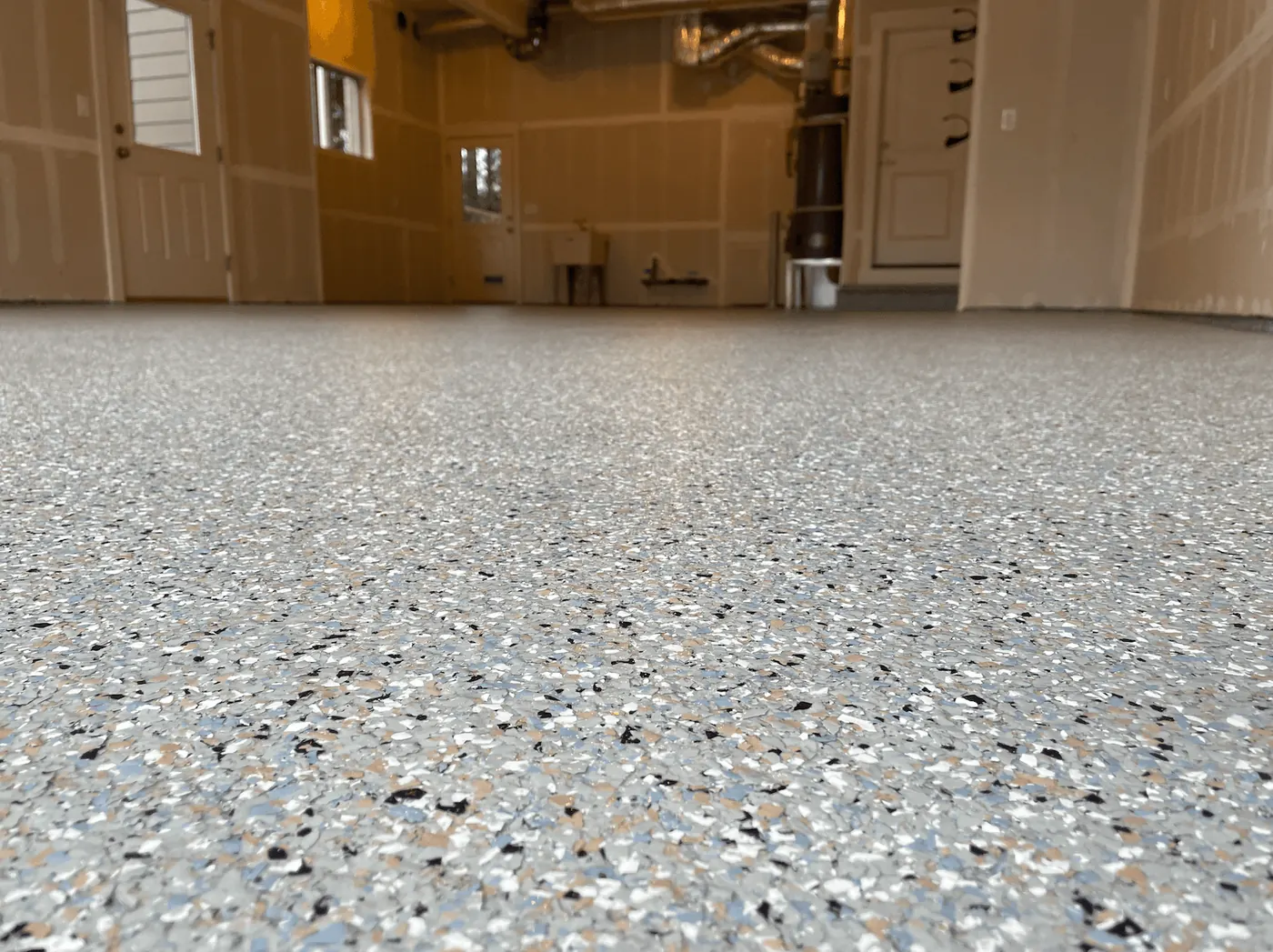
A coating is what floor paint is pretending to be: a layered floor bonded into diamond-ground concrete, finished with a UV-stable top coat.
- 4layers in our flake floor
- 1 dayto install most flake floors
- 10 yrswritten delamination warranty
What garage floor paint really is
Walk the paint aisle and you'll see three things that all claim to be a garage floor. They aren't the same product, and one of them is mostly paint with "epoxy" on the label.
Latex with a tough label
House paint's cousin: a water-based paint made a bit harder. It dries to a very thin film. It's colour, not protection.
Paint with some epoxy in it
The same kind of paint with a little epoxy resin stirred in so the label can say "epoxy." A bit tougher than plain paint, and it still peels under hot tires, just more slowly.
Real epoxy, a thin coat
Two parts you mix, thicker than paint, usually with a bag of flake. The best thing in the aisle. It still relies on an etch instead of a grind, and it's plain epoxy on top, so it yellows in the sun.
What we install is none of these: a layered system over diamond-ground, moisture-tested concrete, finished with a UV-stable poly top coat. Here's what goes into a flake floor, and how epoxy and polyaspartic compare.
Why painted garage floors peel in Florida
Paint fails everywhere eventually. In a Florida garage it has a few extra things working against it, and none of them have to do with how carefully it was rolled on.
What's working against paint
- Hot tires. Tires come home hot off summer asphalt, soften the paint and pull it up when you back out. Hence the bald tire paths.
- Moisture from below. Slabs sit on the ground, and moisture moving up through the concrete bubbles a thin film off in patches.
- Sun at the door. The strip of floor that gets afternoon light fades and chalks first.
- No grind. The can says to etch, and a thin film on smooth concrete has almost nothing to grip.
What a coating does differently
- It's built in layers, bonded into ground concrete, with a tough wear layer on top.
- Every slab is tested with a Wagner C555 moisture meter, and gets a moisture vapor barrier base where the reading calls for it.
- The top coat is UV-stable, so the strip by the door holds its colour.
- We diamond-grind the slab so the base coat bonds into it. That's the step paint skips, and it's the step that decides whether a floor stays down.
When painting a garage floor is the right call
We'll say it because most coating companies won't: there are garages where paint is the smart move.
-
You're selling soon
Fresh gray paint makes a garage photograph clean for the listing. Just don't call it epoxy.
-
Nothing parks there
A storage room, home gym or hobby space doesn't have the hot-tire problem. Paint will scuff and chip, but it won't peel in tire-shaped sheets.
-
You need it this weekend
Paint is the only garage floor you can buy on Saturday morning and walk on soon after, if the slab is dry and the weather cooperates.
-
The budget is small
Then paint, do the prep below properly, and plan to repaint in a few years. There's no shame in it.
Painting a garage floor yourself? Do it right
If you've decided on paint, here's how to get the most out of it. Most of this is the same thinking we use on a coating job, scaled down to a weekend.
-
Do the plastic-sheet test first
Tape a square of clear plastic to the floor, edges sealed, and leave it overnight. If the concrete under it is darker or the plastic is fogged by morning, moisture is coming up through the slab, and paint will struggle. Stop and get the slab looked at.
-
Degrease, then degrease again
Oil spots are a top reason paint lets go. Scrub them with a concrete degreaser, rinse and let the floor dry completely. If water beads anywhere, it isn't clean yet.
-
Rough up the surface
The can says to etch, and etching helps a little. Renting a floor grinder for a day helps a lot. Read diamond grinding vs. acid etching for why.
-
Pick a dry stretch
Avoid muggy days and the afternoon storm pattern of a Tallahassee summer. Paint wants a dry slab and dry air while it cures, so a clear spell in spring or fall is your friend.
-
Two thin coats, then wait
Thin coats bond; thick coats skin over and stay soft. Follow the can on cure times, then add a few days before the car goes back in, longer if it's humid.
Paint, kit or professional coating?
What you're really paying for with each one, including the part nobody prints on the can.
| What matters | Floor paint | DIY epoxy kit | Our coating |
|---|---|---|---|
| Up-front cost | Lowest | Low, plus rentals | Highest |
| Prep | Degrease and etch | Etch, or a rented grinder | Diamond grinding, crack repair, moisture test |
| Build | One or two thin coats | One thin epoxy coat, optional flake | Layered system, full flake |
| Top layer in the sun | Fades and chalks | Plain epoxy yellows | UV-stable poly top coat |
| Hot tires | Peels in the tire paths | Better, on a dry, clean slab | Bonded into ground concrete |
| Your time | A weekend | A weekend or more | Most flake floors: one day |
| Warranty | On the can, if any | On the box, if any | Written, 10 years against delamination |
Painting over epoxy, coating over paint
Plenty of garages already have something on the floor. Here's what each combination means.
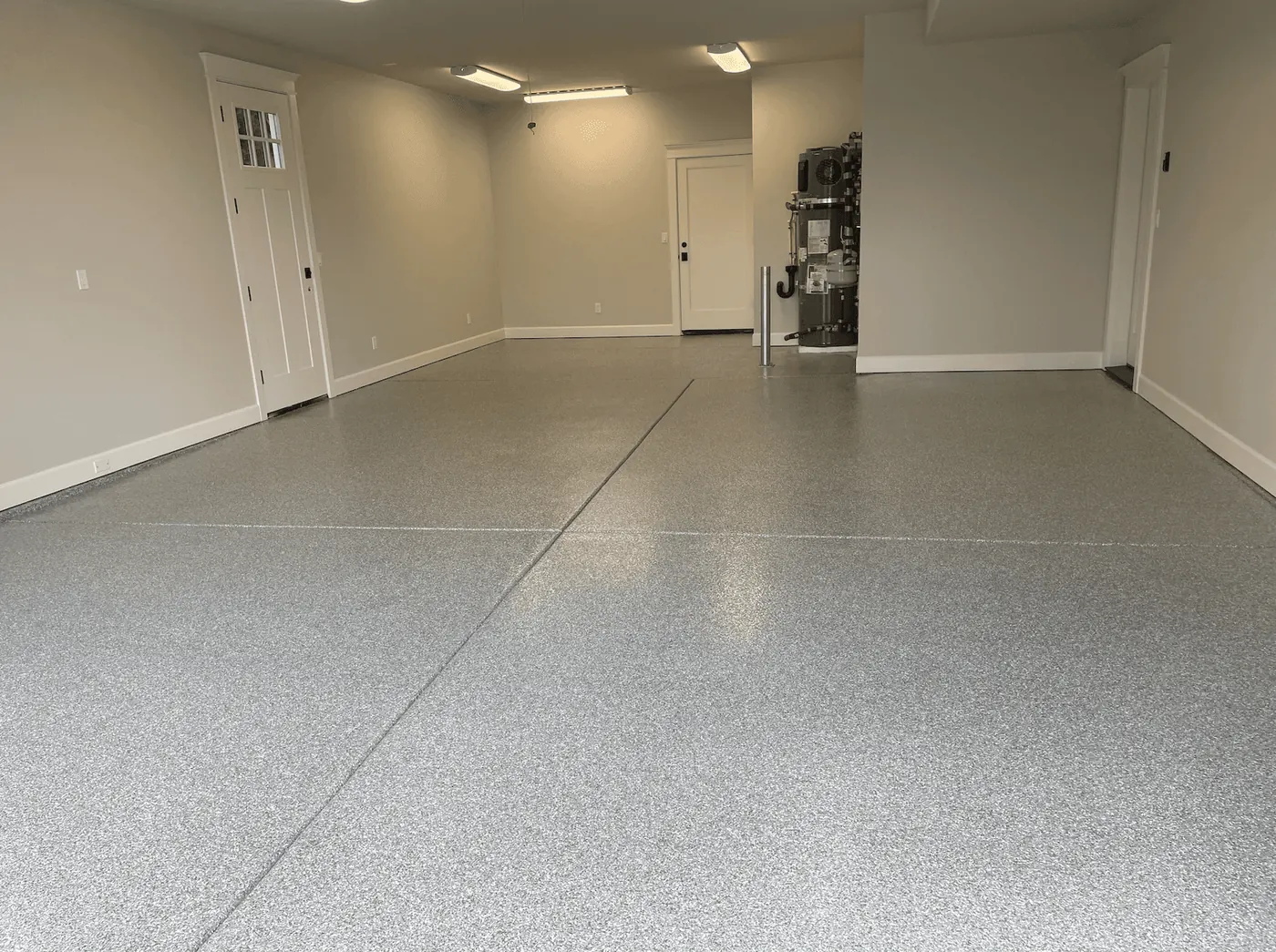 Paint over epoxy
Only if the epoxy is stuck
Scuff it well, and the paint will hold only as well as the epoxy under it. Anywhere the old coating is lifting, scrape to bare concrete first.
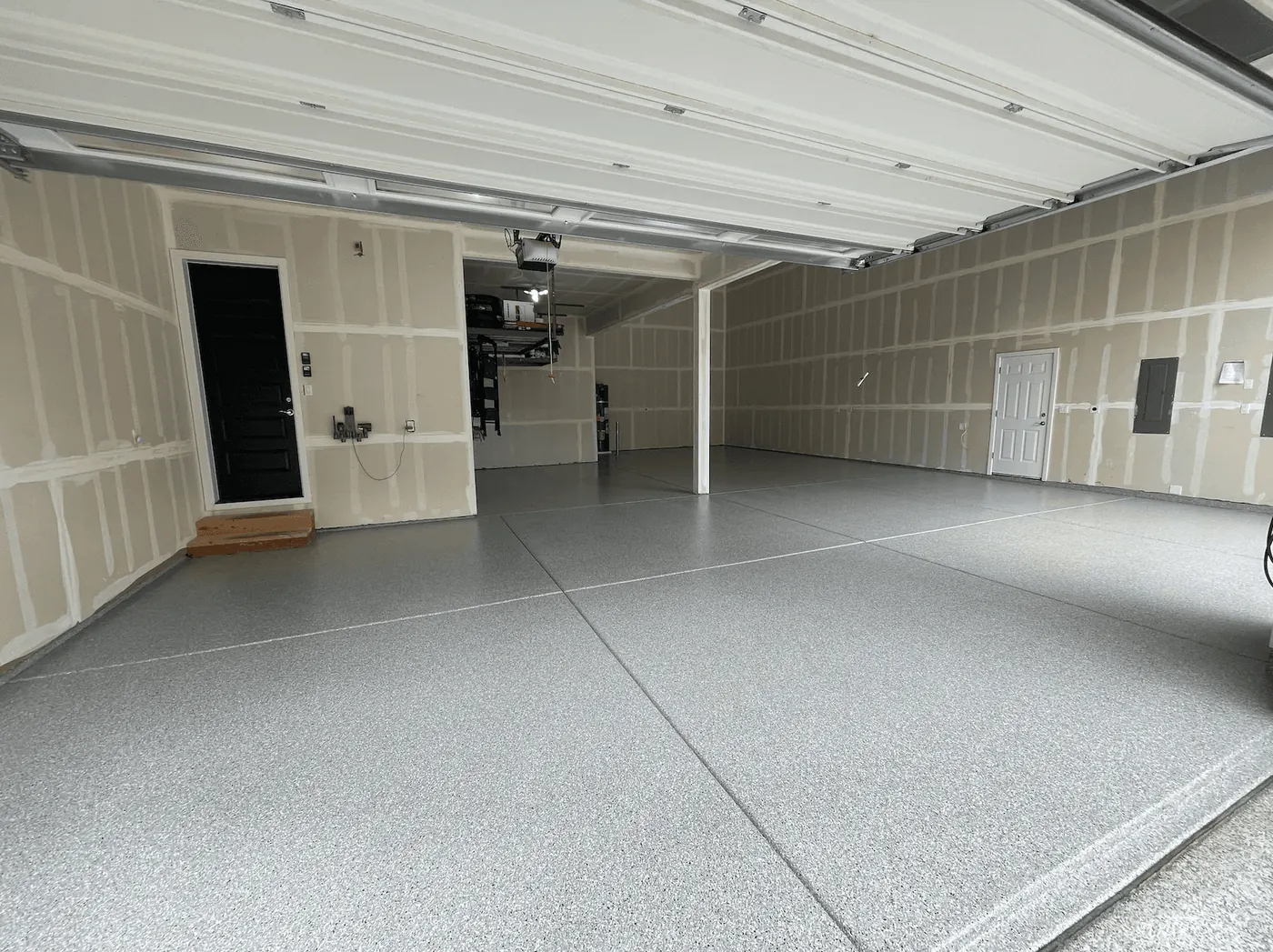 Coat over paint
The paint comes off first
A coating doesn't go over old paint. Diamond grinding takes it down to clean concrete as part of the prep. A thick or stubborn old coating takes more prep, and that's in the one clear price we write down.
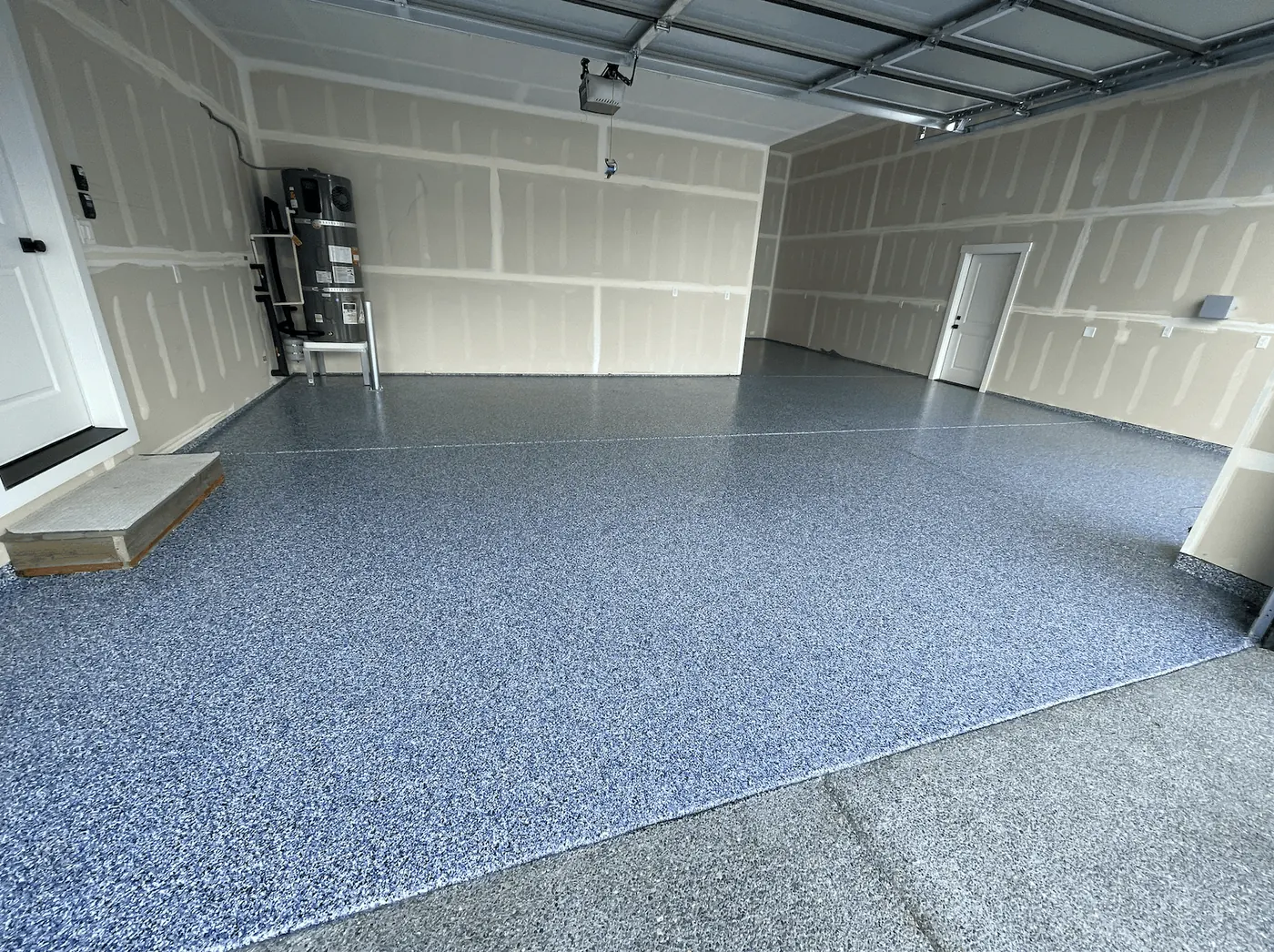 Paint came up damp
Moisture pushed it off
If old paint peeled with a damp or chalky back, moisture from the slab lifted it. That floor gets a Wagner C555 reading, and very likely a moisture vapor barrier base coat.
Garage floor painter or coating installer?
A house painter will paint your garage floor if you ask, and do a neat job of it. It's still paint, with everything above attached to it.
If you want a floor you'll drive on for years, you want a crew that grinds the slab, fills the cracks, tests for moisture and puts its warranty in writing. Ask any installer three questions: How do you prep the concrete? Do you test for moisture? What exactly does the warranty cover?
Our answers: diamond grinding on every floor, a Wagner C555 reading on every slab, and a written 10-year warranty against delamination. It doesn't cover concrete failure or surface scratches, and the full terms are in your written quote.
Garage floor paint questions
Is epoxy garage floor paint the same as an epoxy coating?
No. "Epoxy paint" or "1-part epoxy" is paint with a small amount of epoxy mixed in, and it dries to a very thin film. A two-part kit is real epoxy, a little thicker. A professional coating is a layered system over ground concrete, and ours is finished with a UV-stable poly top coat.
How long does garage floor paint last?
In a garage you park in, often only a few years before the tire paths wear through, sometimes less. It lasts longer in a garage that's only storage. Hot tires peel it in the tire paths first, and moisture from below lifts it in patches.
What is the best garage floor paint?
If you're going to paint, a two-part epoxy kit beats any one-part paint. Beyond that, prep matters more than brand: a clean, degreased, roughed-up slab that passes the overnight plastic-sheet test, painted in thin coats during a dry spell.
Do you paint garage floors?
We install coating systems rather than floor paint. If paint is the right answer for your garage, we'll say so. If a coating is, we'll test the slab and give you one clear price in writing.
Can you coat over a painted garage floor?
Not over it, but a painted garage is no problem. Diamond grinding takes the old paint down to clean concrete as part of the prep. If the old paint peeled with a damp or chalky back, moisture pushed it off, and the slab likely needs a moisture vapor barrier base coat.
Can you paint over an epoxy garage floor?
Yes, if the epoxy is still bonded everywhere and you scuff it thoroughly first. The paint will only hold as well as the epoxy under it. Anywhere the epoxy is lifting, scrape to bare concrete before you paint.
Is a painted garage floor slippery?
Smooth paint is slick when it's wet. An anti-slip additive stirred into the last coat helps. Our coatings get texture from a full flake broadcast under the top coat.
How much does a professional coating cost compared with paint?
More up front, because it includes grinding, crack repair, a moisture test and a layered, warrantied floor instead of a weekend of paint. The price depends on the size and condition of your slab; we give you one clear price in writing after a free visit.
Keep reading
See finished floors in the gallery, or every system we install on the services page.
Want the floor paint is pretending to be?
We'll test your slab, tell you honestly whether paint would hold on it, and give you one clear price in writing for the floor that will.