
The Installation Process
Every step matters. Here's exactly what we do and why.
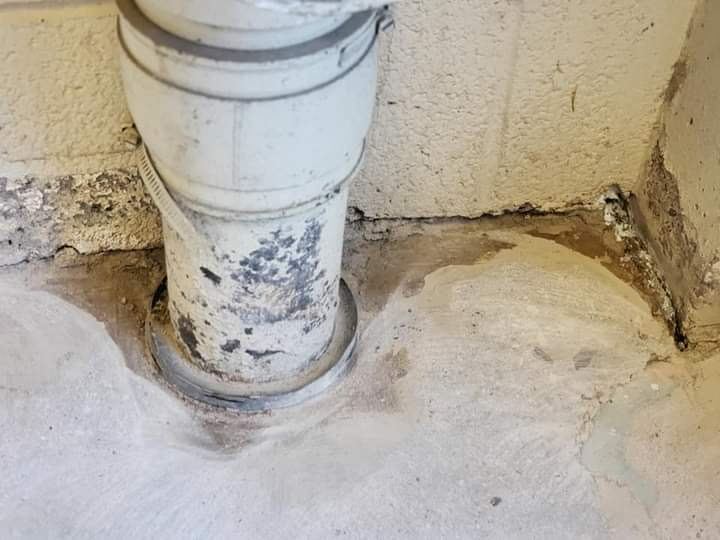
Moisture & Slab Testing
Moisture vapor transmission is the number one reason floor coatings fail early. We test the slab with a Wagner C555 concrete moisture meter before committing to any system — if the numbers are off, we address it before coating.
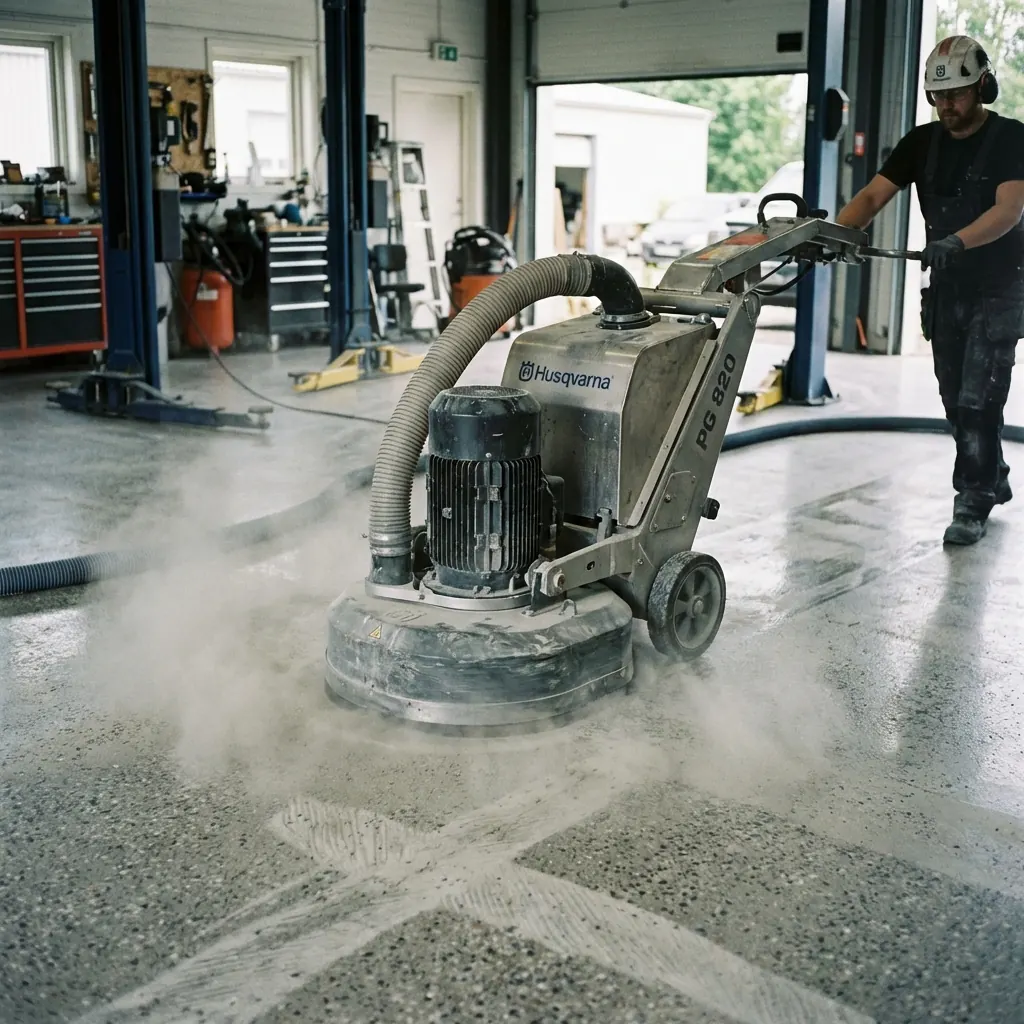
Diamond Grinding
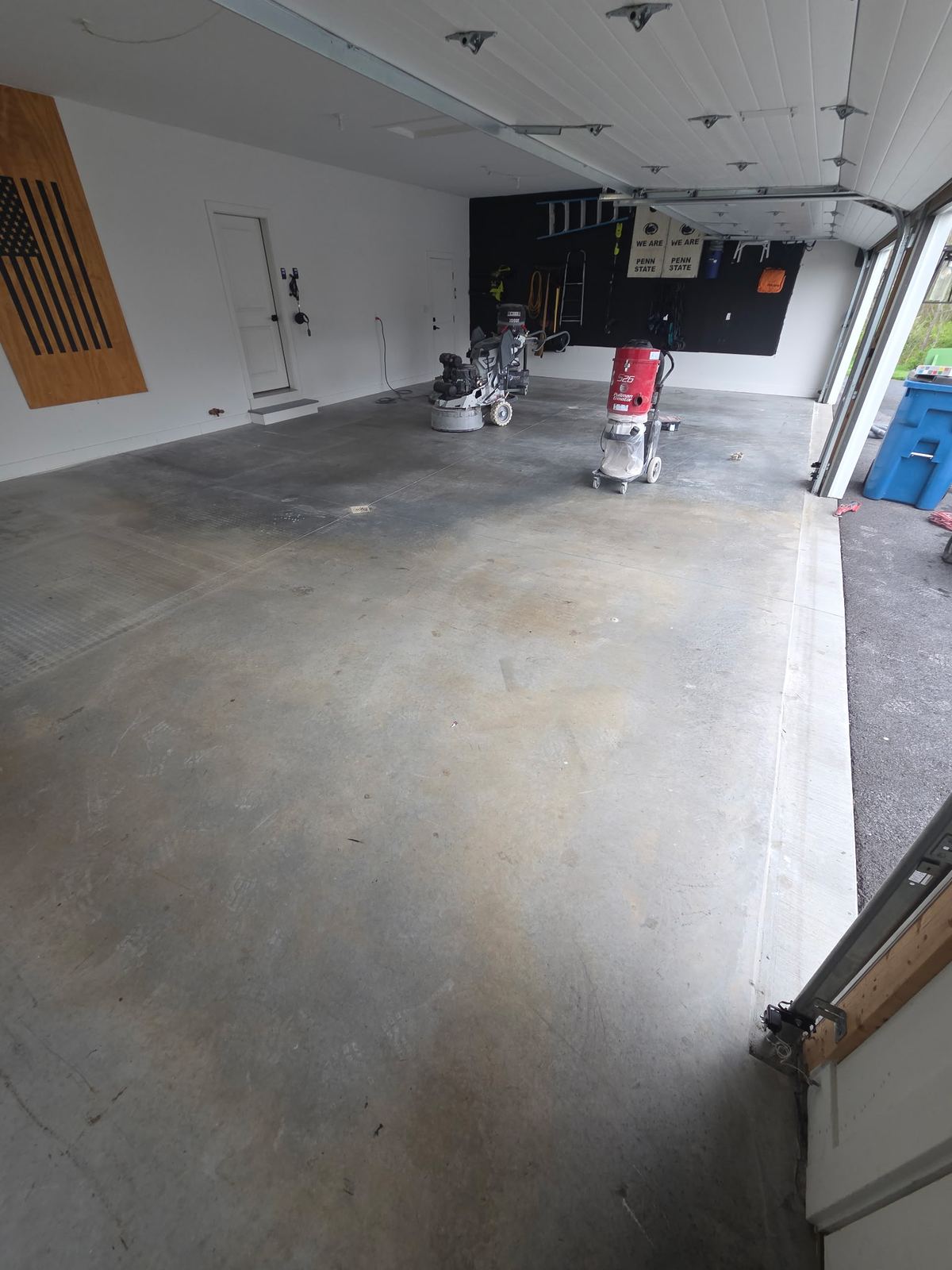
We grind the entire surface with a planetary diamond grinder to achieve a CSP 2–3 concrete surface profile. This opens the pores of the slab so the base coat layer bonds chemically to the concrete rather than just sitting on top of it.
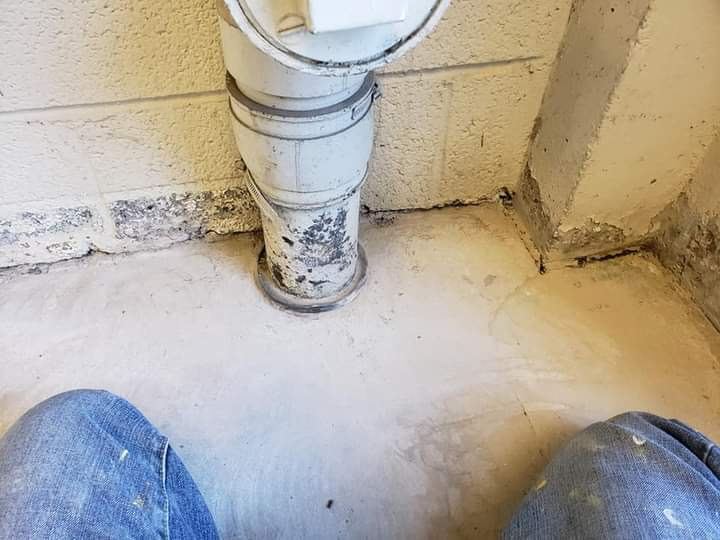
Crack & Spall Repair
Cracks are chased out and filled with flexible epoxy filler. Any spalled or deteriorated areas get patched and leveled. The coating follows the contour of the slab — imperfections that aren't fixed now will show through later.
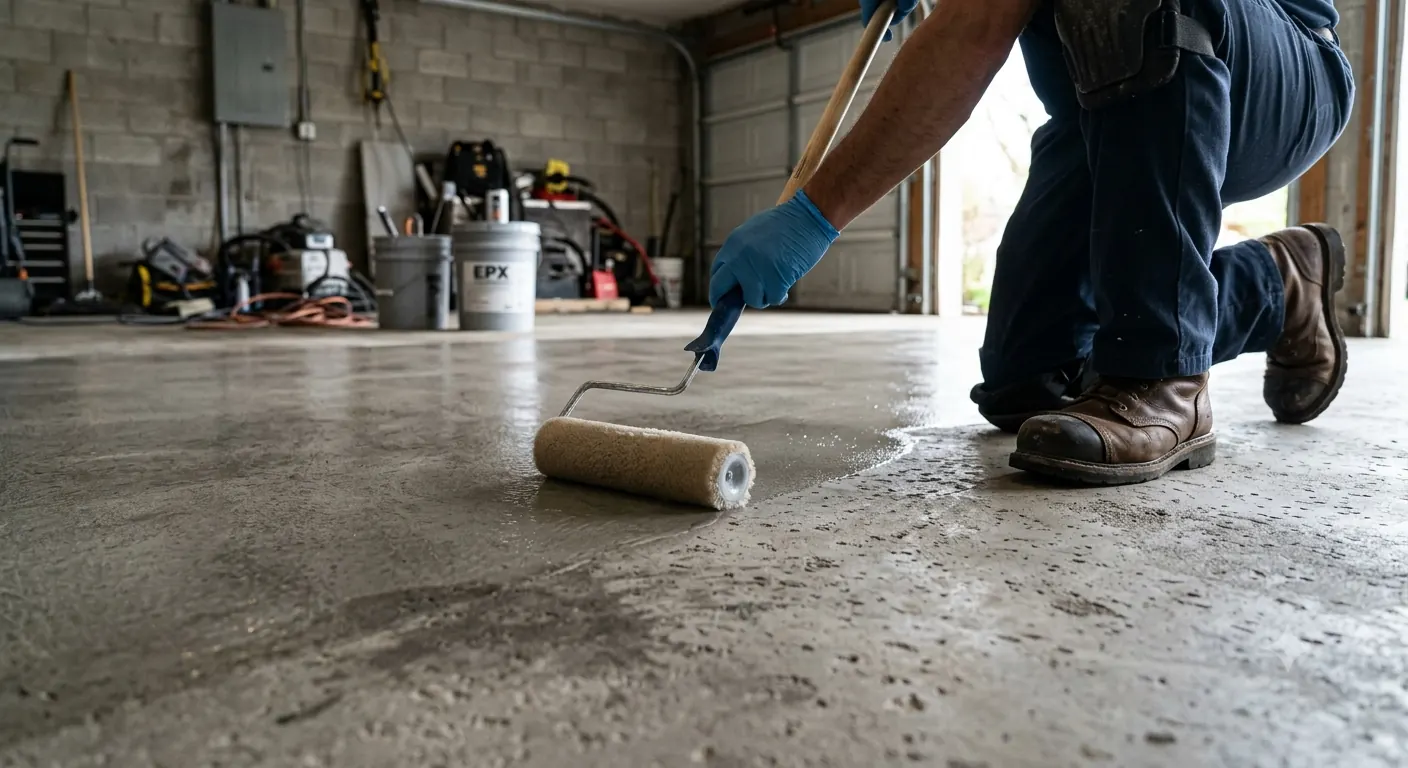
Base Coat — MVB Where Needed
The base coat is rolled and back-rolled across the prepared slab. It bonds directly to the concrete and stays more flexible than standard epoxy. Where the moisture reading or the application calls for it — kitchens, bathrooms, and outdoor areas most often — this is a moisture vapor barrier (MVB) base coat, which blocks moisture vapor transmission at the source, the leading cause of coating failure.
Full-Broadcast Flake
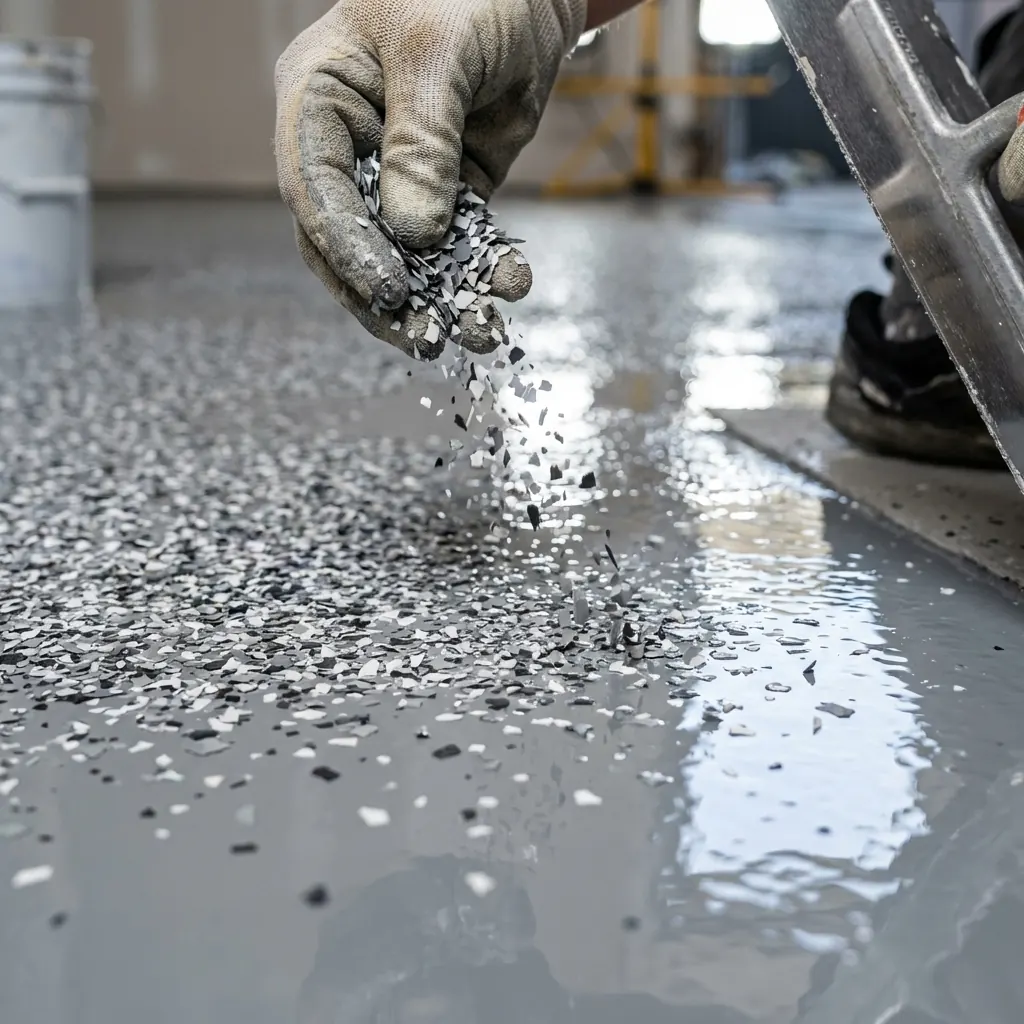
While the base coat is still wet, vinyl flake is broadcast to rejection — full, even coverage with no bare spots. The flake locks in as the base coat cures, creating the decorative pattern and adding built-in texture to the surface.
Scrape, Grout & Vacuum
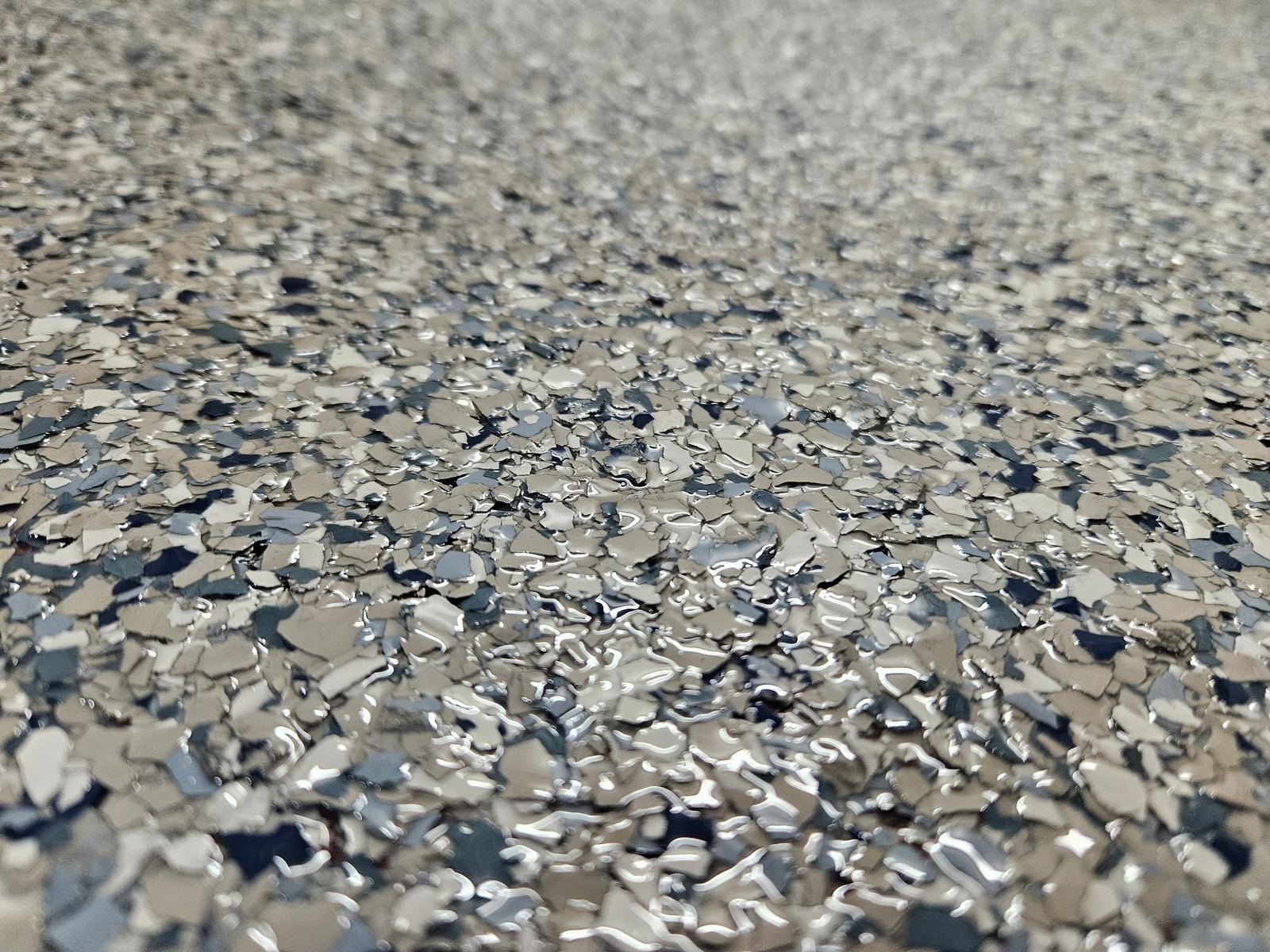
Once the base coat has cured, loose standing flake is scraped flat with a floor scraper and vacuumed clean. Any low spots in the flake layer are filled with a grout coat before the topcoat goes on.
Polyaspartic Topcoat
The clear polyaspartic topcoat seals the flake and delivers the final protection: UV stability so it won't yellow, chemical resistance against oils and solvents, and the chosen sheen level — satin, semi-gloss, or high-gloss.
Return to Service
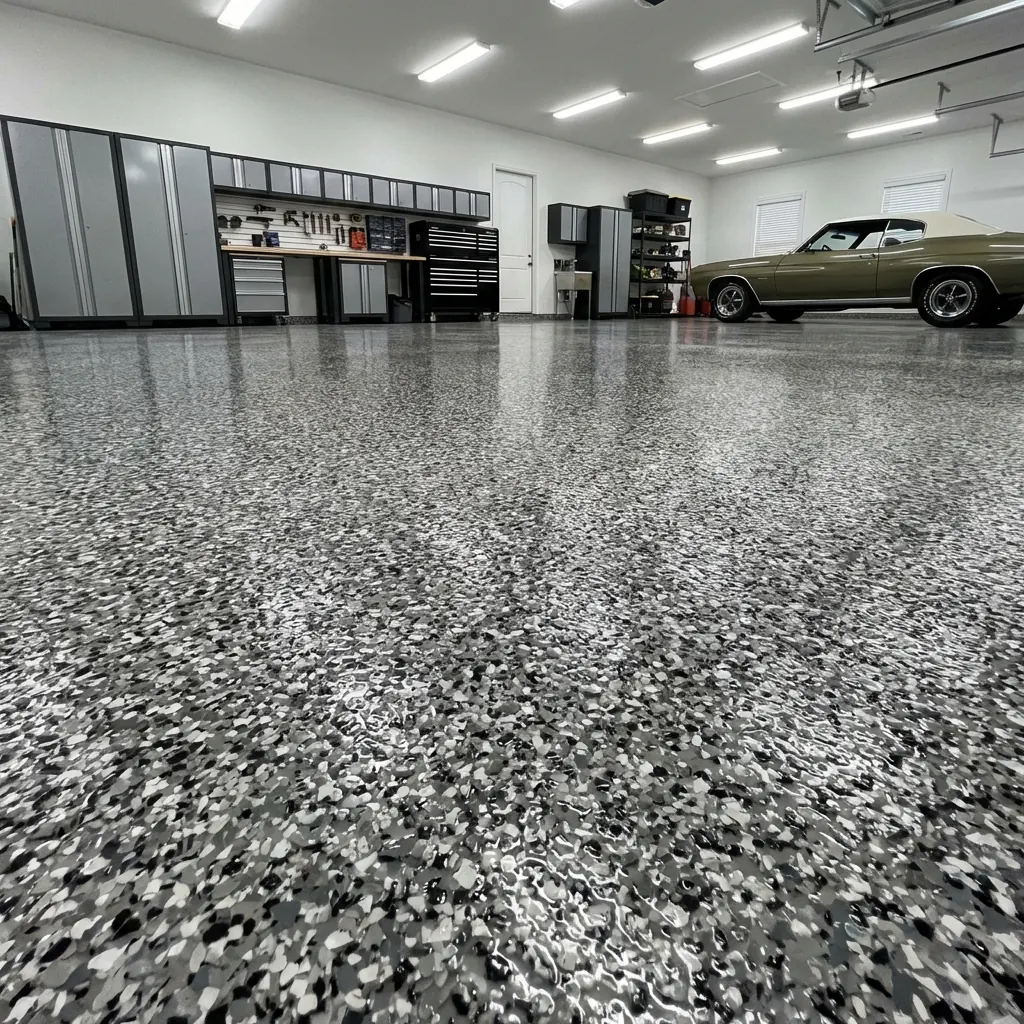
Foot traffic in 6–8 hours. Vehicle traffic the next morning. No week-long cure periods, no strong solvent smell lingering for days. The fast-cure chemistry of polyaspartic is one of its biggest practical advantages over traditional epoxy.