
Polyaspartic Floor Coating in Tallahassee, FL
Polyaspartic is the clear, UV-stable wear layer on our flake floors, the part your tires and feet actually touch. Here's what it is, why it suits a Florida garage or patio, where it falls short, and how we use it.
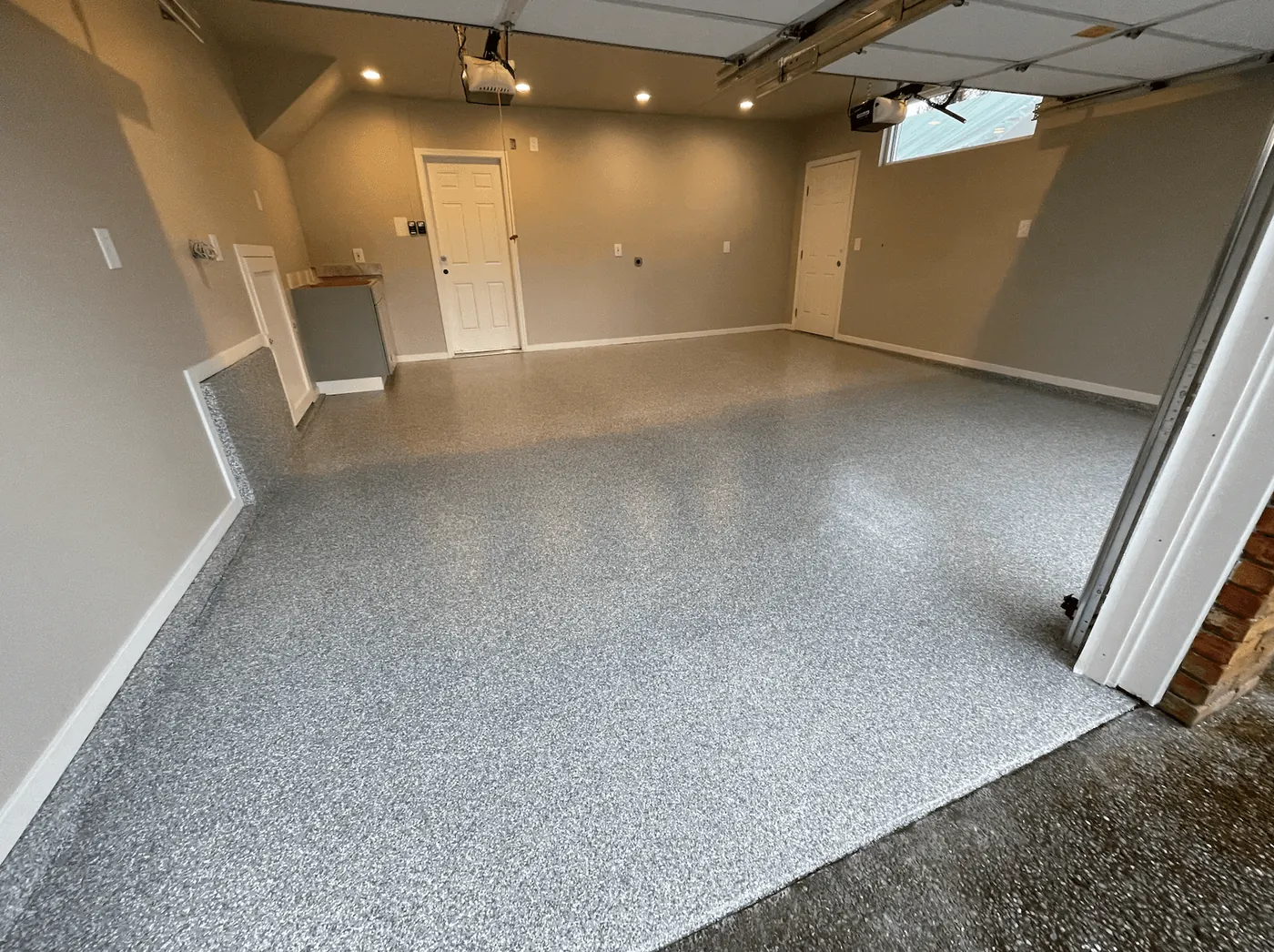
- UV-stable: made for Florida sun
- Most flake floors done in one day
- Every slab moisture-tested first
- 10-year delamination warranty
What is polyaspartic floor coating?
Polyaspartic is a two-part coating from the polyurea family. Chemists developed it in the 1990s as a slower-setting cousin of spray-applied polyurea, the material behind spray-in truck bed liners, so it could be rolled out by hand.
Mixed and rolled, it goes from wet to walkable in hours. It's aliphatic, which means sunlight doesn't turn it yellow. It stays slightly flexible after it cures, and it stands up to oil, gasoline, brake fluid and most of what lands on a garage floor.
On our flake floors it's the clear top coat over a poly base coat, a poly colour coat and a full broadcast of flake. Whether you call it a polyaspartic floor, a poly floor or an epoxy floor, that's the floor. Here's how the flake system goes together, and how polyaspartic stacks up in our epoxy vs. polyaspartic guide.
- 4layers in a flake floor
- 1 dayfor most flake floors
- 10 yrswritten delamination warranty
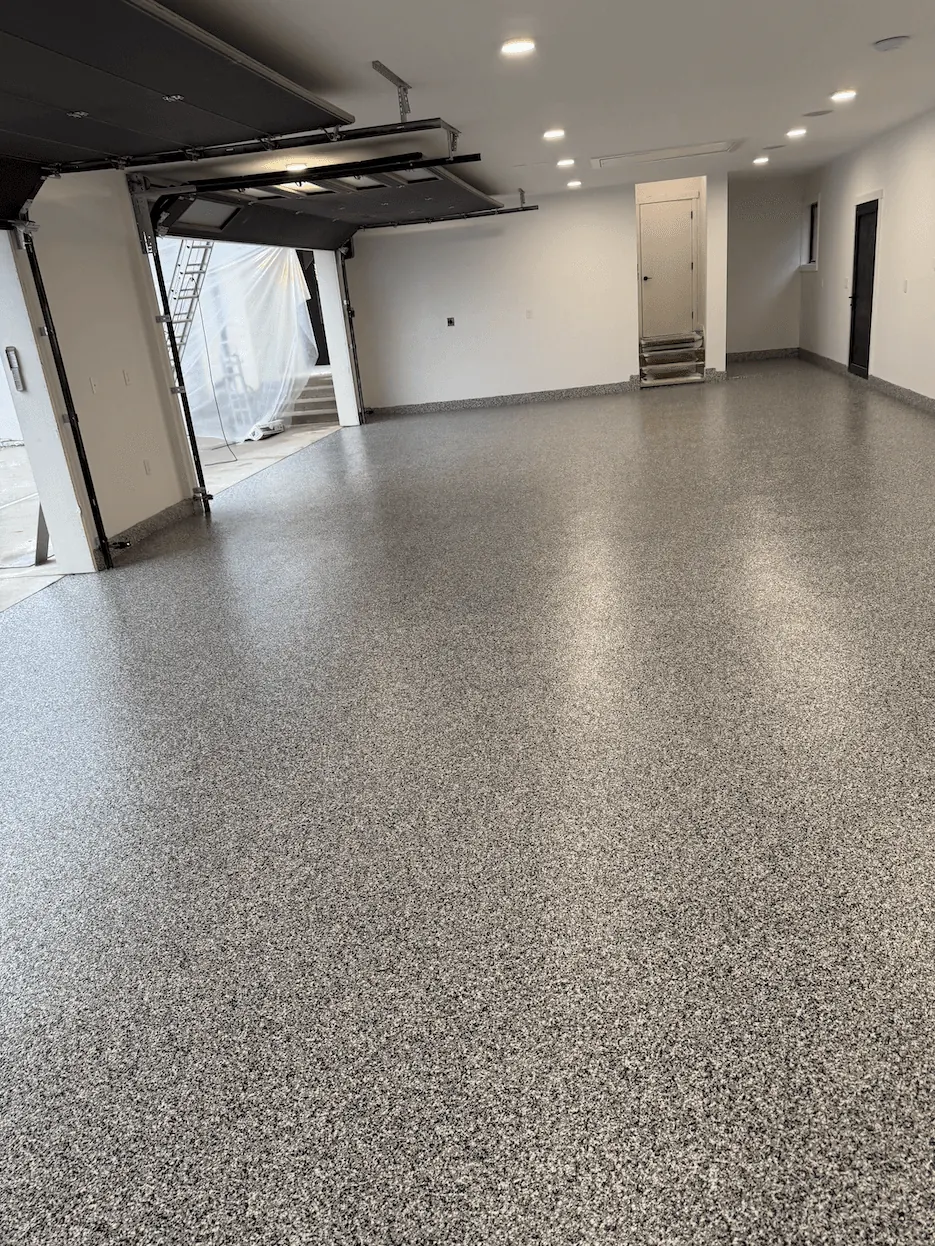
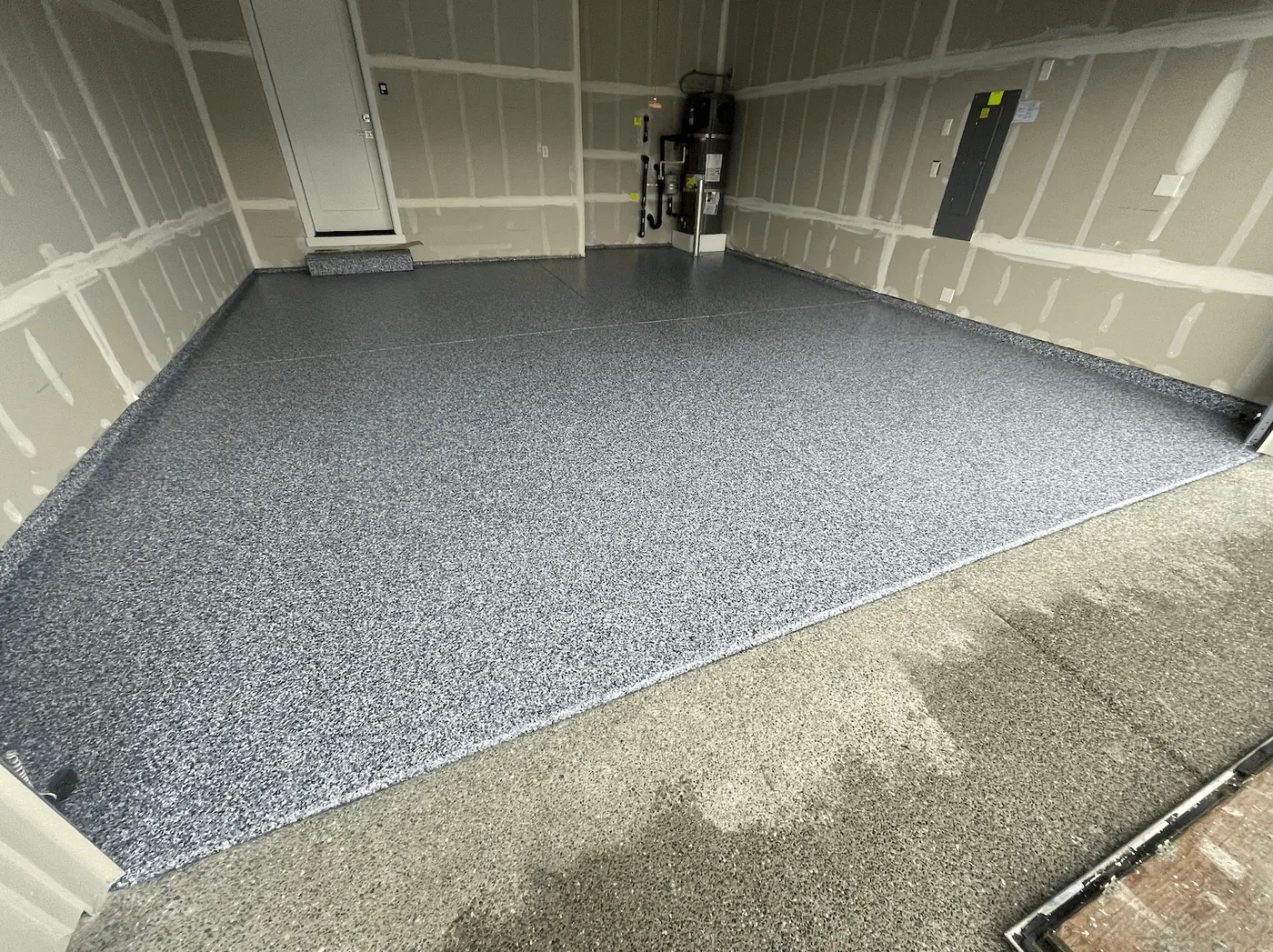
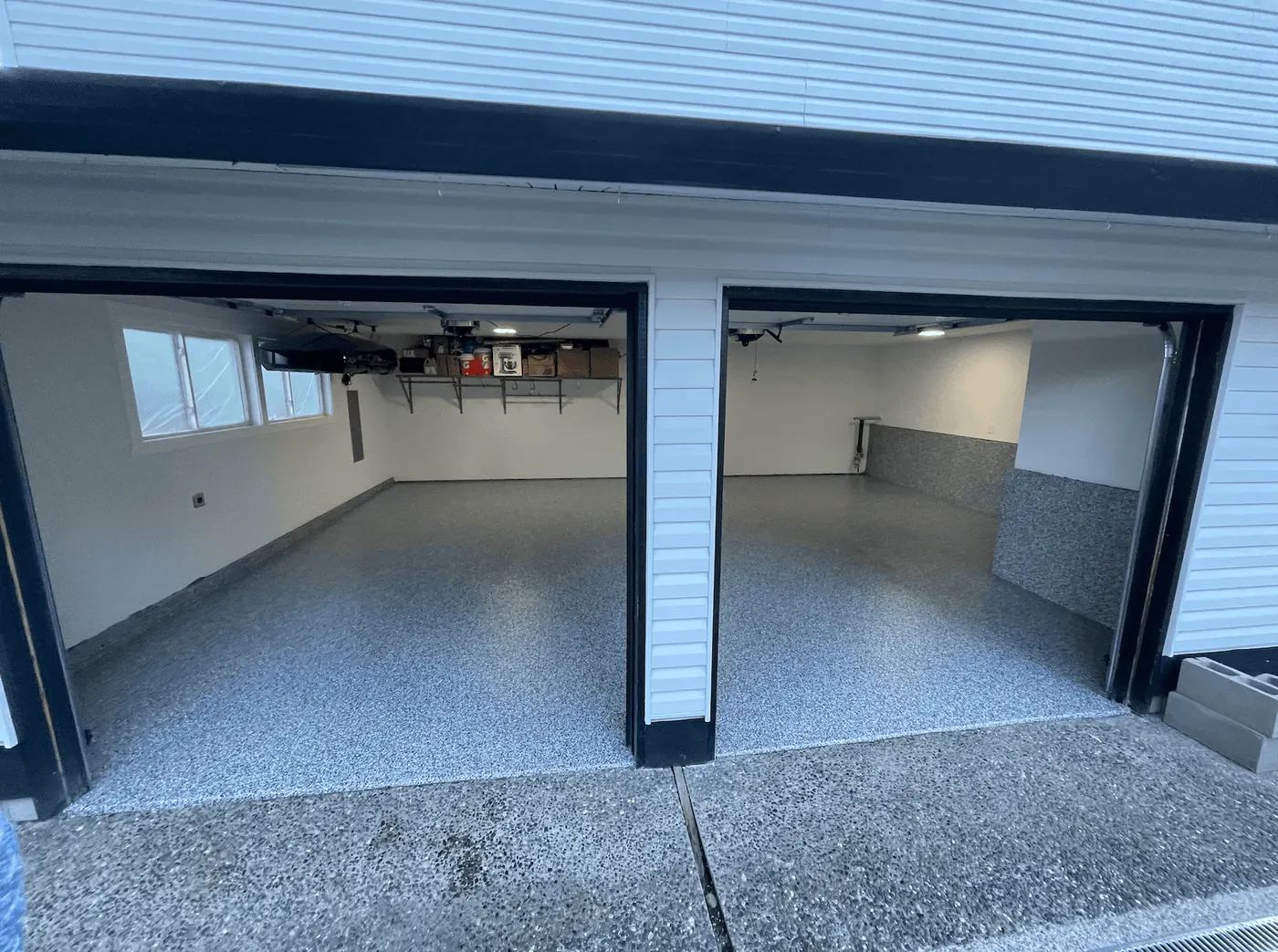
Where polyaspartic goes in the floor
A coated floor is layers, and each one has a job. Polyaspartic is very good at one of them: being the surface that faces the sun, the tires and the spills.
-
Ground, tested concrete
Diamond grinding opens the slab so the coating bonds into it. A Wagner C555 moisture reading decides whether the floor needs a moisture vapor barrier underneath. No coating, polyaspartic included, survives a wet slab nobody tested. Why we grind instead of etch.
-
Poly base coat, or MVB where needed
The base coat bonds to the ground concrete and gives the floor its build. In kitchens, bathrooms and outdoor areas, or wherever the moisture reading calls for it, we build on a moisture vapor barrier (MVB) base instead.
-
Colour coat and a full flake broadcast
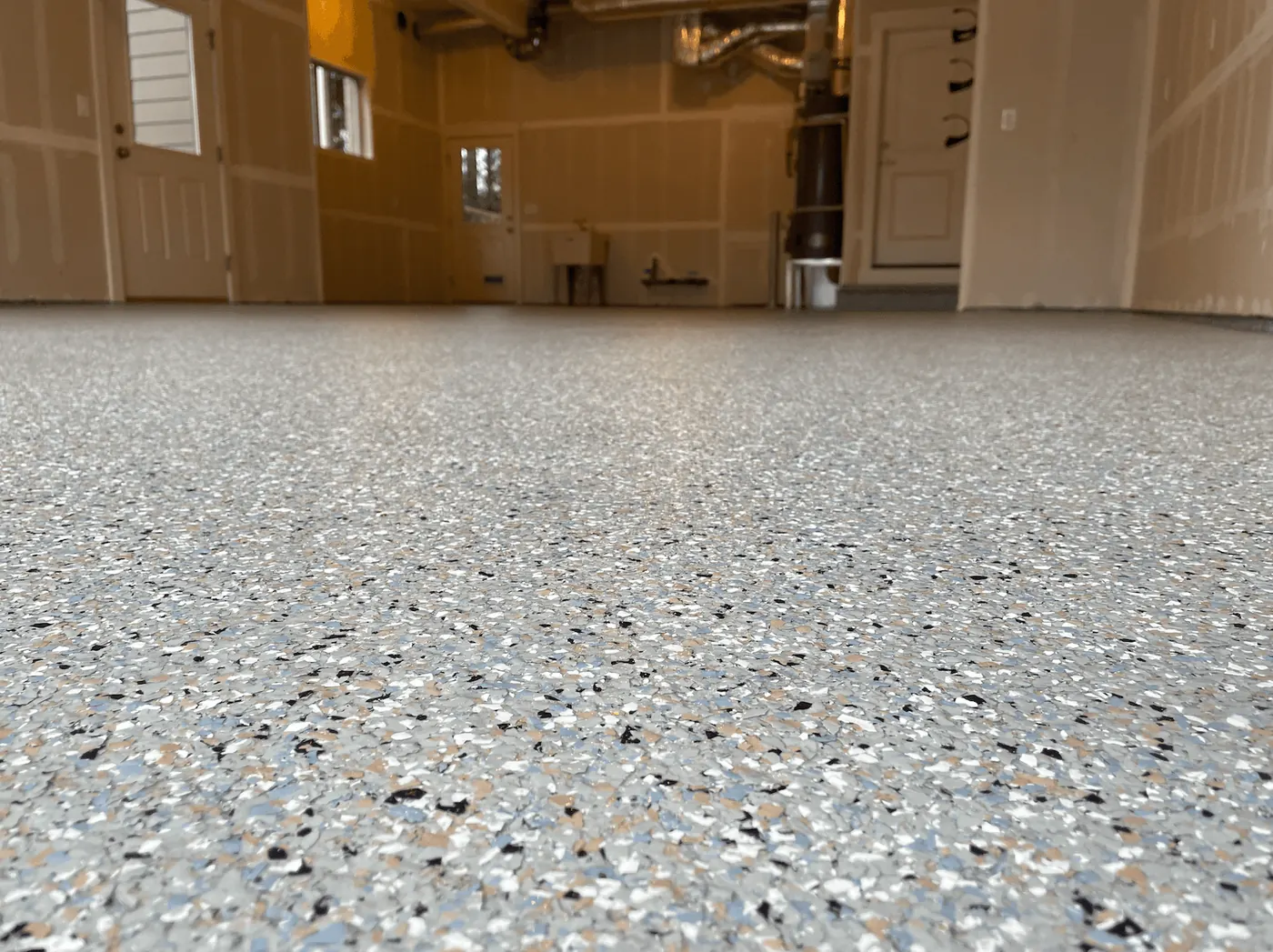
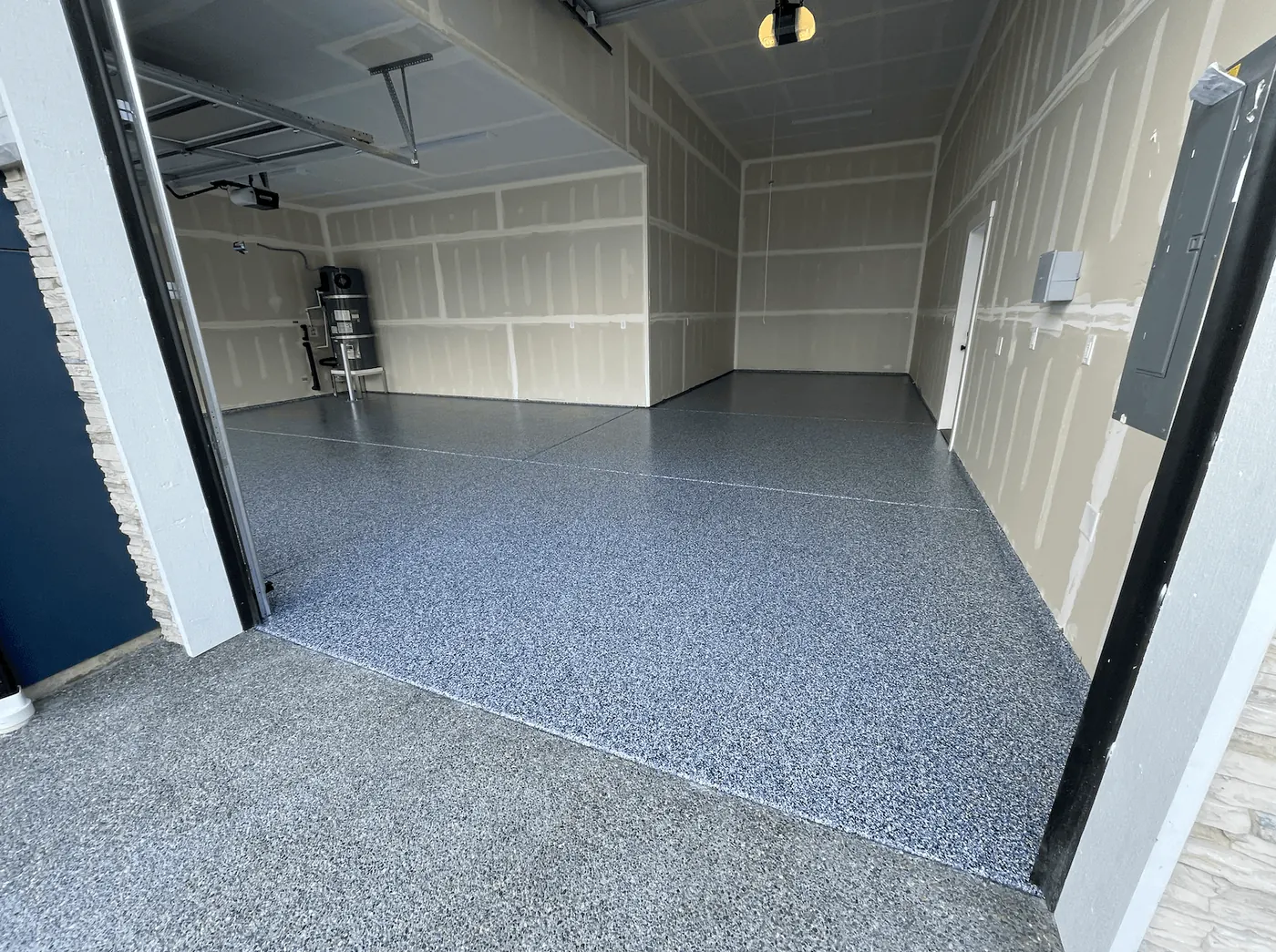
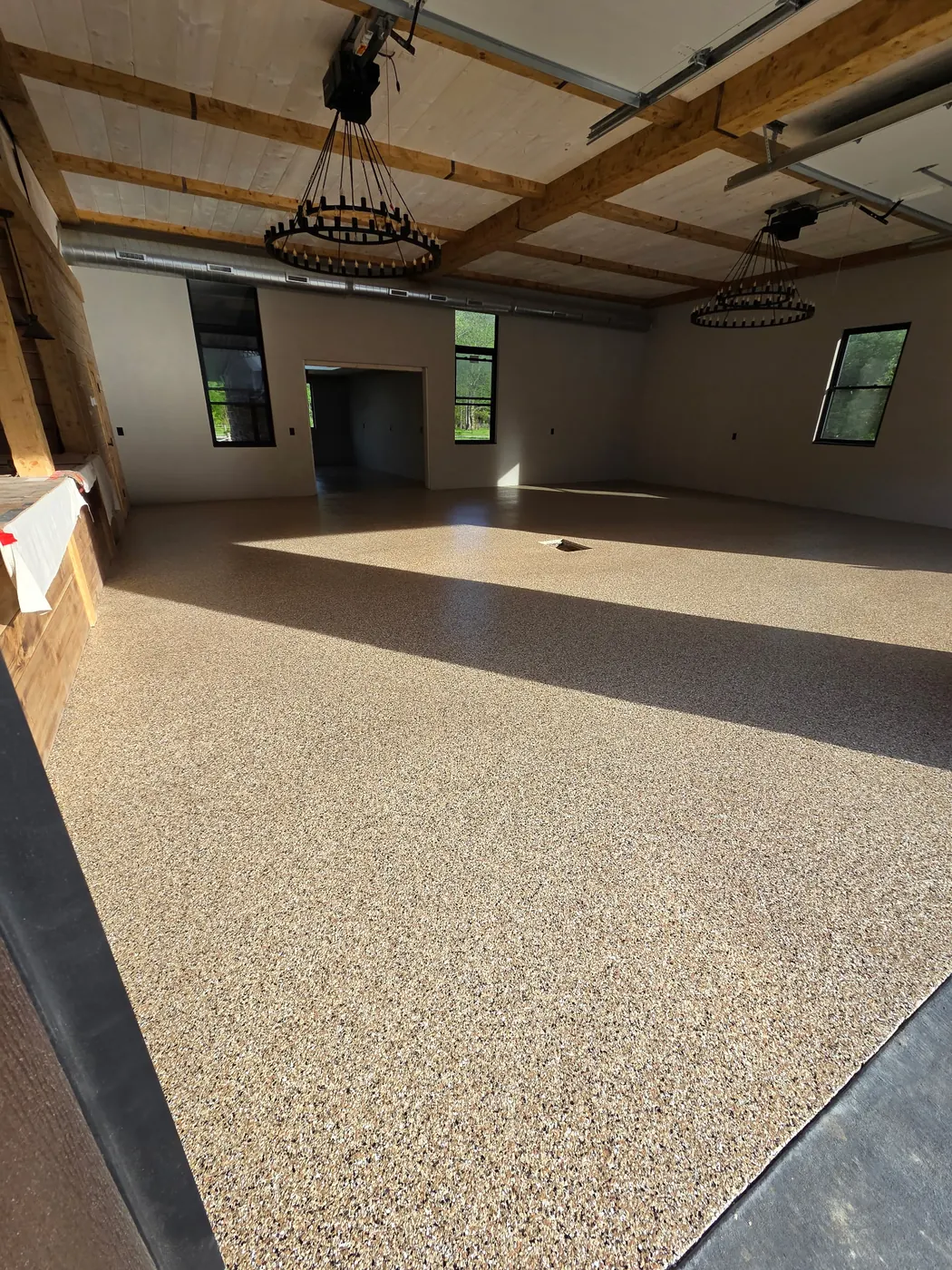
A poly colour coat, then decorative flake broadcast until the floor won't hold any more. That's the texture, the grip and a surface that hides the stains and colour differences the slab had.
-
Clear polyaspartic top coat
The wear layer. UV-stable, chemical-resistant and clear, it locks the flake in and is the only part of the floor your tires and shoes ever touch.
Polyaspartic vs. epoxy vs. polyurea
The short version. The long one, with what each means for a Tallahassee garage, is in our epoxy vs. polyaspartic guide.
| What matters | Epoxy | Polyurea | Polyaspartic |
|---|---|---|---|
| What it is | Rigid two-part resin | Fast-setting, flexible; the truck-bed-liner family | A polyurea slowed down to roll by hand |
| Best job in a floor | Build coat, protected from the sun | Base coat | Clear top coat |
| Sunlight | Standard epoxy yellows | Depends on the grade | Stays clear |
| Cure speed | Slow; days before full use | Very fast | Fast; walkable in hours |
| Flex with the concrete | Little | Yes | Some |
| Working time once mixed | Long | Short | Short, and shorter on a hot, humid day |
Where we use a polyaspartic top coat
The same layers, matched to the room. What changes from space to space is the prep and whether the slab needs a moisture barrier, not the idea of the floor.
 Garages
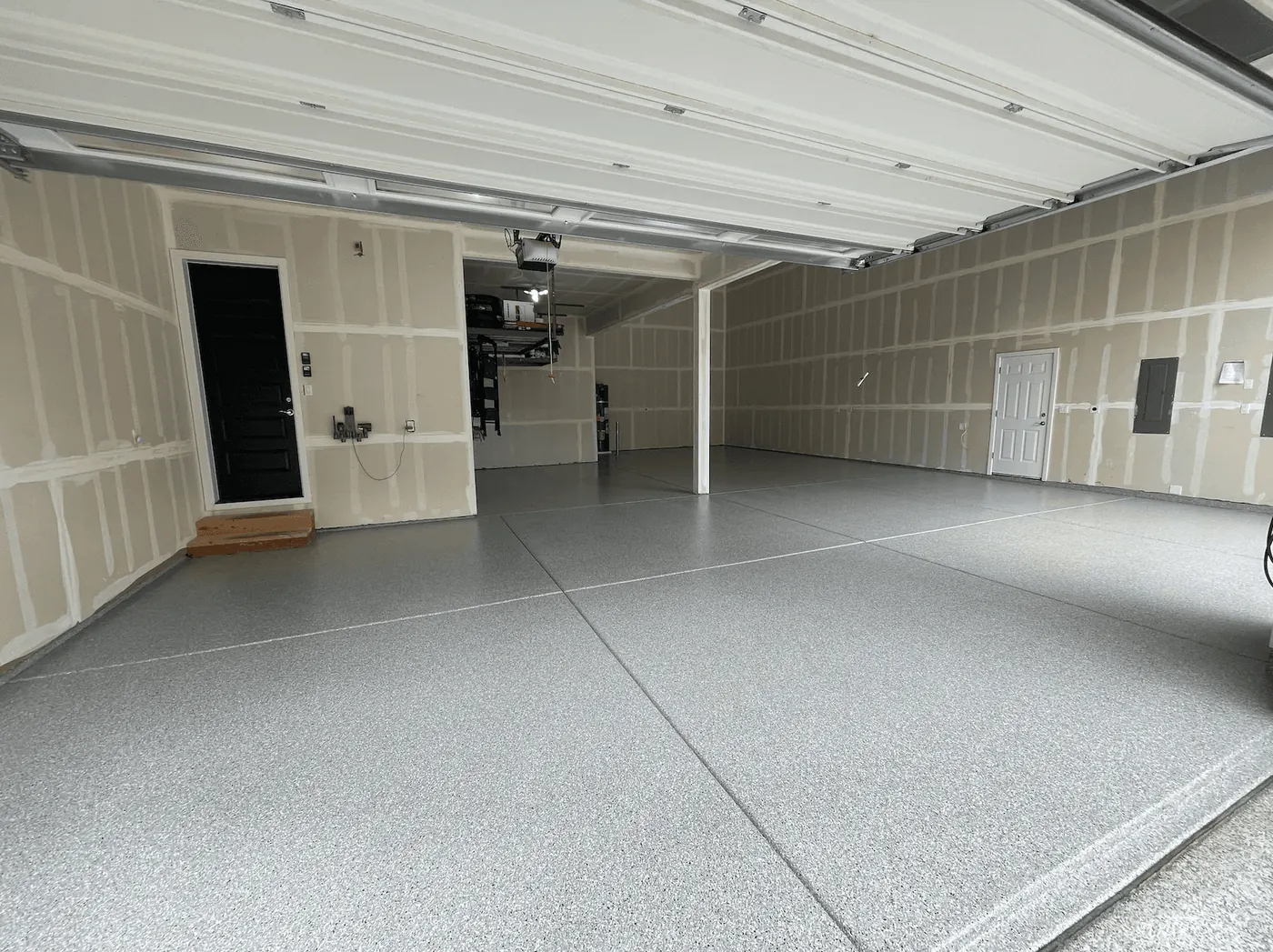
Hot tires, oil, open doors
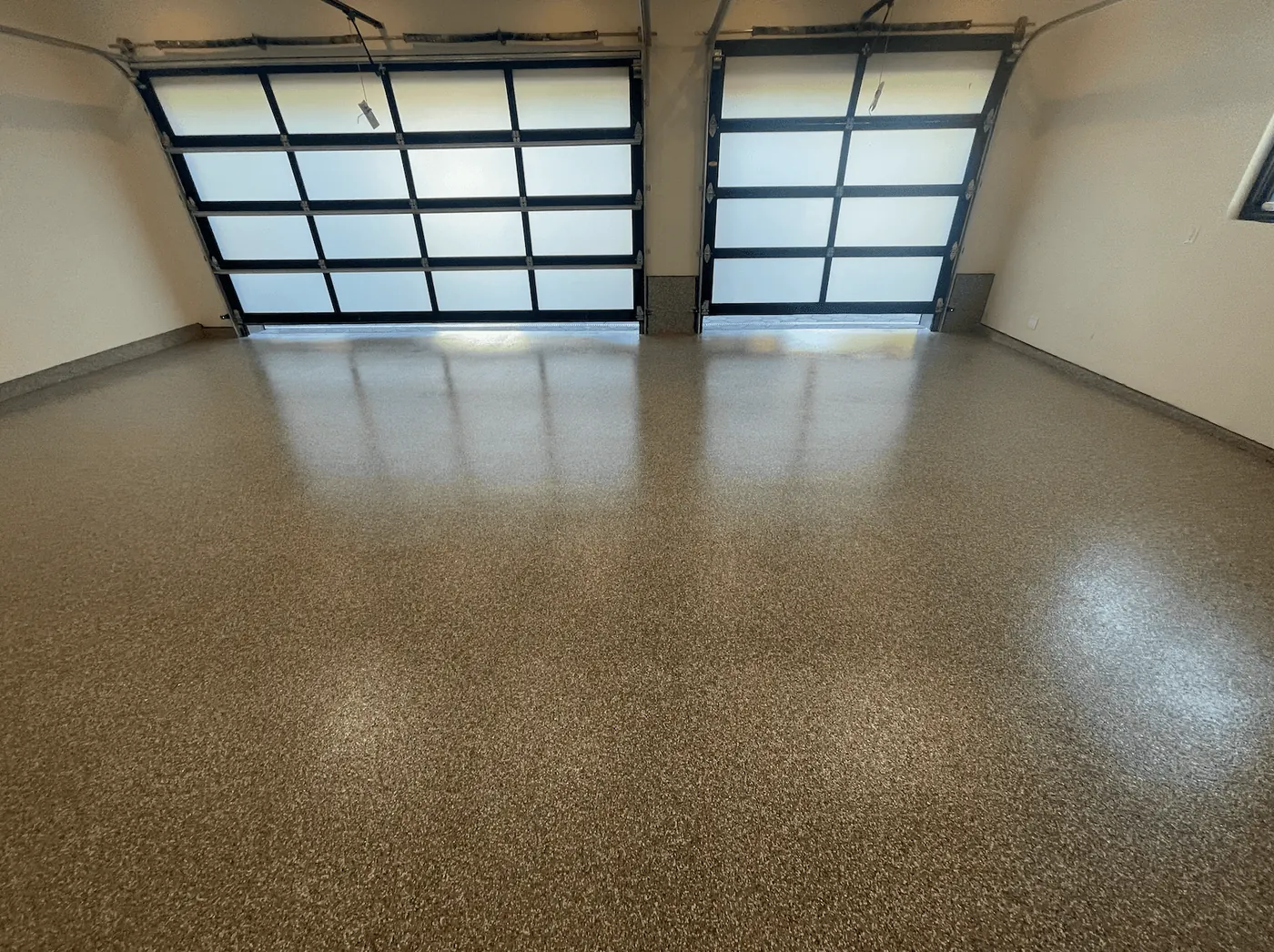
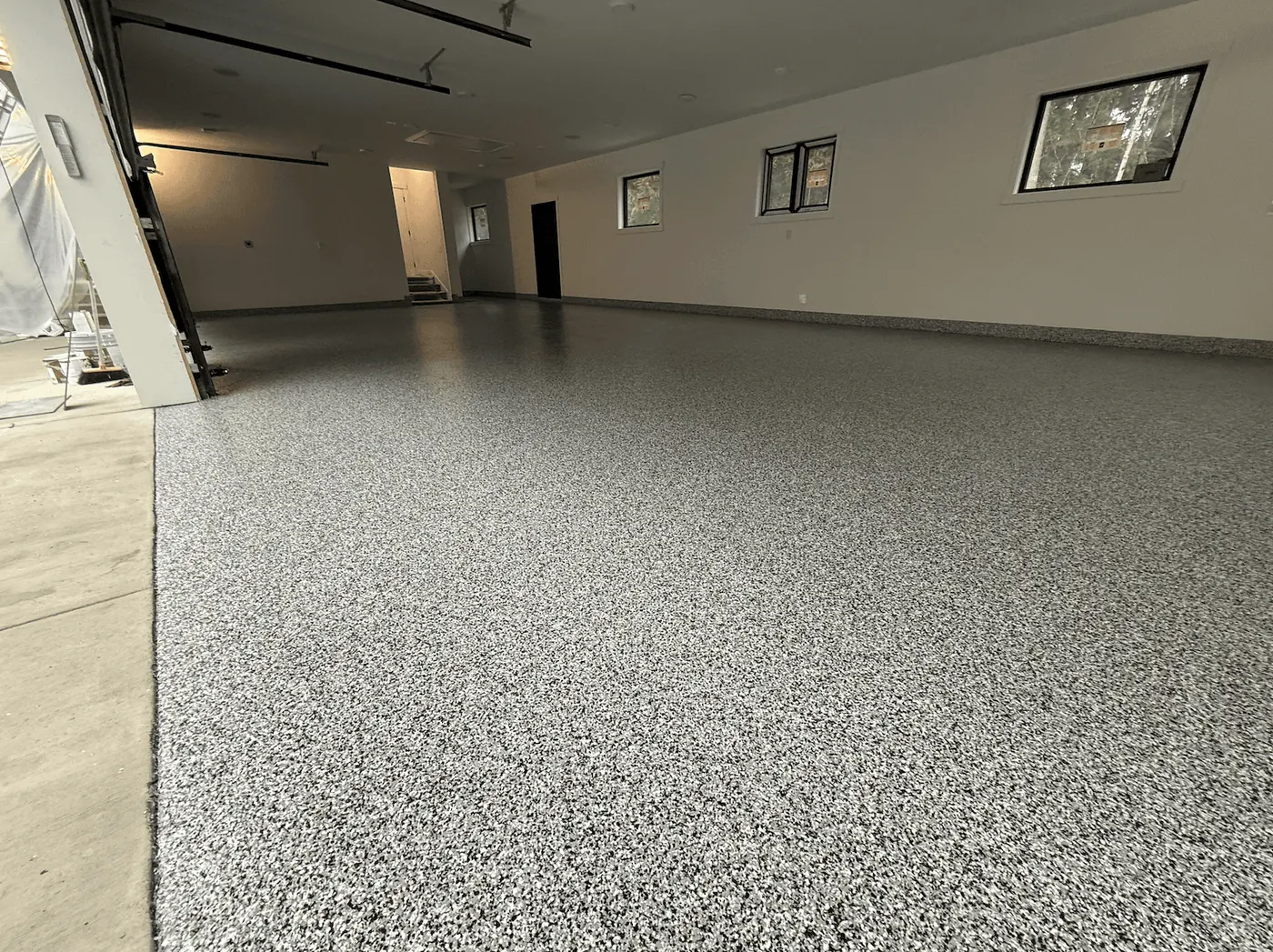
The floor this system was built for. Full flake for texture, a UV-stable top coat at the door, and most floors done in a day. Our epoxy-look garage floors.
 Outdoors
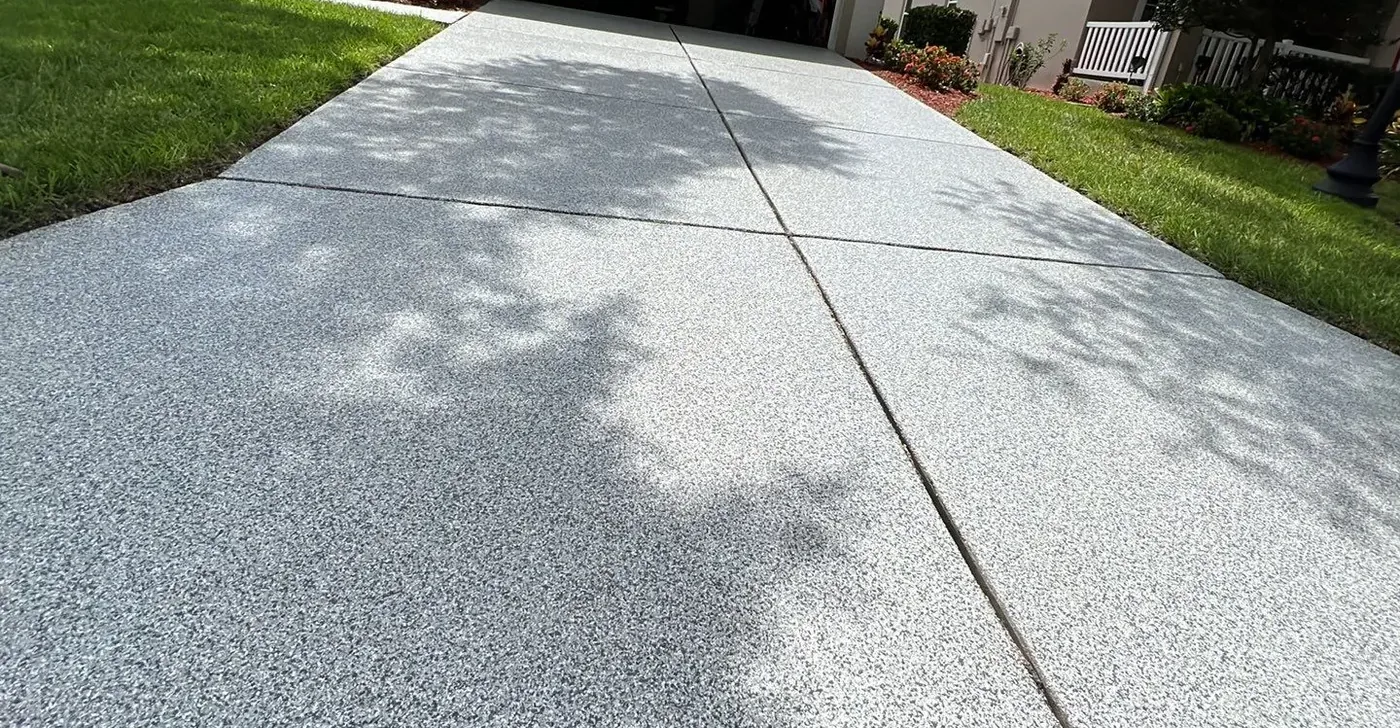
Patios, porches and pool decks
Outdoors is where UV stability earns its keep, and outdoor areas are one of the places we most often build on an MVB base. Patio and pool deck coating.
 Inside the house
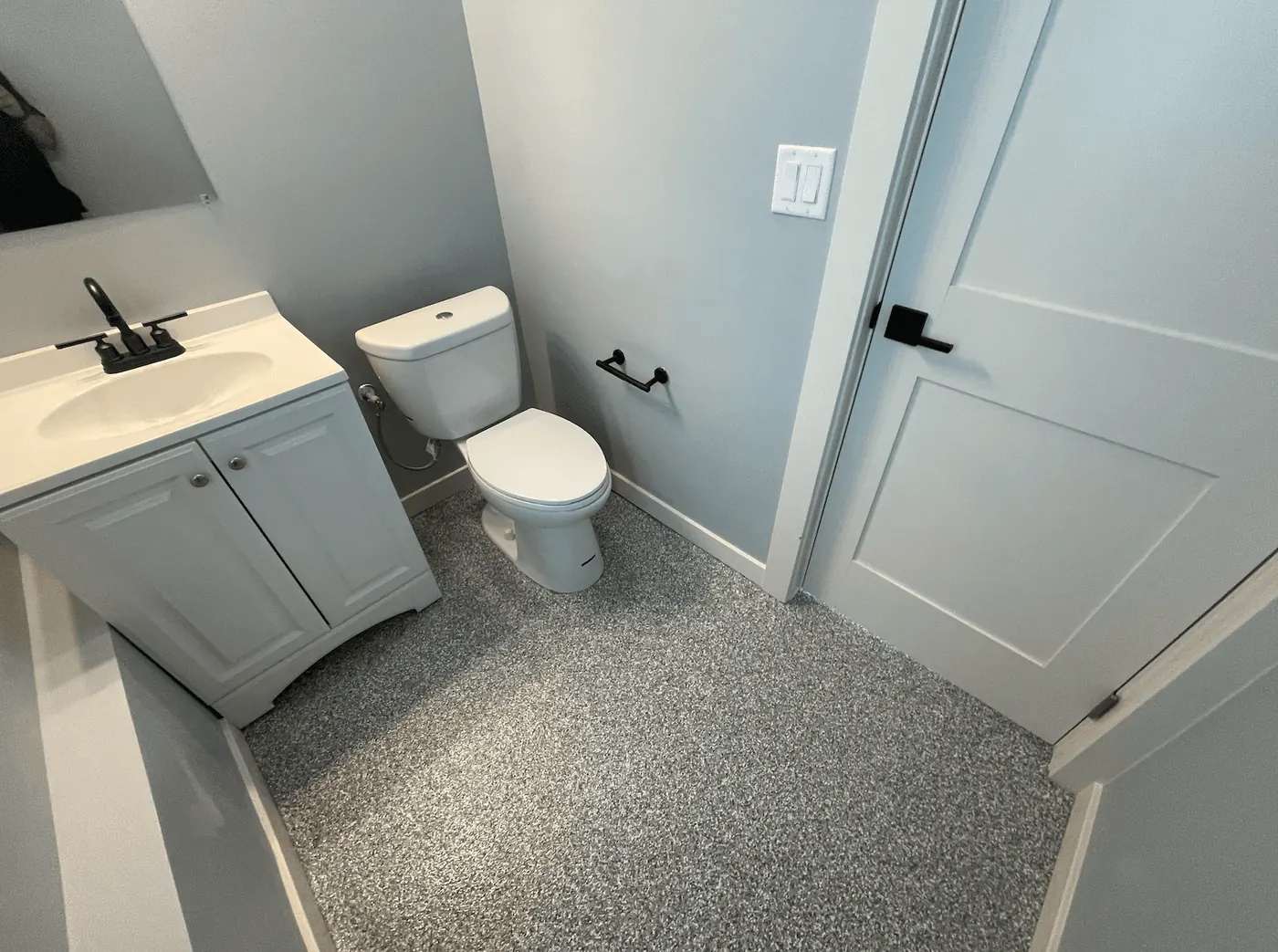
Kitchens, baths and laundry rooms
Seamless, wipe-clean floors for the rooms that get wet. These are the rooms where the moisture test most often calls for an MVB base coat.
Why polyaspartic suits a North Florida home
Tallahassee floors don't fight cold. They fight sun, heat and humidity, and that's where a polyaspartic top coat does its best work.
-
It stays clear in the sun
Afternoon light through an open garage door, or full sun on a pool deck, is where standard epoxy goes amber. Polyaspartic is aliphatic, so it holds its colour in UV.
-
It's back in use quickly
Fast cure is why most of our flake floors go down in a single day. Before we leave, we'll tell you when you can walk on it and when you can park on it.
-
Moisture is handled underneath
Humid air and slabs on the ground mean moisture is always part of the conversation. The top coat is the wear layer; the moisture test and, where needed, an MVB base handle what comes up from below.
Where polyaspartic falls short
No coating is perfect, and the sales pages that say otherwise are the ones to walk away from.
- It's slick when wet if it's smooth. A bare, glossy coat is glassy underfoot. That's one reason our floors have a full flake broadcast under the top coat. For pool decks and steps, we talk through grip before anything goes down.
- It sets fast. A short working time is great for the schedule and unforgiving for a first-timer, especially on a hot, humid day. It's a crew's product, not a weekend project.
- It costs more than epoxy up front. The material is pricier. What you get for it is a surface that holds its colour in the sun.
- It doesn't fix a wet slab. Nothing rolled on top does. Moisture is handled underneath, with a test and an MVB base where the slab needs it.
- It smells during the install. The uncured material is strong and needs ventilation. Once it cures, the smell goes.
Want a marbled, metallic look instead? That's a different system: our metallic floors are a 3-layer, multi-day build sealed with Rockhard T2000, a UV-stable clear coat made for metallic floors. See metallic floors.
Polyaspartic floor coating questions
What is polyaspartic floor coating?
A two-part coating from the polyurea family, developed in the 1990s so it could be rolled on by hand. It cures in hours, stays slightly flexible, resists chemicals and doesn't yellow in sunlight. On our flake floors it's the clear top coat over a poly base coat, a colour coat and a full flake broadcast.
Is polyaspartic better than epoxy?
As a top coat in a Florida garage or patio, yes: it stays clear in sunlight where standard epoxy yellows, and it cures fast. Epoxy still has a place as a build coat where it's protected from the sun. That's why every floor we install is finished with a UV-stable poly top coat, whatever goes underneath.
Will a polyaspartic floor yellow in the Florida sun?
No. Polyaspartic is aliphatic, which means UV light doesn't turn it amber the way it does standard epoxy. That's why it's the top coat we use where a floor faces open garage doors or full sun.
Is polyaspartic the same as polyurea?
Polyaspartic is a type of polyurea. The polyurea in spray-in truck liners sets in seconds and has to be sprayed; polyaspartic was developed to set more slowly so it can be rolled out and stay clear. Polyaspartic and polyurea are both among the base products we work with.
Is a polyaspartic floor slippery?
Any smooth, glossy surface gets slick when it's wet. A full flake broadcast under the top coat gives the floor texture, and for pool decks, porches and steps we talk through how much grip you want before anything goes down.
Can you put polyaspartic on a patio or pool deck?
Yes. Outdoors is where its UV stability matters most. We moisture-test every outdoor slab with a Wagner C555 meter, and outdoor areas are one of the places we most often build on a moisture vapor barrier base.
How long does a polyaspartic floor take to install?
Most of our flake floors are installed in a single day. Before we leave, we'll tell you when you can walk on the floor and when you can park on it, which depends on the temperature and humidity that day.
How much does a polyaspartic floor cost?
The slab decides more of the price than the coating does: the size of the space, crack repair, removing an old coating and whether it needs a moisture barrier. We measure, test and give you one clear price in writing at a free visit.
Does polyaspartic smell?
During the install, yes. The uncured material has a strong odor, so the space is ventilated while we work. Once it cures, the smell goes.
More about polyaspartic floors
Every system we install is on the services page, and you can browse finished floors in the gallery.
Get a polyaspartic floor quote
Garage, patio, porch, pool deck or a room inside the house. We'll test the slab, help you choose a finish and give you one clear price in writing.