
Patio & Pool Deck Coating in Tallahassee, FL
Outdoor concrete in North Florida takes full sun, summer storms, wet feet and pollen season. We prep it like a garage floor, test it for moisture, and finish every coating with a UV-stable poly top coat that won't yellow in the sun.
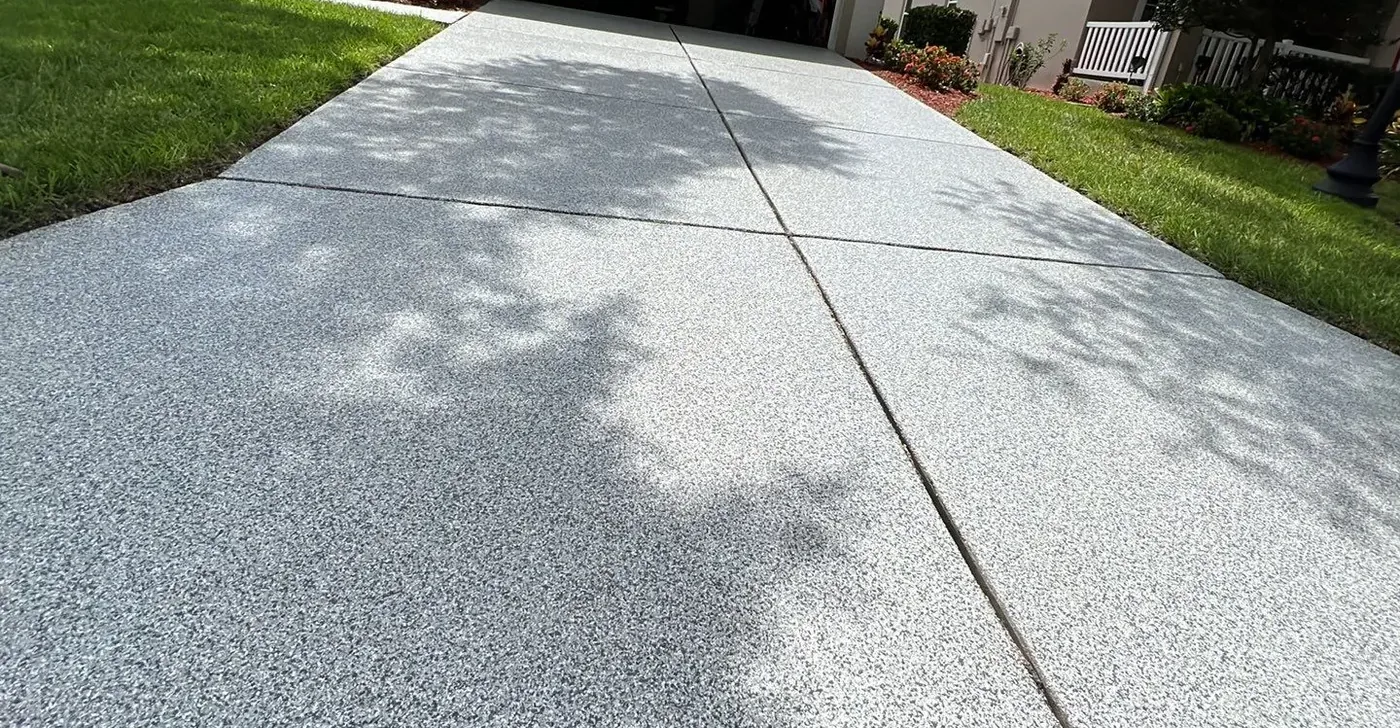
- UV-stable poly top coat
- Moisture-tested with a Wagner C555
- MVB base where the slab needs it
- 10-year delamination warranty
Can you coat a concrete patio or pool deck?
Yes, if it's sound concrete. Alongside garages and interior floors, we coat patios, porches and pool decks. It's the same layered approach as our garage floors: diamond grinding, crack repair, a base coat, a full flake broadcast and a clear top coat.
Outdoors adds three priorities. The top coat has to hold up to the Florida sun without yellowing, so every system we install is finished with a UV-stable poly top coat. The surface needs grip when it's wet, which is why we talk through traction before anything goes down. And moisture matters even more than it does in a garage: outdoor areas are one of the places we most often build on a moisture vapor barrier (MVB) base coat.
The flake also hides the stains, patches and colour differences outdoor concrete collects over the years, and a coated surface rinses clean instead of soaking up spills, sunscreen and splash-out.
- UV-stablepoly top coat on every system
- C555moisture test on every slab
- 10 yrswritten delamination warranty
What a North Florida patio needs from a coating
A garage floor mostly fights tires, oil and moisture from below. A patio or pool deck adds full sun, afternoon storms, bare feet and bigger temperature swings.
-
UV stability
Standard epoxy yellows and loses its gloss in sunlight. An aliphatic poly top coat doesn't, which matters on a pool deck or a south-facing patio that sits in direct sun most of the year.
-
Grip when it's wet
Any glossy surface is slick when it's wet, and a pool deck is wet a lot. A full flake broadcast gives the surface texture, and we talk through how much grip you want around the pool and on steps before we start.
-
Heat underfoot
Any surface in full sun gets hot. Lighter colours absorb less heat than dark ones, so on a deck that gets afternoon sun, the blend you pick matters for comfort as well as looks.
-
Moisture and movement
Outdoor slabs sit on damp ground and swell and shrink with the weather. We moisture-test every slab with a Wagner C555 meter, and outdoor areas often get an MVB base coat.
How we coat a patio or pool deck
Bond first, finish second. These are the same steps that keep our garage floors down, done outside.
-
Look, measure and test
At a free visit we check the concrete for cracks, crumbling or heaving, old paint or sealer, and moisture, and we measure the space. You get one clear price in writing.
-
Diamond grind
Grinding takes off old sealer, paint and the weak top layer of the concrete, so the coating bonds into the slab instead of sitting on top of whatever was there before. Why we grind instead of acid-etch.
-
Crack and spall repair
Cracks and chipped areas are filled and ground flush. Concrete that's heaving or crumbling needs repair before any coating, and if we see it, we say so. More in crack repair before coating.
-
Base coat, colour and flake
An MVB base coat where the reading calls for it, which outdoors is often, then the colour coat and a full broadcast of flake for texture and a finish that hides wear.
-
UV-stable top coat
The clear wear layer that faces the sun, the rain and the pool water. It's what keeps the surface from yellowing, and it goes on every system we install.
Outdoor work runs on the weather. The slab has to be dry, and the surface has to stay above the dew point while the coating cures, so a patio or pool deck job is scheduled around the forecast.
What we coat outdoors, and what needs a conversation first
These coatings bond to diamond-ground concrete. Most outdoor concrete around a home is a good candidate. A few surfaces need a closer look.
Good candidates
- Concrete patios and back slabs
- Concrete pool decks
- Porches, lanais and covered entries on a concrete slab
- Concrete with old paint or sealer on it; grinding takes it off
Talk to us first
- Pavers, brick, natural stone or wood decking. They aren't concrete, so ask at the visit and we'll tell you honestly what's possible.
- Concrete that's heaving, sinking or crumbling. It needs repair before any coating.
- Slabs where water stands after every storm. A coating won't fix drainage.
Patios and pool decks in Tallahassee
Outdoor concrete here deals with more sun, rain and humidity than most of the country. Three things shape how we plan an outdoor floor.
Long, bright summers
A pool deck in Tallahassee can sit in full sun for most of the day from spring into fall. That's exactly the exposure that turns standard epoxy amber, and why the top coat has to be UV-stable.
Afternoon thunderstorms
In the wettest summer months, thunderstorms build on many afternoons. Coating needs a dry slab and a dry forecast, so outdoor jobs are planned around the weather, and drier stretches in spring and fall are easier to book.
Mildew, leaves and pollen
Shaded concrete grows mildew, and spring pollen coats everything outside. A sealed, coated surface rinses clean with a hose and a soft brush. Our care guide covers cleaning.
Choosing a colour for outdoor concrete
Flake comes in blends from very light to very dark, and outside, the choice affects more than looks:
- Lighter blends stay cooler. On a deck in full afternoon sun, a light blend absorbs less heat than a dark one.
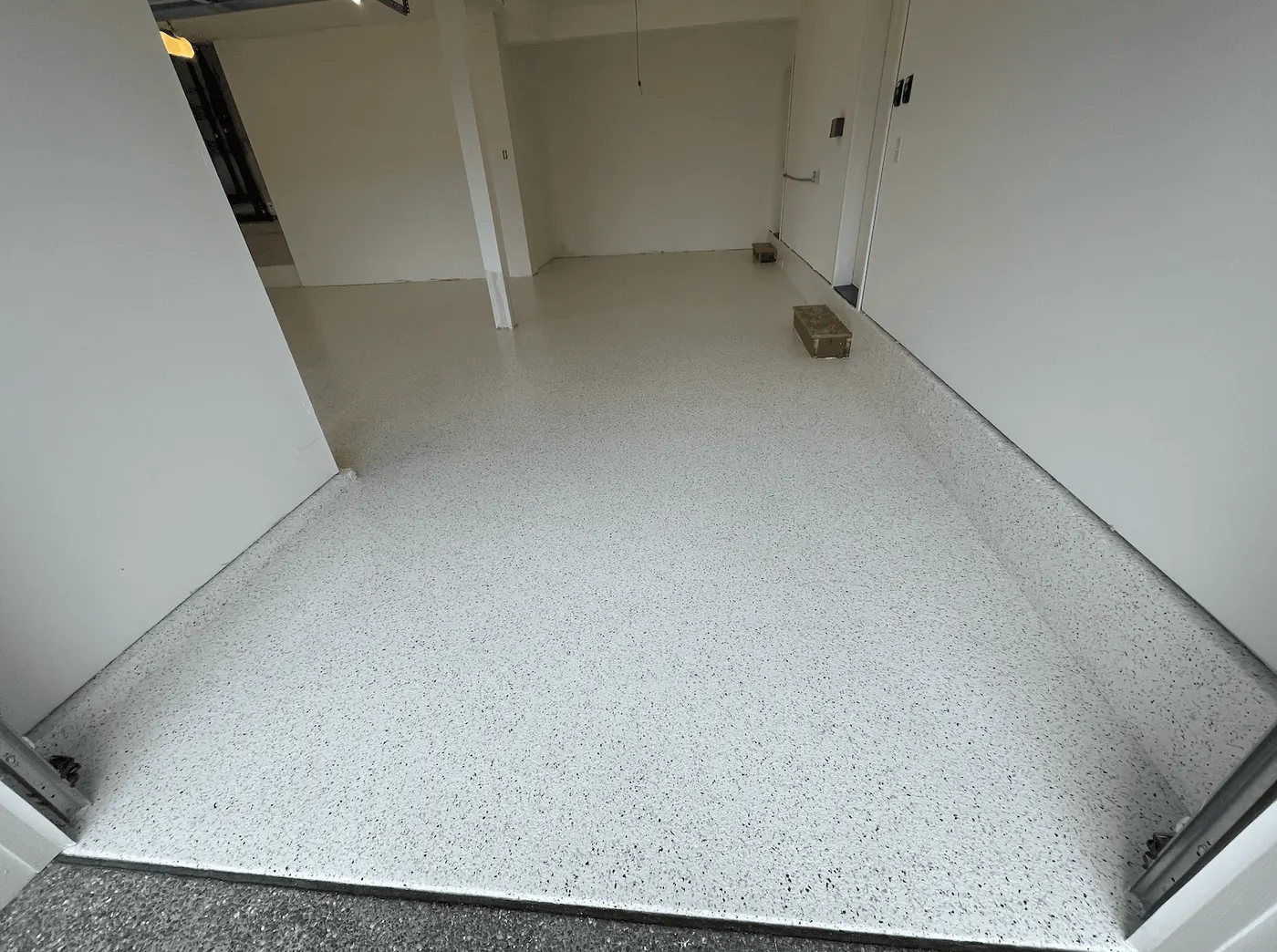
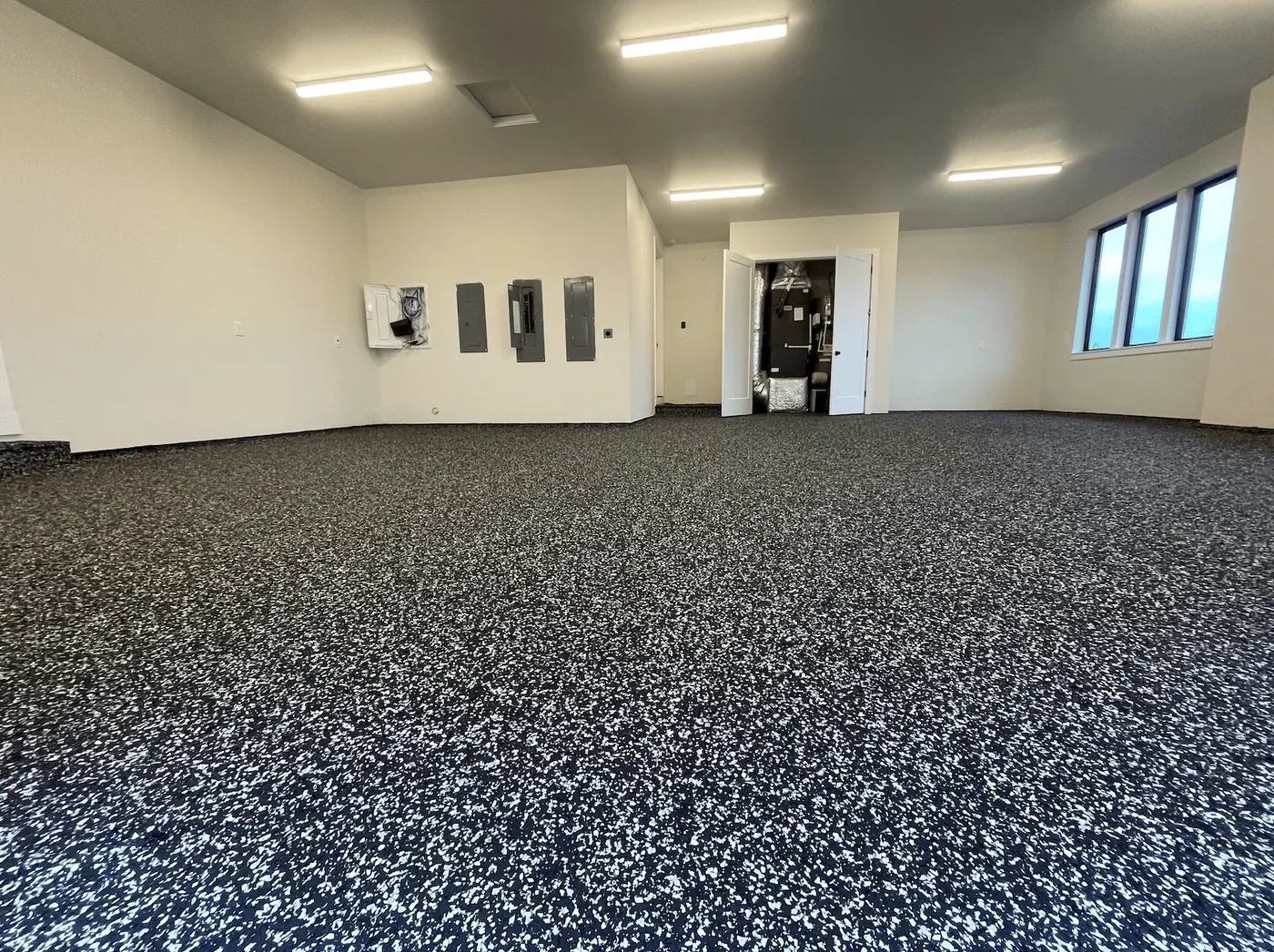
- Mid-tones hide the most. Very light floors show red clay and leaf stains; very dark ones show pollen and dust. A mixed, mid-tone blend hides both.
- Match the house, not the garage. A patio reads as part of the home, so pick a blend that works with the siding, trim and pool tile.
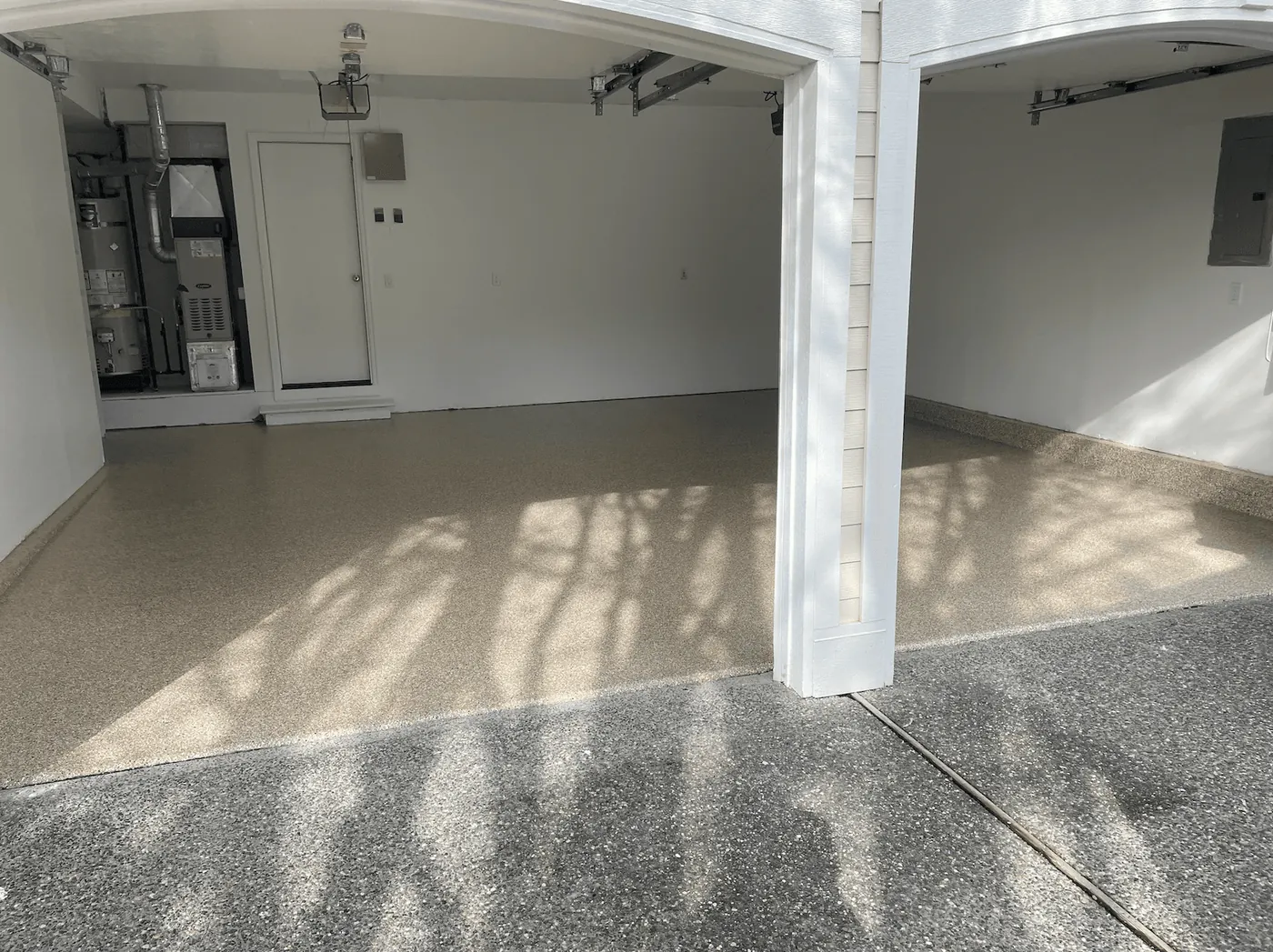
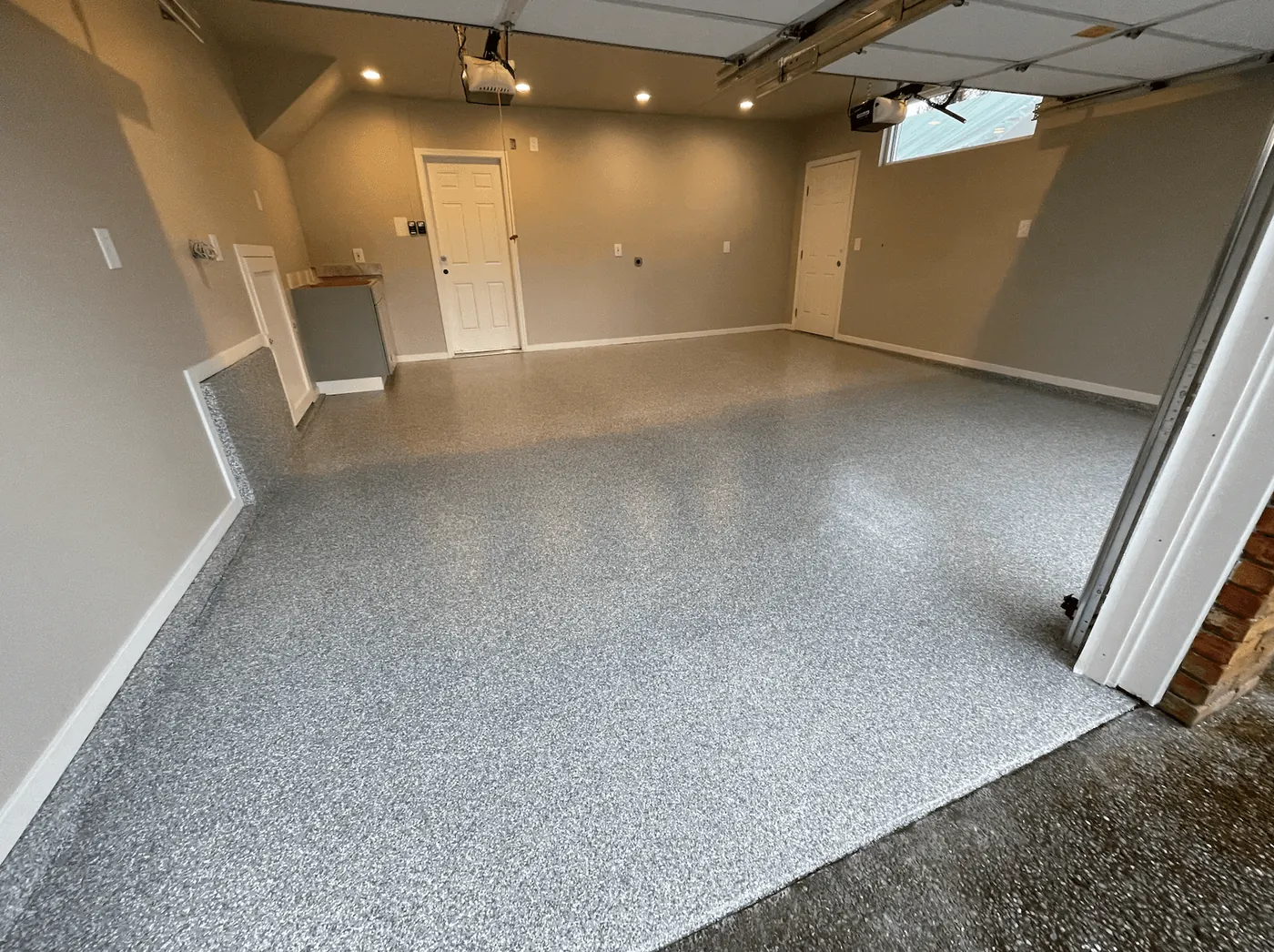
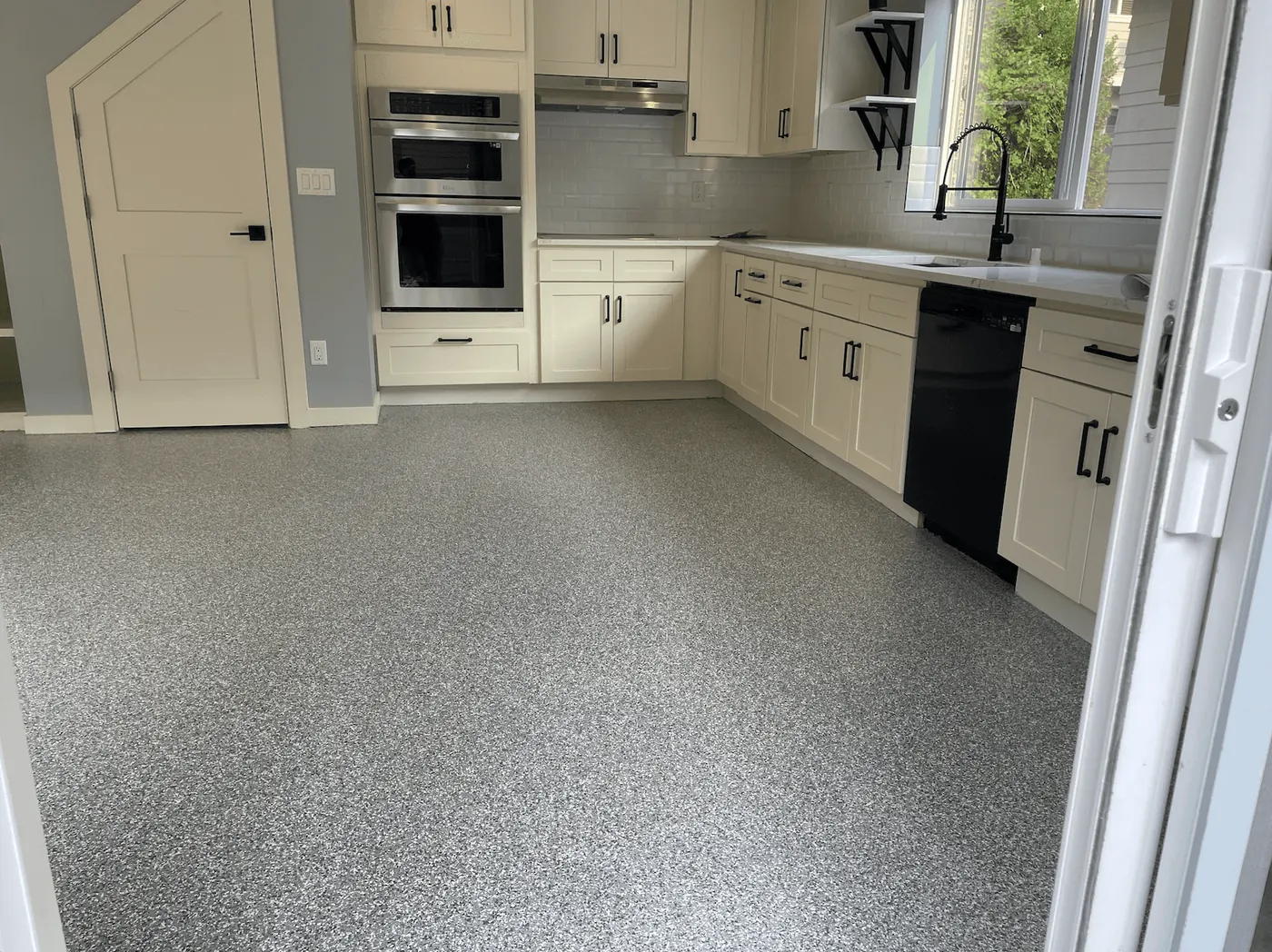
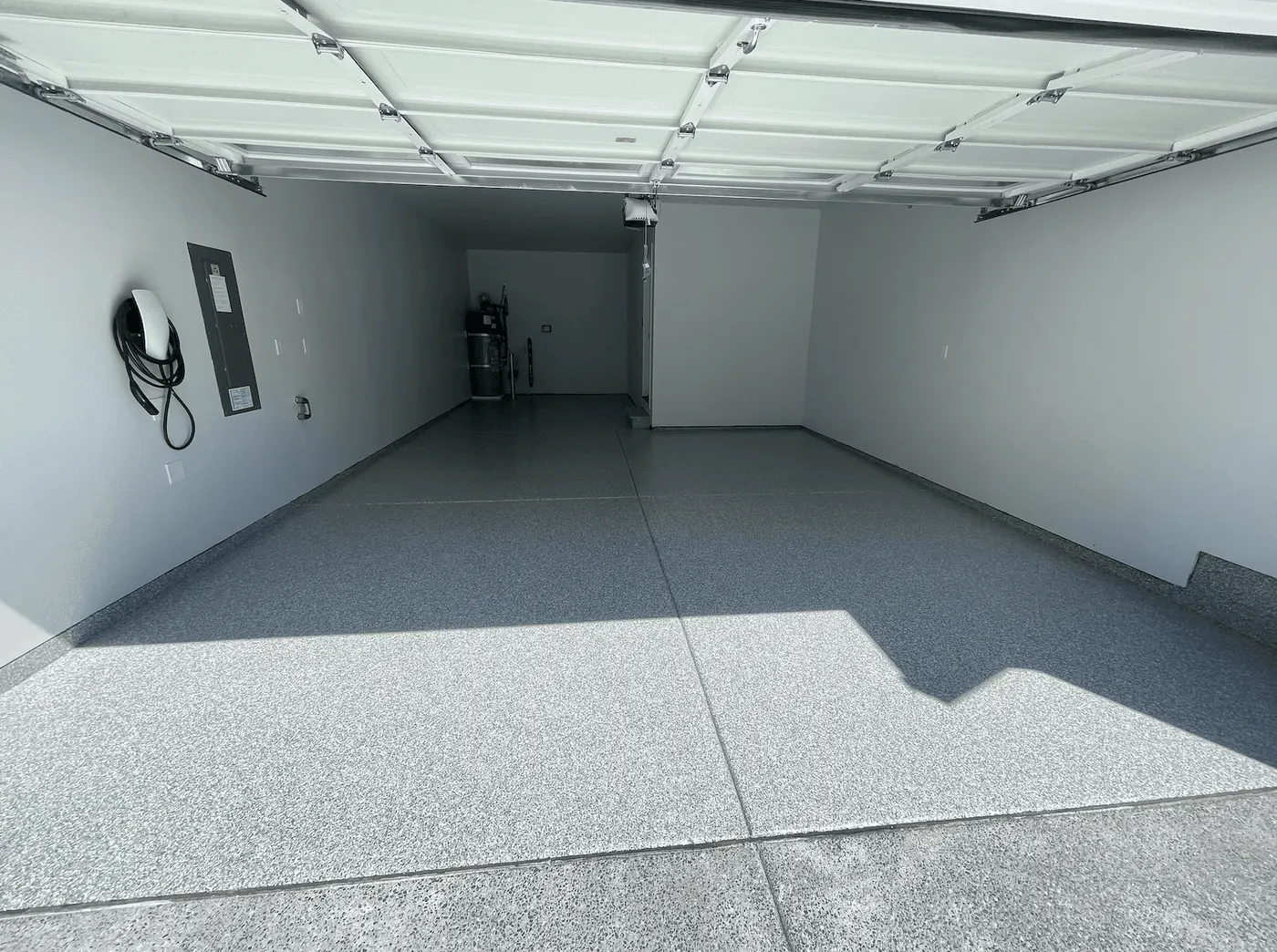
The photos here show a light and a dark blend indoors so you can compare them. Browse more finished floors in the gallery.
Patio and pool deck coating questions
Do you coat patios, pool decks and porches in Tallahassee?
Yes. Alongside garages and interior floors, we coat patios, porches and pool decks on concrete slabs. Every system is finished with a UV-stable poly top coat, and we moisture-test every slab with a Wagner C555 meter first.
Is a coated pool deck slippery?
Any glossy surface is slick when it's wet, and a pool deck is wet a lot. A full flake broadcast gives the surface texture, and we talk through how much grip you want around the pool and on steps before anything goes down.
Will a patio coating yellow in the sun?
The top coat won't. Every system we install is finished with a UV-stable poly top coat. Standard epoxy is the coating that yellows in sunlight, which is why it shouldn't be the top layer on a surface that sits in the sun.
Does a coated pool deck get hot?
Any surface in full sun gets hot underfoot. Lighter blends absorb less heat than dark ones, so on a pool deck in full sun, the colour you pick matters for comfort as well as looks.
Can you coat over an old patio sealer or paint?
Usually. Diamond grinding removes paint, sealer and old coatings down to clean concrete, and that's part of the prep. Thick or textured surfaces take more work to remove, and we'll tell you what's involved at the free visit.
What's the best time of year to coat outdoor concrete here?
Whenever the slab is dry and the forecast is too. Summer afternoon storms make outdoor scheduling trickier, so drier stretches in spring and fall are easier to plan around. We set the date with the weather in mind.
How soon can we use the patio after it's coated?
It depends on the system and the weather that day. Before we leave, we'll tell you when you can walk on it and when the furniture and the grill can go back.
Does your warranty cover outdoor coatings?
Every installation comes with a written 10-year warranty against delamination, meaning the coating letting go of the concrete. It doesn't cover concrete failure or surface scratches, and the full terms are set out in your written quote.
Can you put epoxy on outdoor concrete?
Plain epoxy isn't UV-stable, so it yellows and chalks in direct sun. Outdoors, the top coat has to be UV-stable, which is why every system we install finishes with a UV-stable poly top coat, whatever goes underneath.
More floors we coat
We serve homes within about 40 miles of Tallahassee. Check the service area, or see every system on the services page.
Get a free patio or pool deck quote
We'll look at the concrete, check it for moisture and damage, help you pick a blend and give you one clear price in writing.