
Diamond Grinding vs. Acid Etching a Garage Floor
Ask what kills a garage floor coating and you'll hear "prep" before you hear "product." Here's what grinding does that acid etching can't, why we never acid-etch, how moisture testing fits in, and how to prep a floor yourself if you're going the kit route.
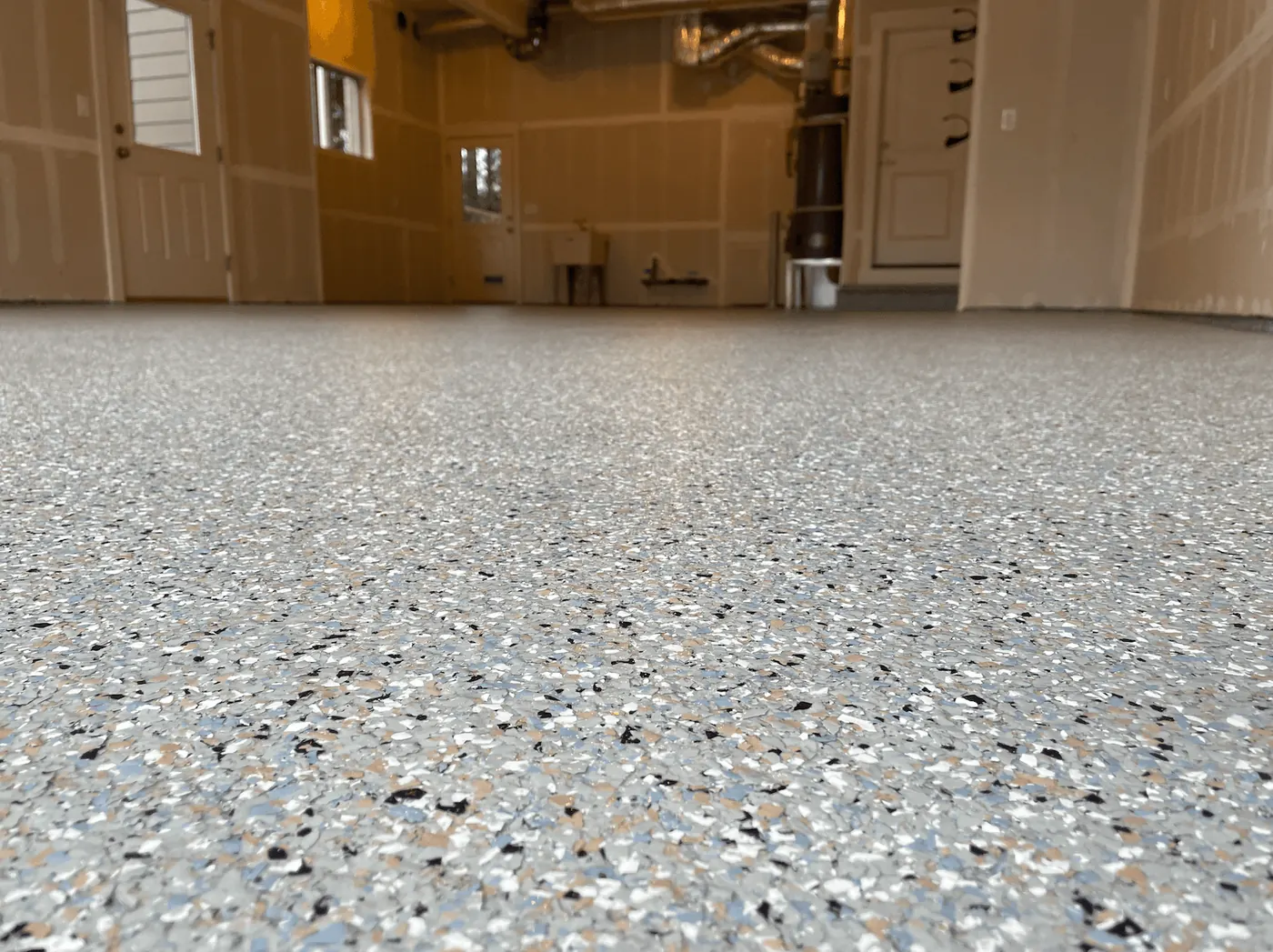
- Diamond grinding on every floor
- Never acid-etched
- Every slab moisture-tested
- Cracks filled and ground flush
Do you have to grind a garage floor before coating it?
For anything more than paint, yes. A coating doesn't glue itself to concrete. It bonds into it, the way a tire grips a rough road and slides on a polished one.
That grip needs a measurable roughness. The industry describes it with the concrete surface profile (CSP) scale published by the International Concrete Repair Institute, from nearly smooth to very rough. Acid etching leaves a very light profile at the bottom of that scale. Our flake floors are ground to a CSP 2–3 profile, and a diamond grinder is the reliable way to get there.
Grinding also takes off what stops any coating from bonding: the weak top layer of the slab, old sealers, curing compounds, paint and failed coatings. Etching dissolves a little of the top layer and leaves the rest. That's why, when a floor coating peels, the answer is so often one word: prep.
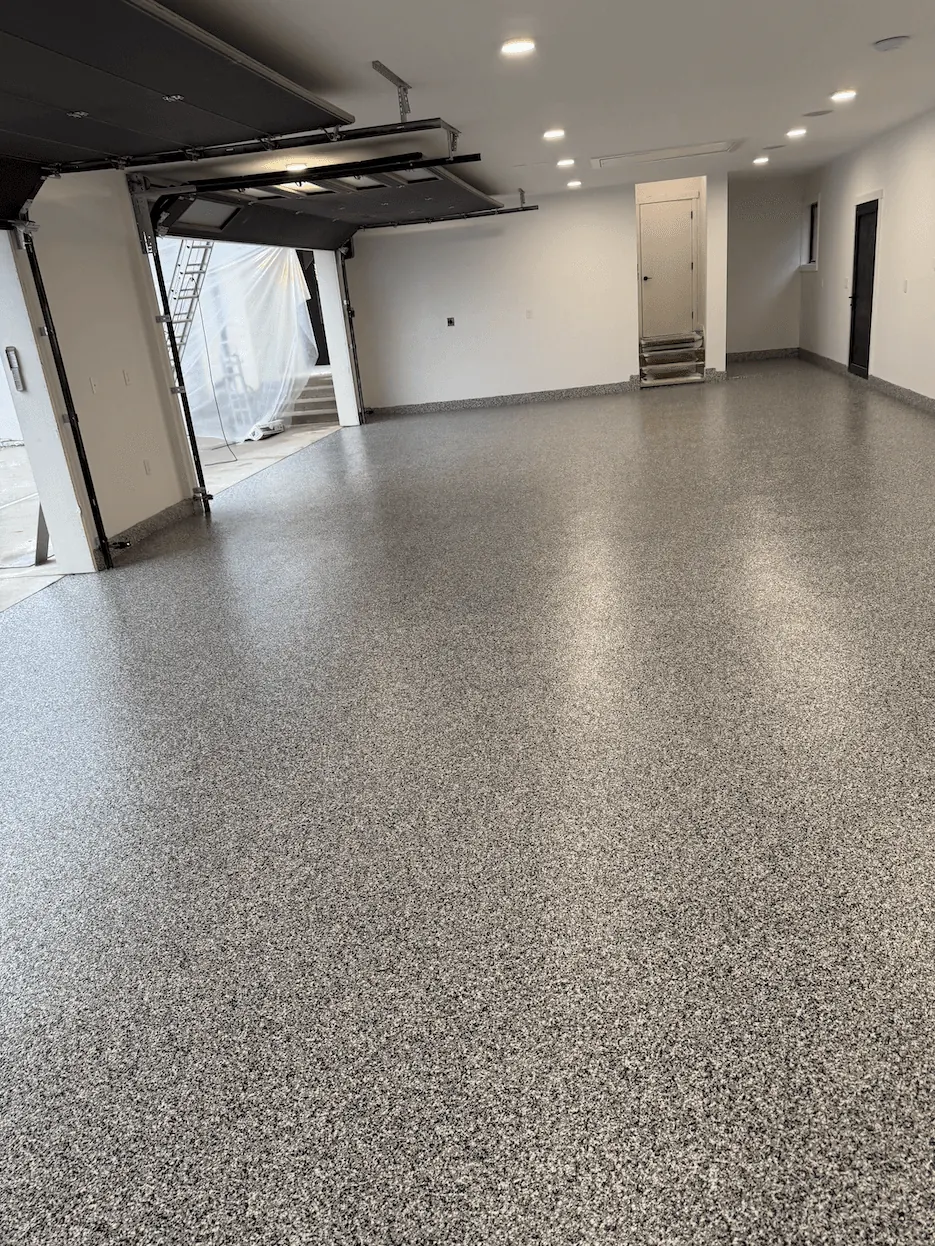
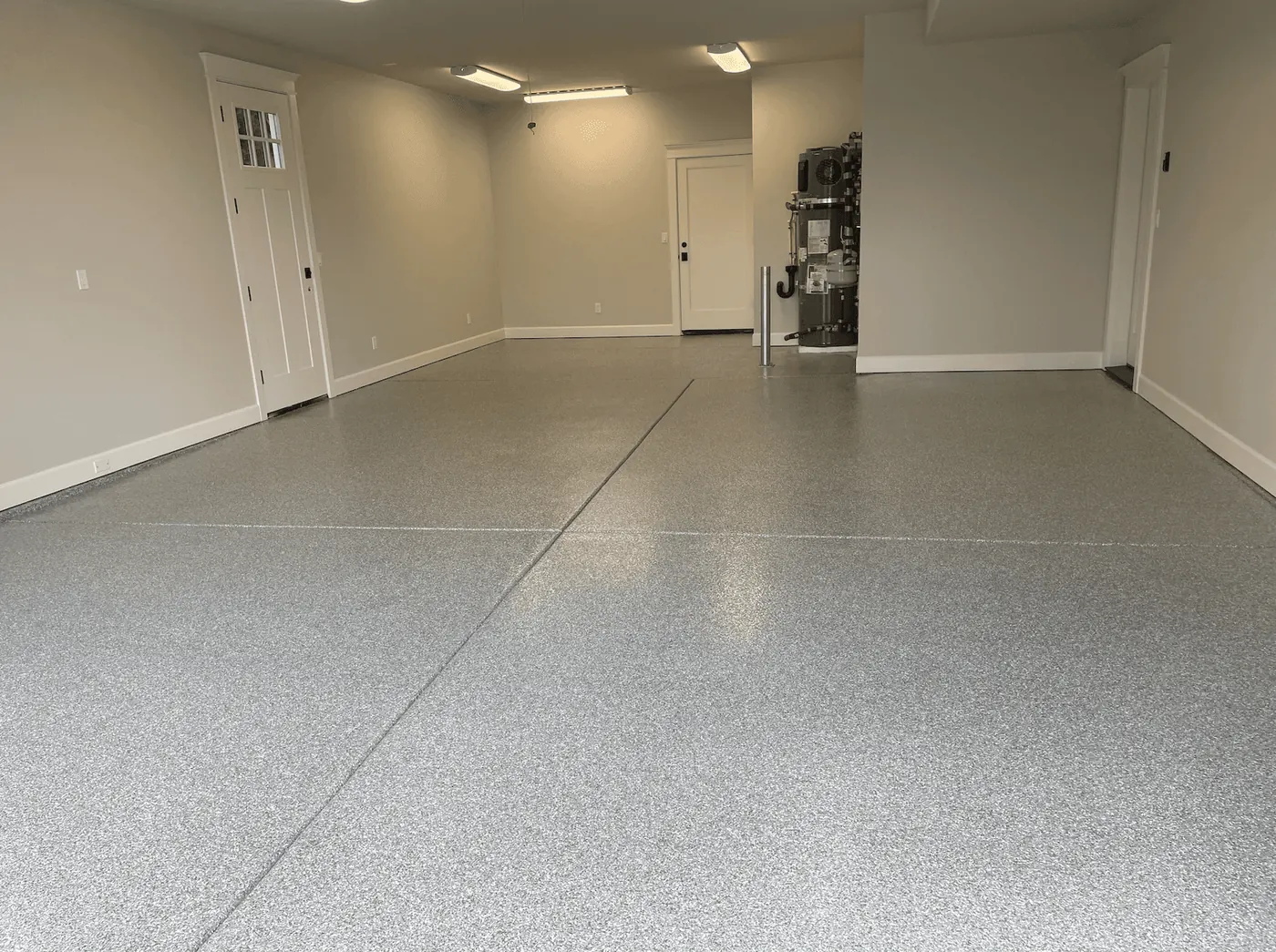
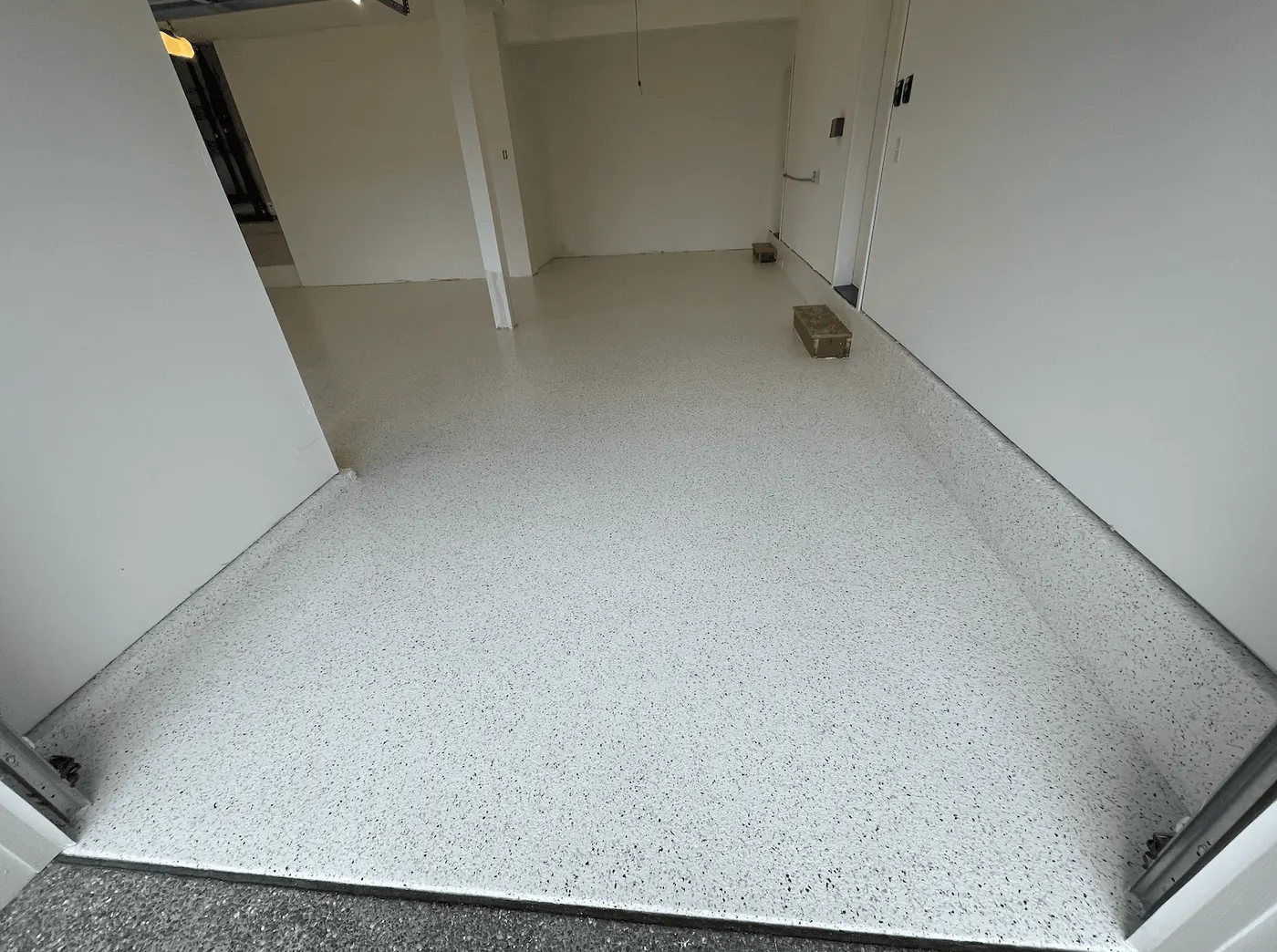
What acid etching does, and what it doesn't
Etching is what most hardware-store kits tell you to do, because it's what a homeowner can do on a Saturday. It isn't useless. It's just a lot less than it sounds.
Roughen the surface a little
Muriatic acid, or a gentler citric etch, reacts with the top of the slab and roughens it slightly. On a soft, raw, never-sealed slab, that can be enough texture for a thin water-based kit.
Remove anything
Acid can't take off a sealer, curing compound, old paint, a failed coating or soaked-in oil. Those areas just don't react. Many garage slabs are troweled hard when they're poured, so acid barely bites at all.
Residue and water
Etching is uneven, strong in spots and weak in others. Rinse badly and residue clogs the pores. Rinse well and you've soaked the slab right before sealing it, and in Florida humidity a wet slab dries slowly.
Fumes and burns
Muriatic acid gives off fumes that sting eyes and lungs, and it burns skin. Gloves, goggles, a respirator and an open door are the minimum. Citric etches are safer and weaker.
What diamond grinding does
A planetary grinder with diamond tooling, run over the whole slab. It's most of the labor on a coating job, and the step a cheap bid is most tempted to shortcut.
-
It takes the top layer off
Diamonds cut away the weak surface paste, sealers, curing compound, paint and old coatings, down to clean, sound concrete, not just where something was loose.
-
It leaves an even profile
Grinding is a mechanical, dry process, so the roughness is consistent from the door to the back wall. The goal is open and even, not polished; a polished slab is too smooth to bond to.
-
It reaches the edges
The last few inches at the walls, the step into the house and the door track need attention too. Edges are where a poorly prepped floor lifts first.
-
It shows you the slab
With the top layer off, the slab tells the truth: cracks hidden under stains, soft spots, old filler. That's when crack repair happens, before anything is coated.
-
Then it all gets vacuumed
Dust left on the slab is a bond breaker, just like acid residue. The floor is vacuumed clean before the first coat goes on.
Grinding concrete makes fine silica dust, which shouldn't be breathed. Whoever grinds your floor, pro or DIY, should run the grinder with dust collection and wear a respirator.
Grinding vs. etching, compared
What each method does to a typical garage slab.
| What matters | Acid etching | Diamond grinding |
|---|---|---|
| Surface profile | Very light | Even, and set to what the coating needs |
| Removes sealers and curing compound | No | Yes |
| Removes old paint or coatings | No | Yes |
| Works on a hard-troweled slab | Poorly | Yes |
| Even result across the floor | Uneven | Consistent |
| Adds water to the slab | Yes, from the rinse | No; it's a dry process |
| Enough for | Thin water-based kits on a raw slab | Professional coating systems |
Other things people call prep
Four more you'll see on quotes and in forums, and where each one actually fits.
-
Shot blasting
Steel shot fired at the slab. It cuts a rougher profile than most garage coatings need and suits big commercial floors and thick overlays.
-
Sanding
Dulls a sound, cured coating so a new top coat can grip it. It does nothing for bare concrete.
-
Pressure washing
Cleans, but doesn't profile. A washed slab is a clean, smooth slab, and smooth is the problem. It also adds water to the concrete.
-
Degreasing
A real step. Soaked-in oil is a bond breaker, so oil-saturated spots get a concrete degreaser along with the diamond grinding.
The moisture test is part of prep, too
A perfect profile on a wet slab still fails. Moisture rising through the concrete can push a coating off from underneath, however well it bonded.
What we do
- Test every slab with a Wagner C555 moisture meter, with readings across the floor.
- Weigh the signs: white powdery deposits, dark patches, a coating that peeled before.
- Build on a moisture vapor barrier (MVB) base where the reading or the room calls for it, most often in kitchens, bathrooms and outdoor areas.
What you can do yourself
- Tape a square of clear plastic tightly to the bare concrete and leave it overnight.
- Fog on the plastic or a dark patch under it in the morning means the slab is moving moisture.
- If it is, a kit floor without a barrier is a short-term floor.
How to prep a garage floor yourself
If you've decided on a hardware-store kit, the best thing you can do for it is skip the kit's etch and rent a grinder. If you etch anyway, do it properly.
-
Rent a grinder if you can
Rental yards rent walk-behind concrete grinders with diamond tooling by the day. Hook it to a vacuum made for concrete dust, wear a respirator, take slow, overlapping passes, and hand-grind the edges.
-
Degrease first, either way
Scrub oil spots with a concrete degreaser and rinse. Acid won't touch oil, and grinding alone can smear it around.
-
Check for sealer
Sprinkle water on the slab. If it beads instead of darkening the concrete, there's a sealer or coating on it, and an etch will fail there. That area needs grinding.
-
If you etch, rinse and dry thoroughly
Follow the kit's directions with full protection, then neutralize, rinse until the water runs clear, and give the slab several dry days. In a humid Tallahassee summer, that can take longer than you'd think.
-
Test, fill, vacuum
Run the plastic-sheet test before you open the kit. Fill cracks with a concrete crack filler and sand or grind it flush. Vacuum everything.
Know the ceiling: a well-etched slab under a thin kit is still a thin floor with plain epoxy on top. Our guide to paint, kits and professional coatings runs the whole decision.
What we do before every floor
The same prep on a single-car garage as on a whole-house floor, because the coating doesn't know the difference.
-
Test and look
A Wagner C555 reading, a look at the cracks and the floor's history, and one clear price in writing that covers the prep we can see.
-
Diamond grind
The whole slab, never acid-etched, so the base coat bonds into open, clean concrete.
-
Repair and vacuum
Cracks chased out, filled and ground flush; chips and spalls patched; the whole floor vacuumed clean.
-
Barrier where needed, then the floor
An MVB base where the slab calls for it, then the base and colour coats, a full flake broadcast and a UV-stable top coat. See our installation process.
Garage floor prep questions
Is acid etching enough to prep a garage floor for epoxy?
For a thin, water-based kit on a raw, never-sealed slab, it can be. For anything more, no. Etching leaves a very light profile, can't remove sealers, paint, old coatings or oil, and etches unevenly. Diamond grinding does all of that and leaves a consistent profile.
Do you acid-etch floors?
No. Every floor we coat is diamond-ground. It's the step that decides whether a coating holds, and grinding does it without putting acid or rinse water into the slab.
Can you use muriatic acid to prep a garage floor?
You can, with gloves, goggles, a respirator and the door open. It roughens the top of the slab but removes nothing underneath it, and it has to be neutralized and rinsed thoroughly, which puts water into the concrete right before you coat it.
What is a concrete surface profile?
A standard way to describe how rough prepared concrete is, using the CSP scale published by the International Concrete Repair Institute, from nearly smooth to very rough. Coating makers specify the profile their products need; our flake floors are ground to a CSP 2–3 profile.
Do you need to grind a new concrete garage floor?
Yes. New slabs are usually troweled smooth and often carry a curing compound that coatings can't bond through. New concrete also needs a proper cure, typically at least 28 days, before any coating goes on.
Can you coat over an oil-stained garage floor?
Yes, once the oil is dealt with. Soaked-in oil is a bond breaker, so oil-saturated spots get a concrete degreaser along with the diamond grinding before anything is coated.
Does grinding make a lot of dust?
Grinding concrete makes fine silica dust, which is why it should always be done with dust collection and a respirator, and why the floor is vacuumed clean before the first coat goes on.
Is grinding included in the price?
Yes. Diamond grinding is part of every floor we coat. A slab that needs extra work, like removing an old coating or heavy repairs, takes more prep, and that's reflected in the one clear price we put in writing after a free visit.
More on getting a floor ready
Every step after the grind is on our installation process page.
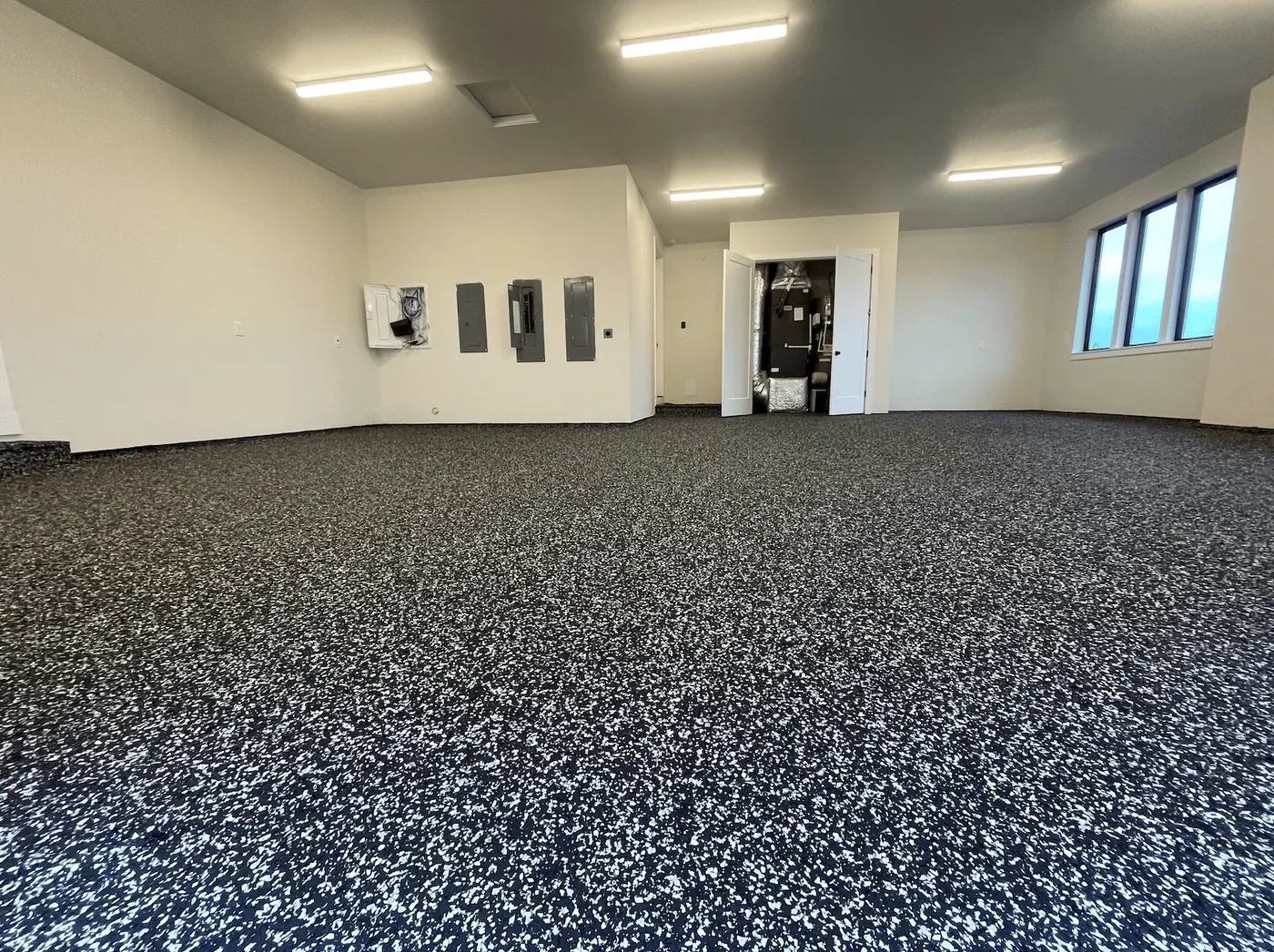
Want the prep done right the first time?
We'll test the slab, show you what the grinder has to take off and give you one clear price in writing that includes all of it.