
Cracked Garage Floor? Crack Repair Before Coating
Almost every cracked garage floor can be coated, but never by rolling a coating over the cracks. We fill and grind cracks before the base coat goes down. Here's how to read the cracks in your slab, what the repair involves, and when a crack needs a concrete contractor first.
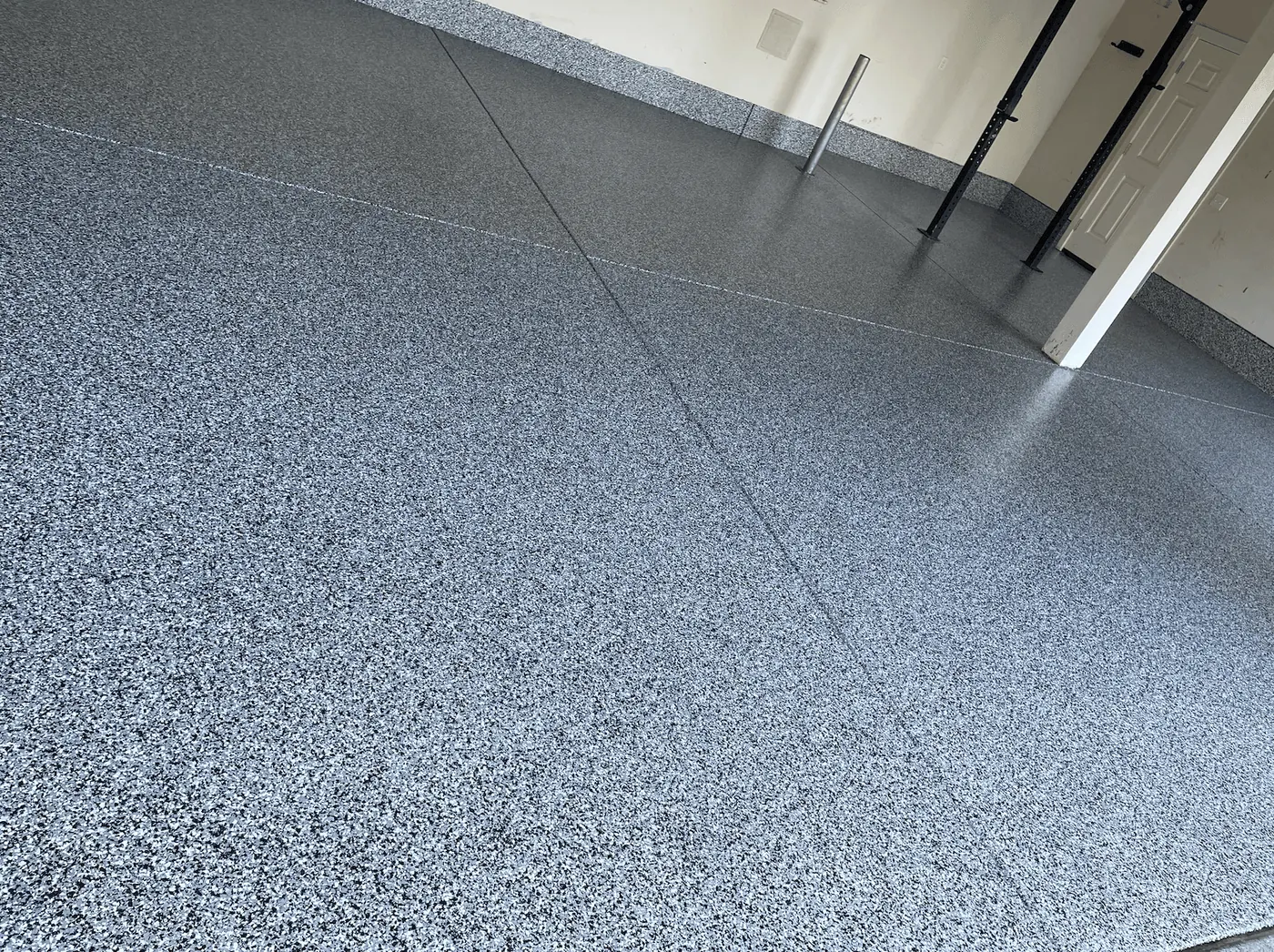
- Cracks filled and ground flush first
- Diamond grinding on every floor
- Every slab moisture-tested
- Moving cracks fixed before coating
Can you coat a cracked garage floor?
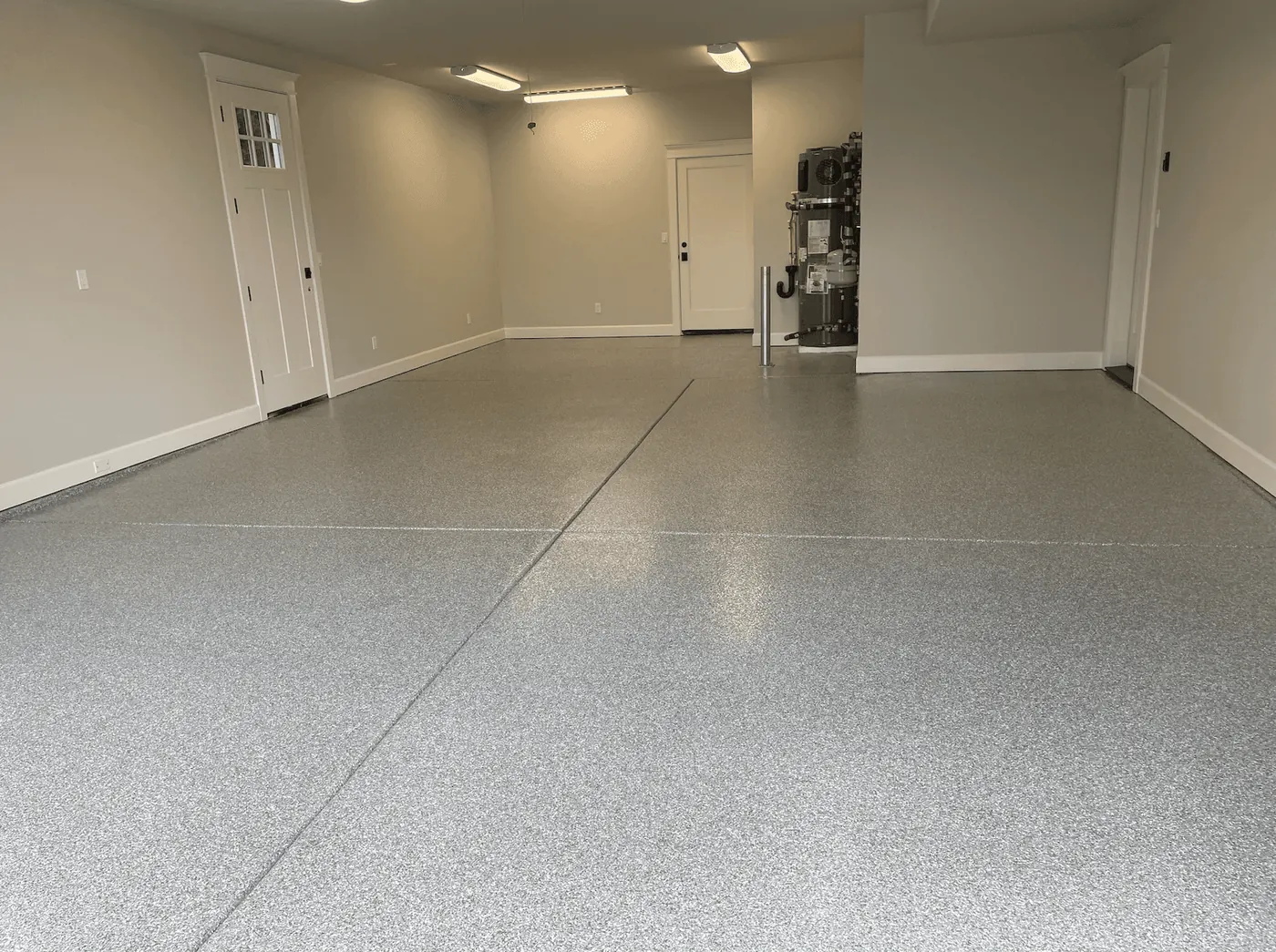
Yes, once the cracks are repaired. On every floor we coat, cracks are chased out, filled and ground flush during prep, and chips and spalls are patched, before the base coat goes down.
That order matters because a coating is a film, not a filler. Roll it over an open crack and the crack shows through as a line, often within a day. The coating follows the shape of the slab, so anything that isn't fixed first will show later.
The one exception is a crack that's still moving: one side higher than the other, or a gap that keeps getting wider. No coating bridges a moving crack. That's a slab problem for a concrete contractor, and if we see one at your free visit, we'll tell you so instead of coating over it.
Which cracks are routine, and which aren't
Most garage slabs crack somewhere. Concrete shrinks as it cures, and the ground under a slab, from red clay to sandy soil, wets and dries with the seasons. What matters is the kind of crack.
- Hairline and shrinkage cracks. Thin, random, both sides level. They usually form in the first months after the pour, often from an inside corner like the step into the house, and then stop. Routine: filled and ground flush during prep.
- Wider cracks with both sides level. Still routine. The crack is opened up to clean concrete, filled and ground flat with the rest of the slab.
- Control joints. The straight lines cut or tooled into the slab on purpose, so it cracks there instead of at random. They aren't damage. We'll talk through how your joints are handled under the coating at the free visit.
- Cracks with a step, or that keep growing. One side higher than the other means the slab has settled or been pushed up, often by tree roots or by fill soil along a wall that's still settling. It's still moving, so it needs concrete repair before any coating.
- Chips, pitting and spalls. Surface concrete that has flaked or broken away, often near the garage door or where something heavy was dropped. Ground back to sound concrete, patched and ground flush.
How to tell if a crack is still moving
You can check this before anyone quotes you:
- Draw a pencil line across each end of the crack and write the date beside it.
- Measure the widest point with a ruler, or a plastic crack-width card from the hardware store.
- Take a photo with the ruler in the frame.
- Check again a few months later, ideally after a wet spell and a dry one.
Same length, same width and still level means it has stopped. Longer than your marks, wider, or with one side rising means it's still moving. Bring your notes and photos to the free visit.
Why you can't just coat over cracks
A floor coating is a film a fraction of an inch thick. Three things go wrong when it's rolled over an open crack.
The line comes back
The coating sags into the crack and thins at the edges, so the crack shows through the finished floor as a line.
Air and moisture push up
Air and moisture trapped in an open crack push up through the thin spot in the coating and raise blisters along the line.
The bond weakens
An open crack keeps feeding moisture from below into the bond between the coating and the concrete. Filling it first takes that path away.
What crack repair involves when we coat your floor
Crack repair isn't a separate visit. It's part of the prep on install day, between the grind and the base coat.
-
Open it up
The crack is chased out to remove loose, failing concrete and give the filler clean walls to bond to.
-
Fill it
The crack is filled with a repair material suited to it, and chips, pits and spalls are patched at the same time.
-
Grind it flush
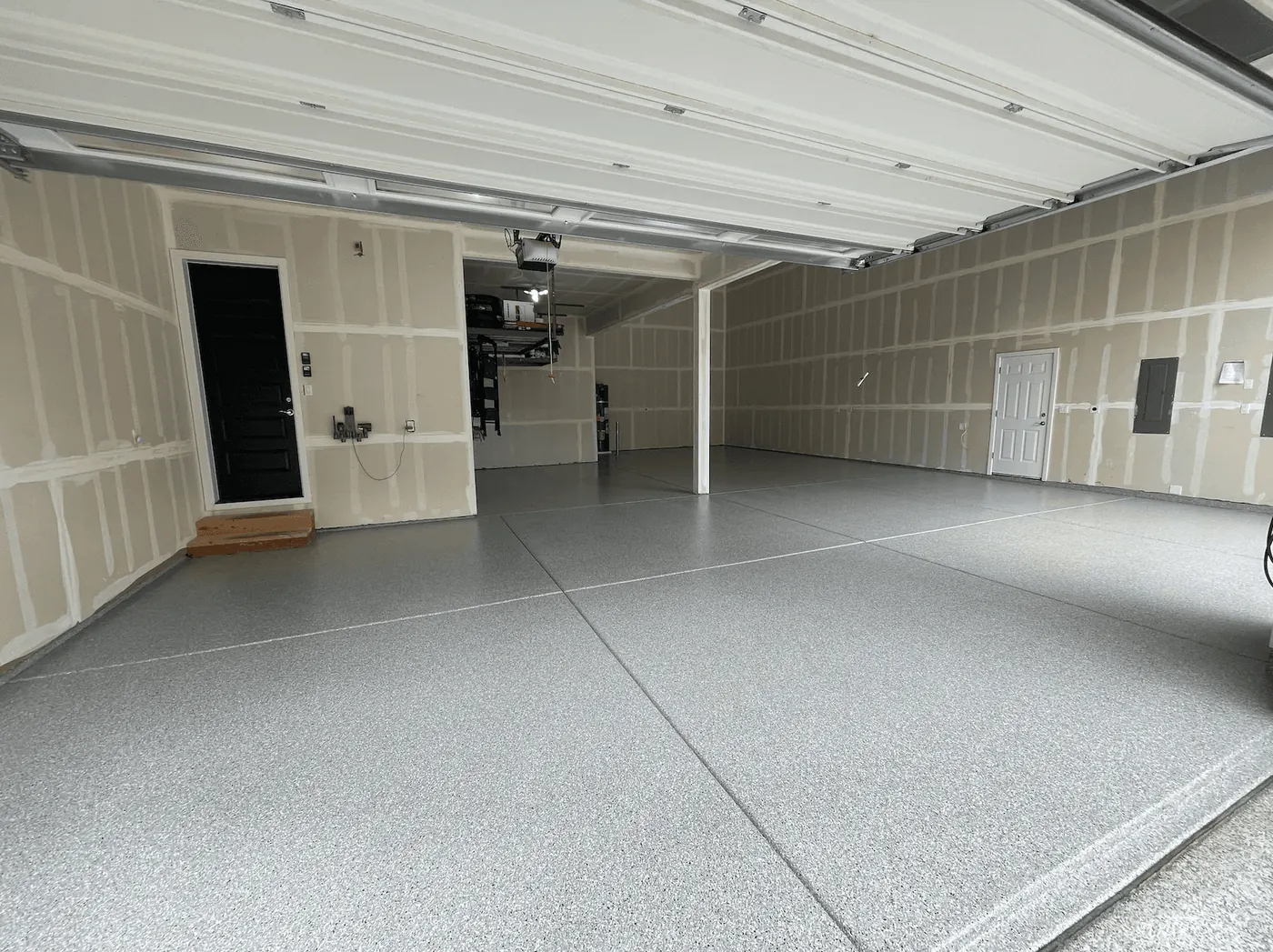
Repairs are ground level with the slab as part of the diamond grind that preps the whole floor, so they disappear under the flake.
-
Test for moisture
Cracks are often where moisture shows first. A Wagner C555 reading decides whether the floor needs a moisture vapor barrier base coat.
-
Build the floor
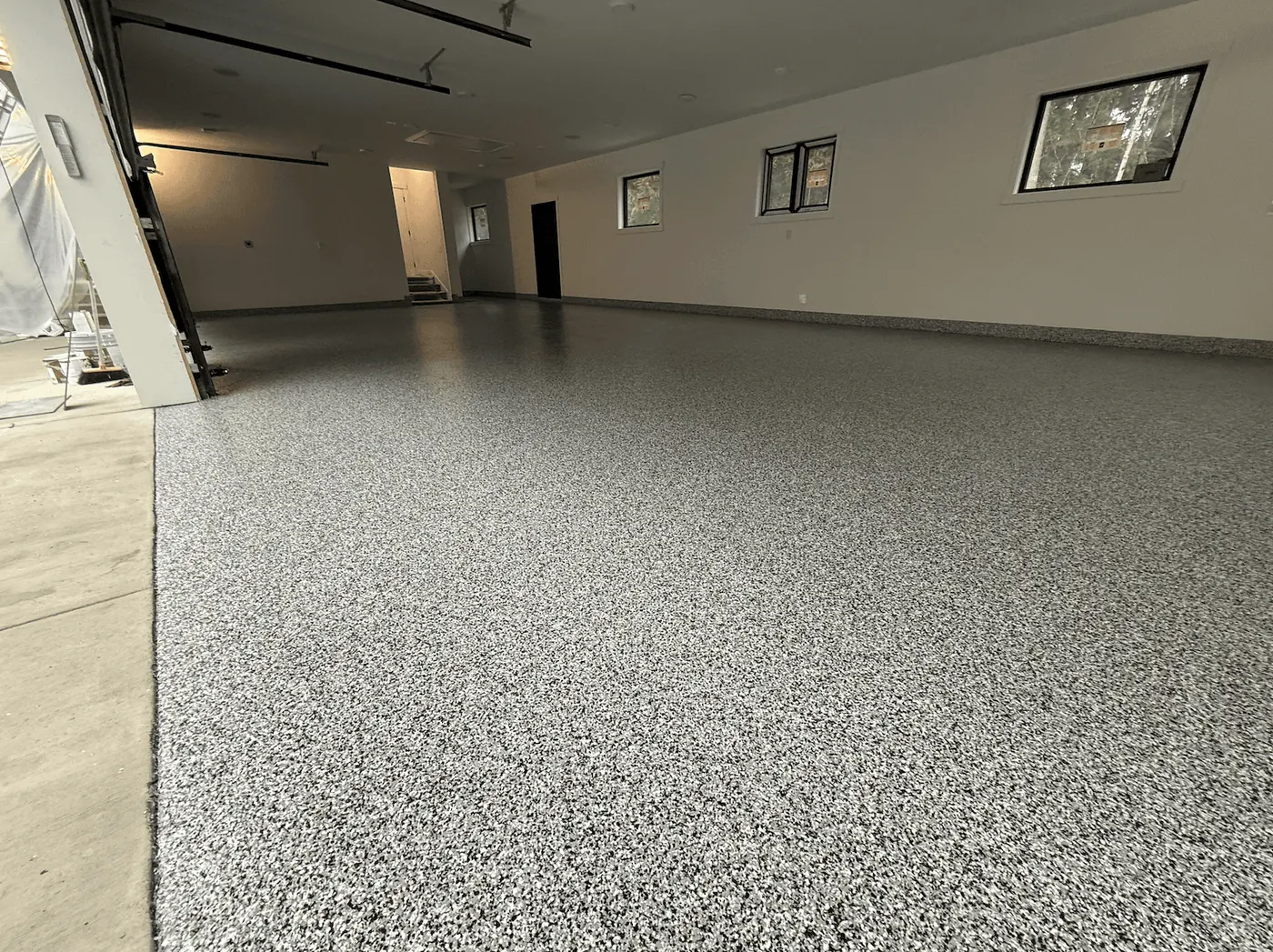
Then the floor goes down as normal: base coat, colour coat, full flake broadcast and a clear UV-stable top coat. Most flake floors, repairs included, are done in a single day.
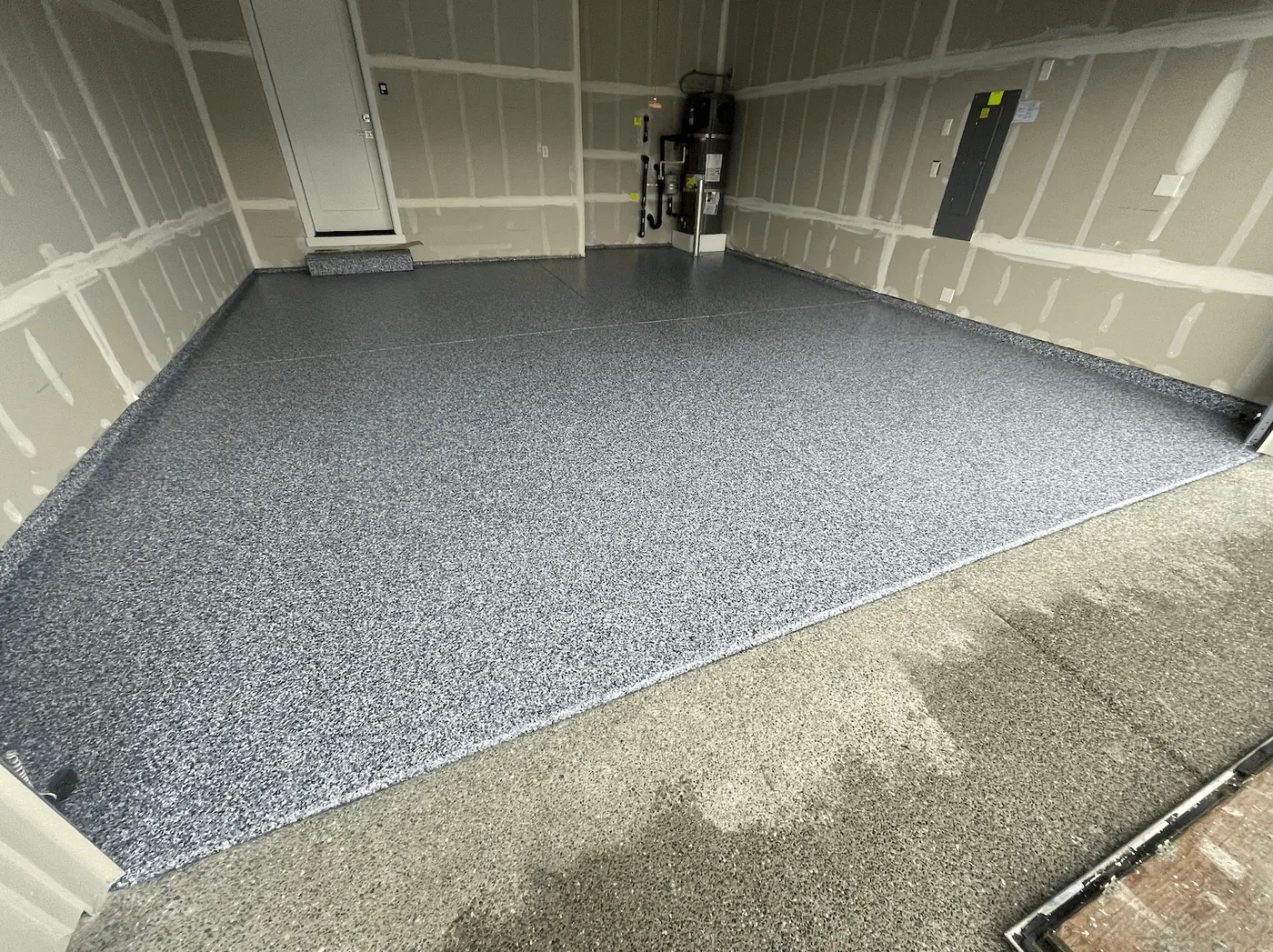
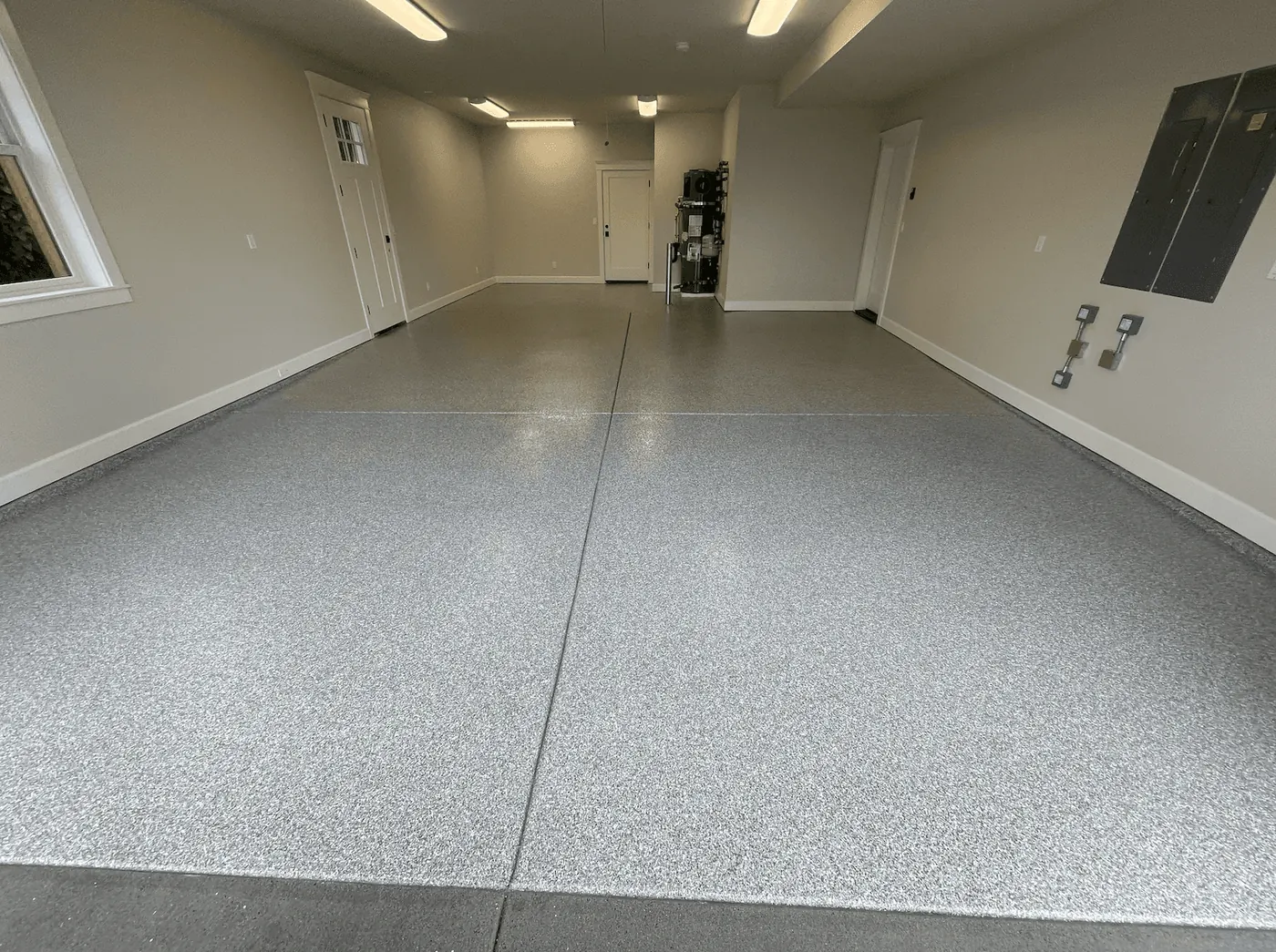
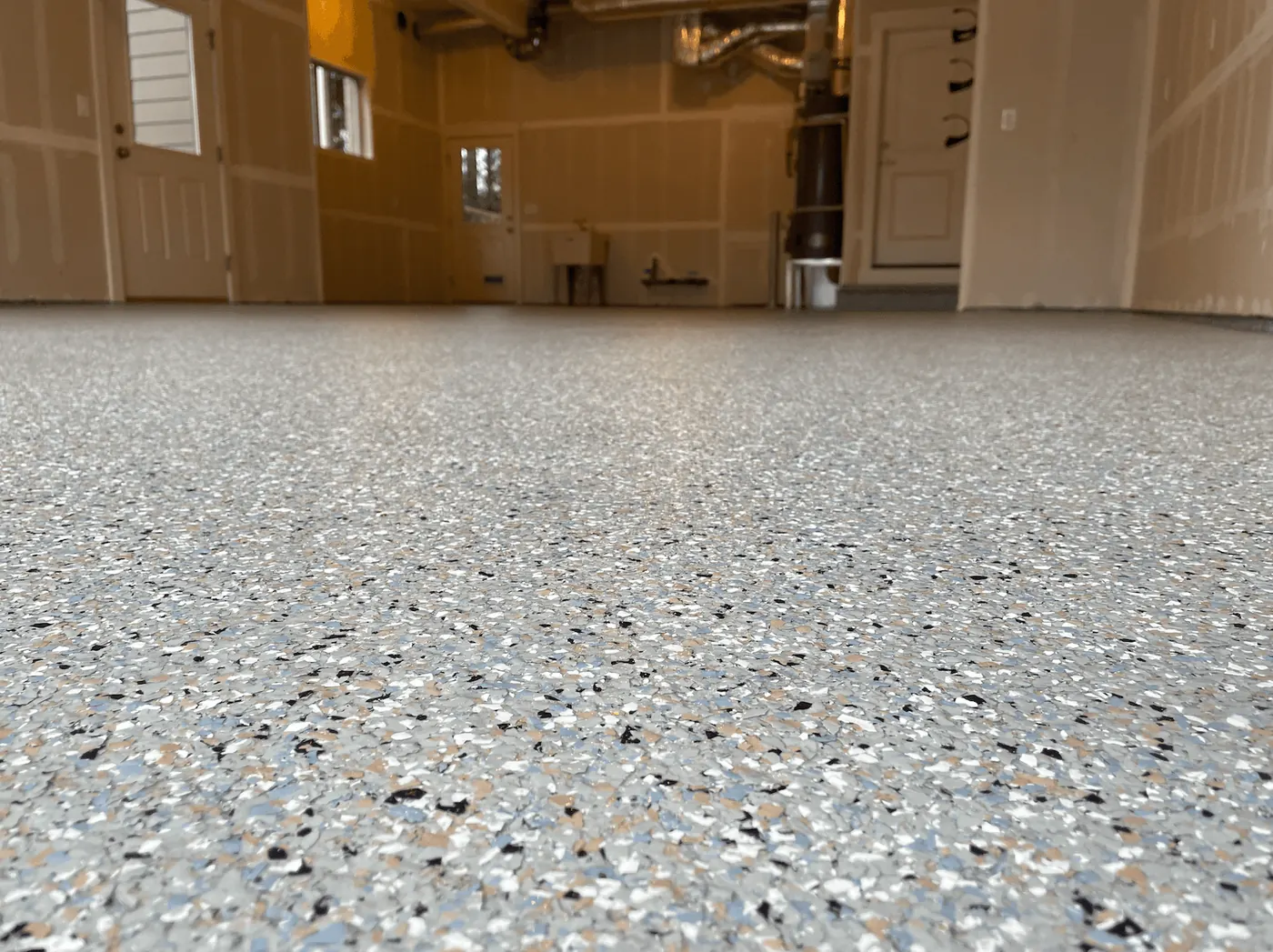
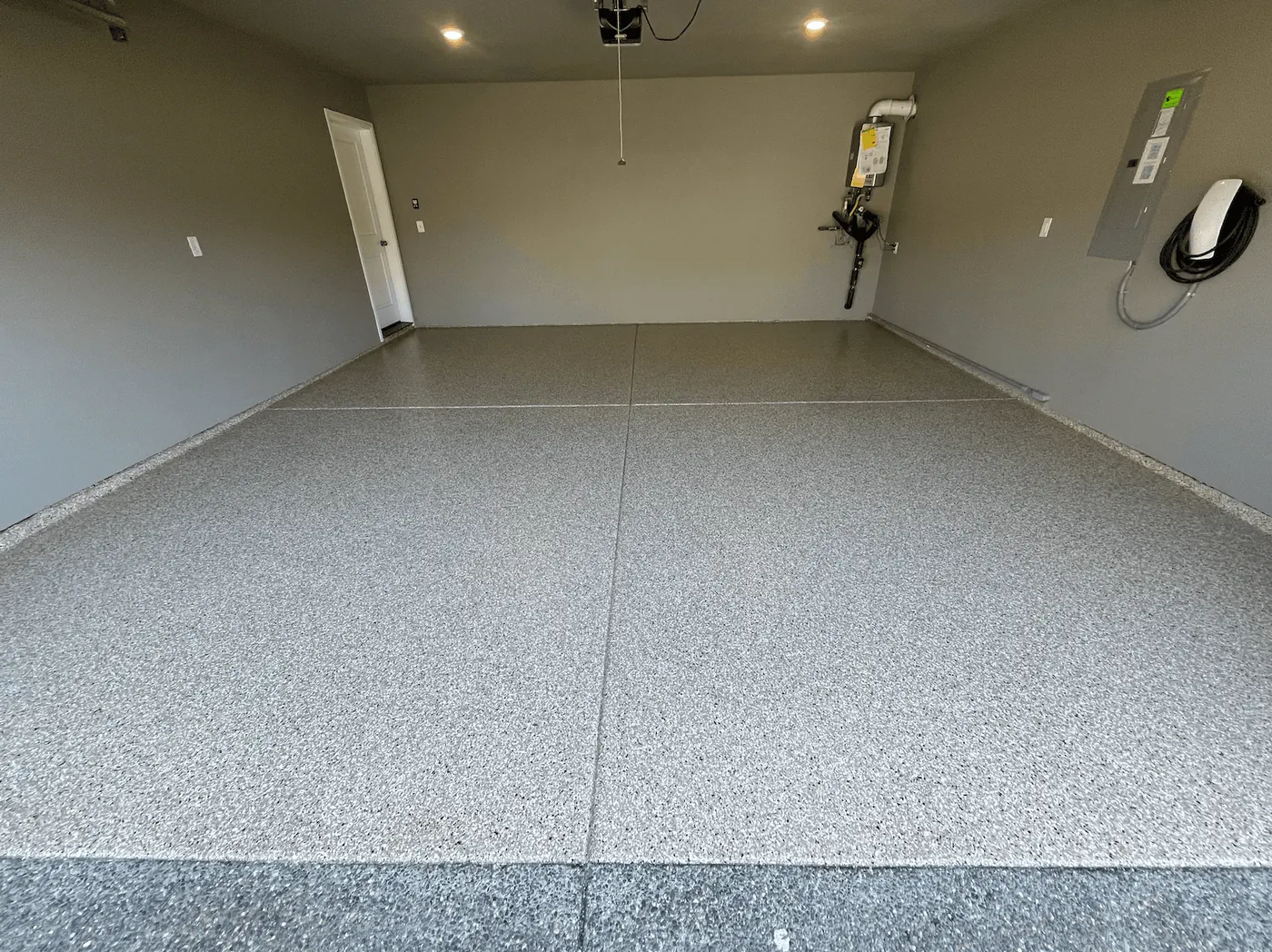
Repaired cracks disappear under a full flake broadcast. Under a smooth solid colour floor, a repaired crack can still show as a faint line in low light, which is worth knowing when you choose a system.
Crack fillers, compared
A quick guide to the materials you'll see on store shelves and in quotes. The right one depends on the crack.
| Filler | Strength | Watch out for |
|---|---|---|
| Epoxy crack filler | Cures hard; a repair a tire won't dent | Needs time to cure before it can be ground flush |
| Polyurea or polyaspartic filler | Sets in minutes, so it suits install day | Short working time; a crew product |
| Cement patch | Matches the concrete | Can shrink as it cures and needs a long cure before coating |
| Flexible caulk | Stretches with a joint that moves | A hard coating over soft caulk cracks |
Cracks and the price
- Routine crack repair is part of the prep on every floor we coat.
- Lots of cracks, wide cracks or heavy spalling mean more prep, and that's reflected in the one clear price we put in writing.
- Structural slab repair is a separate job for a concrete contractor, priced by them.
Cracks and the warranty
- Every installation comes with a written 10-year warranty against delamination: the coating letting go of the concrete.
- It doesn't cover concrete failure or surface scratches. A slab that cracks or moves after it's coated is concrete failure.
- That's why moving cracks get fixed before any coating goes on. The full terms are in your written quote.
When to call a concrete contractor before a coater
These signs point to a slab problem, not a surface problem. A coating goes on after the concrete is fixed and the repair has cured; new concrete typically needs at least 28 days.
-
A crack with a step
One side sits higher than the other, or the crack keeps growing longer or wider.
-
A sunken or rocking section
Part of the slab has dropped, or a panel rocks underfoot.
-
A crack into the wall
A crack runs from the floor up into the foundation or stem wall.
-
Water coming up
Water seeps up through a crack after heavy rain. That's drainage, and a coating won't fix it.
Crack repair questions
Can you coat a cracked garage floor?
Yes, after the cracks are repaired. On every floor we coat, cracks are chased out, filled and ground flush during prep, before the base coat goes down. The exception is a crack that's still moving, which needs a concrete contractor first.
Can you put epoxy over cracks in a garage floor?
Not successfully. A coating is a thin film; rolled over an open crack it shows the line, thins at the edges and can blister from trapped air and moisture. Fill first, then coat.
Will a garage floor coating hide cracks?
Repaired cracks disappear under a full flake broadcast. Unrepaired cracks show through any coating, and under a smooth solid colour floor even a repaired crack can show as a faint line.
Do you repair cracks as a separate service?
Crack repair is part of the prep when we coat a floor, not a standalone job. If a slab needs structural repair, like a sunken section or a crack with a step, that's work for a concrete contractor before we coat.
Does crack repair change the price?
Routine crack repair is part of the prep on every floor we coat. A slab with lots of cracks, wide cracks or heavy spalling takes more prep, and that's reflected in the one clear price we put in writing after a free visit.
What if one side of the crack is higher than the other?
The slab has settled or been pushed up and is likely still moving. No coating bridges that. It's a concrete repair first, and we'll say so at the free visit rather than coat over it.
Does your warranty cover cracks?
Our written 10-year warranty covers delamination, meaning the coating letting go of the concrete. It doesn't cover concrete failure or surface scratches, so a slab that cracks or moves after it's coated isn't covered. The full terms are in your written quote.
How can I tell if a crack is still moving?
Mark both ends with a pencil and the date, measure the widest point and photograph it with a ruler beside it. Check again a few months later. If it's longer, wider or one side has risen, it's still moving.
More on prepping a floor
Our installation process shows where crack repair fits, from the moisture test to the final walkthrough.
Cracked floor? Let's take a look
We'll check the cracks, test the slab for moisture and tell you honestly whether it's routine prep or a concrete repair first. Then you get one clear price in writing.