
How to Clean and Care for a Coated Garage Floor
A coated floor is about the easiest floor in the house to look after. Most of what goes wrong comes from doing too much to it, not too little. Here's the routine, what to clean it with, what never to use, and the North Florida habits worth having.

- Sweep weekly, mop monthly
- pH-neutral cleaner, then rinse
- No wax, sealer or "shine" products
- Wipe up car fluids promptly
The short version
Sweep or dust-mop once a week. Hose it down and squeegee it dry when it's muddy or covered in pollen. Every month or two, mop it with a pH-neutral cleaner and rinse with clean water.
Wipe up car fluids when they happen. Never put wax, sealer or a "shine" product on it, and keep acids, bleach and strong solvents off it.
For the first several days after install, use nothing but a broom and plain water. The coating keeps hardening after it's walkable, and we'll give you the exact cure times before we leave.
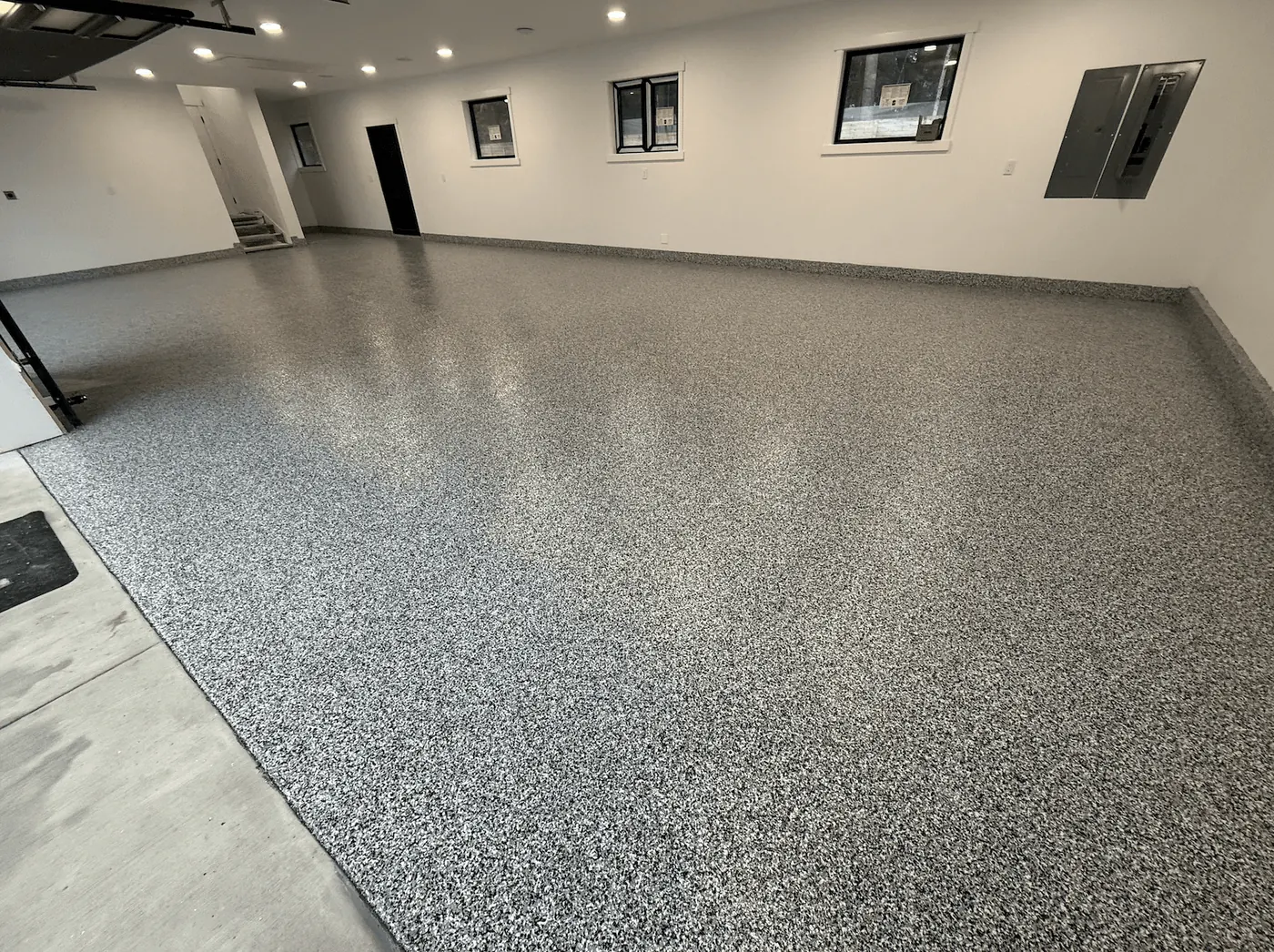
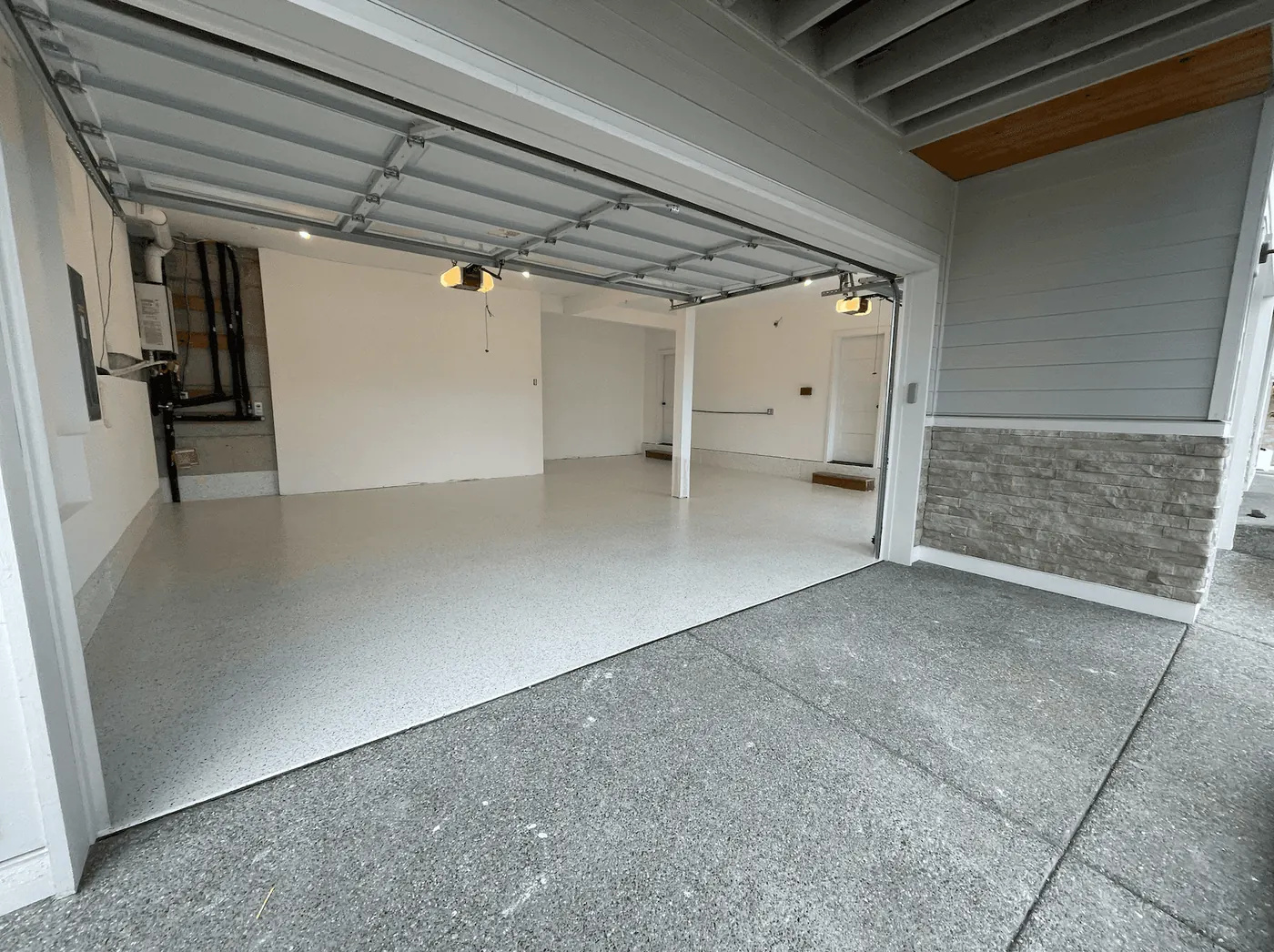
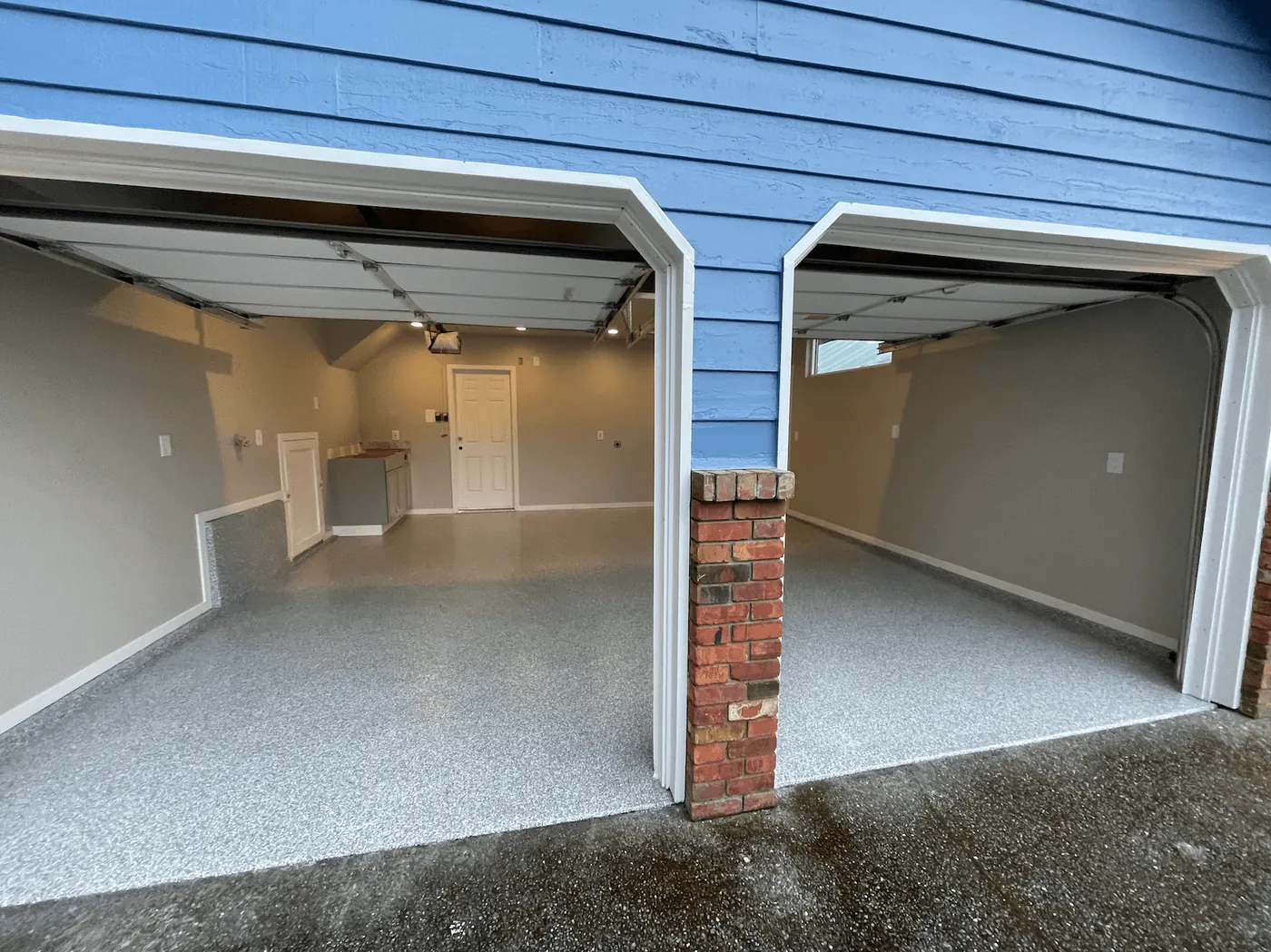
A care routine for a North Florida floor
Grit is what dulls a coated floor. Under shoes and tires it works like fine sandpaper, so most of this routine is about getting it off.
-
Every week: sweep or dust-mop
A soft broom or a microfiber dust mop picks up sand, grit and leaves without scratching the top coat.
-
Muddy or stormy days: hose and squeegee
Red clay, sand and storm runoff ride in on tires and shoes. Rinse the floor and push the water out the door with a rubber squeegee so grit doesn't dry onto it.
-
Pollen season: rinse it off
In spring, pine and oak pollen coats everything in a yellow-green film. A rinse and a squeegee clears it; don't let it build up and get ground in.
-
Every month or two: mop
Damp-mop with a pH-neutral floor cleaner mixed to its label, then go over the floor with clean water so no film is left. On a textured flake finish, a soft deck brush gets into the texture better than a mop.
-
Once a year: look it over
Check the edges, the spots where the tires sit and the strip by the door. If anything looks wrong, call or text us.
What to clean it with
- Plain water does most of the work.
- When it doesn't, a pH-neutral floor cleaner mixed to the label, then rinsed off. "pH-neutral" means neither acidic nor alkaline, so it won't eat at the finish.
- Go easy on soap. It leaves a film that dulls the gloss, holds dirt and makes the floor slick when it's wet.
- Test anything new in a corner first, and never mix cleaners. Ammonia and bleach together give off toxic fumes.
What never goes on the floor
- Wax, polish, sealers or "floor shine" products. The top coat already has its gloss; anything on top clouds it and makes it slippery.
- Acids, including vinegar and acid-based concrete cleaners.
- Strong solvents like paint stripper and brake cleaner.
- Abrasives: scouring powder, scrub pads, wire brushes and metal shovels.
- A pressure washer on a high setting. A hose and a squeegee are all a coated floor needs.
Not sure about a product? Call or text (850) 544-5946 and ask before you use it. It's a two-minute answer.
Tire marks, spills and stains
The top coat resists car fluids and most of what lands on a garage floor, but resisting isn't the same as ignoring.
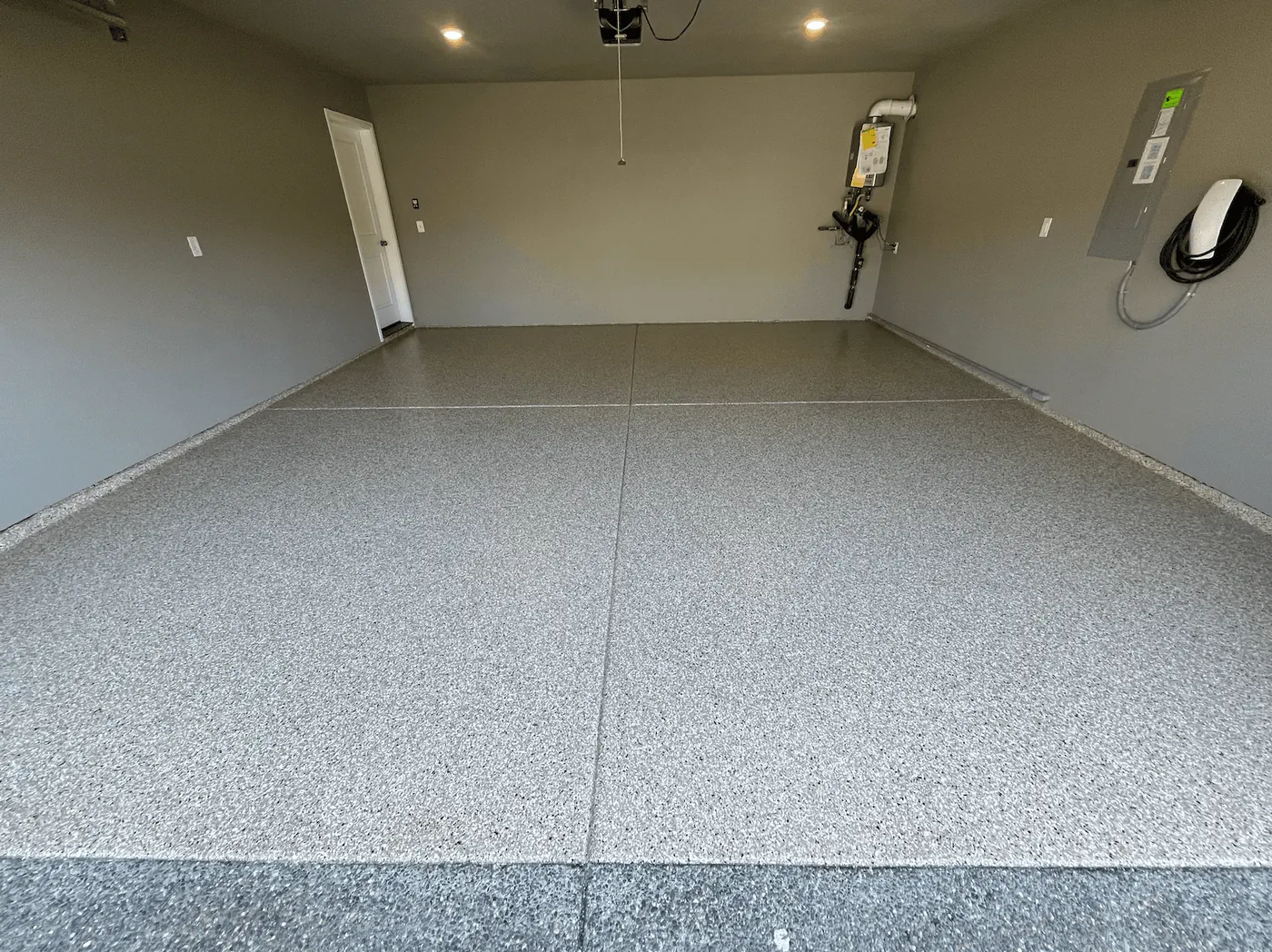 Tire marks
Where the tires sit
Those yellow-brown marks come from chemicals added to tire rubber that slowly migrate into whatever the tire sits on, faster when tires are hot. A damp melamine sponge with a little pH-neutral cleaner usually lifts light marks. Parking pads prevent them.
 Car fluids
Wipe it when you see it
Brake fluid, battery acid, gasoline, antifreeze and washer fluid left to sit can dull or stain the finish. For a big oil spill, soak it up with cat litter or absorbent pads first, sweep that up, then mop.
 Hosing out
Mind where the water goes
Storm drains are meant for rain, not soap and oil. Sweep first, use as little water as the job needs, and let the rinse water run onto the lawn rather than down the driveway to the street.
Protect it from what actually damages it
Most real damage to a coated floor comes from impact and dragging, not everyday wear:
- Put pads under jack stands and floor jacks. A square of plywood works.
- Lift or roll heavy things. Don't drag toolboxes, engine stands, fridges or freezers across the floor; use a dolly or a mat.
- Use furniture pads under workbench legs and storage racks.
- Avoid solid rubber-backed mats left down for months. Softeners in some rubber backings can stain a coating, especially where the mat traps moisture.
Scratches and stains are on the care side of the line: our written 10-year warranty covers delamination, meaning the coating letting go of the concrete. It doesn't cover concrete failure or surface scratches, and the full terms are in your written quote.
North Florida habits worth having
Four things about this climate that change how you look after a coated floor.
-
The floor that looks wet
On a warm, muggy day after a cool spell, humid air condenses on the cooler slab and the whole floor can look damp with nothing spilled. That's surface condensation, and it clears when you open the door or run a fan. Any smooth floor is slicker when it's wet, so walk carefully until it does.
-
Mildew on shaded patios
Shaded outdoor floors can grow mildew. A soft brush and a cleaner labeled safe for coated surfaces, tested in a corner first and rinsed well, takes care of it.
-
Salt air near the coast
If you live toward the coast, rinse salt spray and blown-in sand off porches and patios now and then, so grit and salt don't sit on the surface.
-
After a storm
If a storm pushes water and silt into the garage, hose the silt out, rinse, squeegee and let the floor dry with the door open. A coated floor is far easier to clean up than bare concrete.
Garage floor care questions
How do you clean an epoxy or polyaspartic garage floor?
Sweep or dust-mop it weekly, hose it down and squeegee the water out when it's muddy, and every month or two damp-mop it with a pH-neutral floor cleaner, then rinse with clean water. Wipe up car fluids as they happen.
What is the best cleaner for a coated garage floor?
Plain water for routine cleaning, and a pH-neutral floor cleaner mixed to its label when you need more. Go easy on soap, which leaves a dull, slippery film, and keep acids, bleach and strong solvents off the floor. Rinse whatever you use.
Can you pressure wash a coated garage floor?
You don't need to. A garden hose and a squeegee clean a coated floor. If you do use a pressure washer, keep it on a low setting, hold the tip well back from the surface and stay away from edges and cracks.
Should you wax or seal a coated garage floor?
No. The top coat already provides the gloss and the protection. Wax or sealer on top clouds the finish and makes the floor slippery.
How do you remove tire marks from a garage floor coating?
Try a damp melamine sponge with a little pH-neutral cleaner, then rinse. The marks come from chemicals in tire rubber that migrate into the floor over time, so the sooner you catch them, the easier they lift. Parking pads under the tires prevent them.
Can you put rubber mats on a coated garage floor?
For a while, yes. For mats that stay down for months, avoid solid rubber backings: softeners in some rubber can stain a coating, especially where moisture is trapped underneath. Fabric-backed mats or mats made for coated floors are the safer choice.
How do you get pollen and red clay off the floor?
Rinse and squeegee. On a coated floor, pollen and clay sit on top of the surface instead of soaking into the concrete, so they come off with water. Sweep often in pollen season so it doesn't get ground in.
Does the warranty cover stains and scratches?
Our written 10-year warranty covers delamination, meaning the coating letting go of the concrete. It doesn't cover concrete failure or surface scratches, and the full terms are set out in your written quote. Good care is what keeps the surface looking new.
More for homeowners
More answers about warranty, timing and the areas we serve are in the FAQ.
Ready for a floor that cleans up with a hose?
We'll come out, test the slab and give you one clear price in writing. The visit is free, with no pressure to book.