
Epoxy vs. Polyaspartic Garage Floors in Florida
Both make a hard, glossy, seamless floor, and people call both "epoxy." They behave very differently in a hot, sunny, humid garage. Here's how they compare on sun, cure time, flexibility and cost, and which one belongs where.
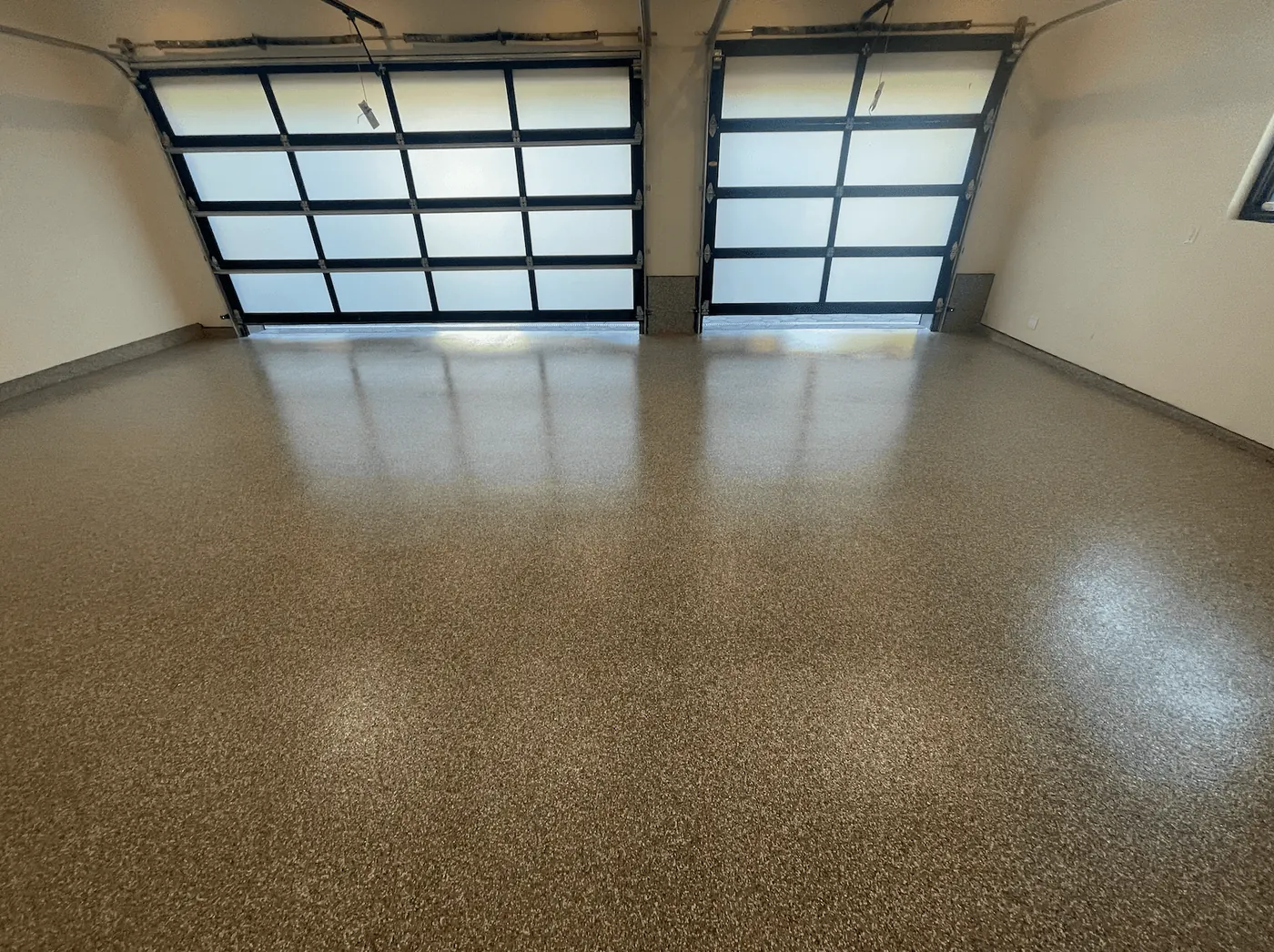
- Sun: polyaspartic stays clear
- Speed: polyaspartic cures in hours
- Price: epoxy is cheaper up front
- Our floors: UV-stable poly top coat
The short answer
In a North Florida garage, polyaspartic beats plain epoxy on the things you notice every day: it doesn't yellow in sunlight, it cures in hours instead of days, and it stays slightly flexible as the concrete moves.
Epoxy still wins on up-front price, and it does good work as a build coat where it's protected from the sun, or in a dry, shaded, air-conditioned room.
That's why every floor we install is finished with a UV-stable poly top coat, while epoxy remains one of the base products we work with. The question usually isn't epoxy or polyaspartic. It's which one faces the sun.
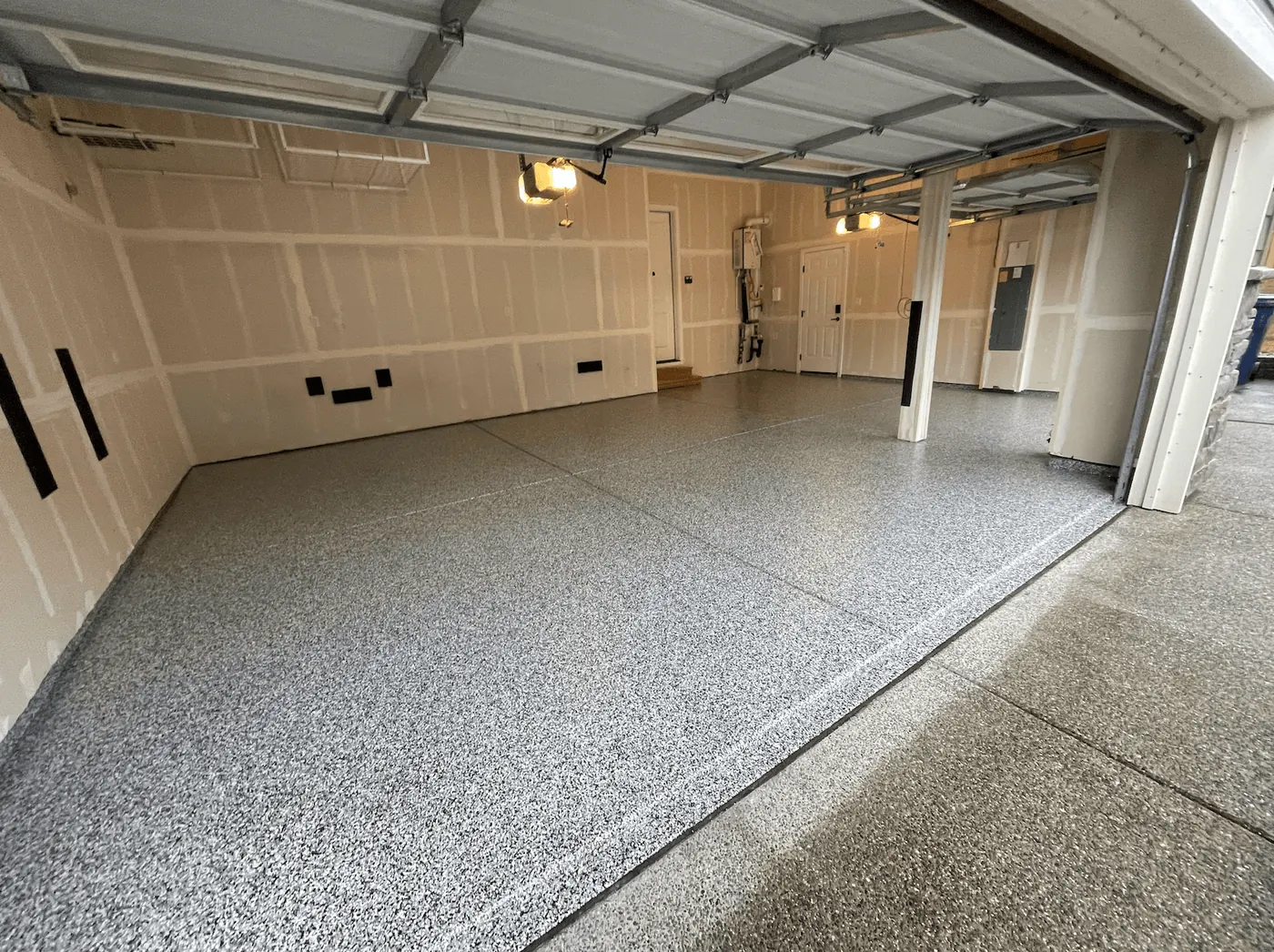
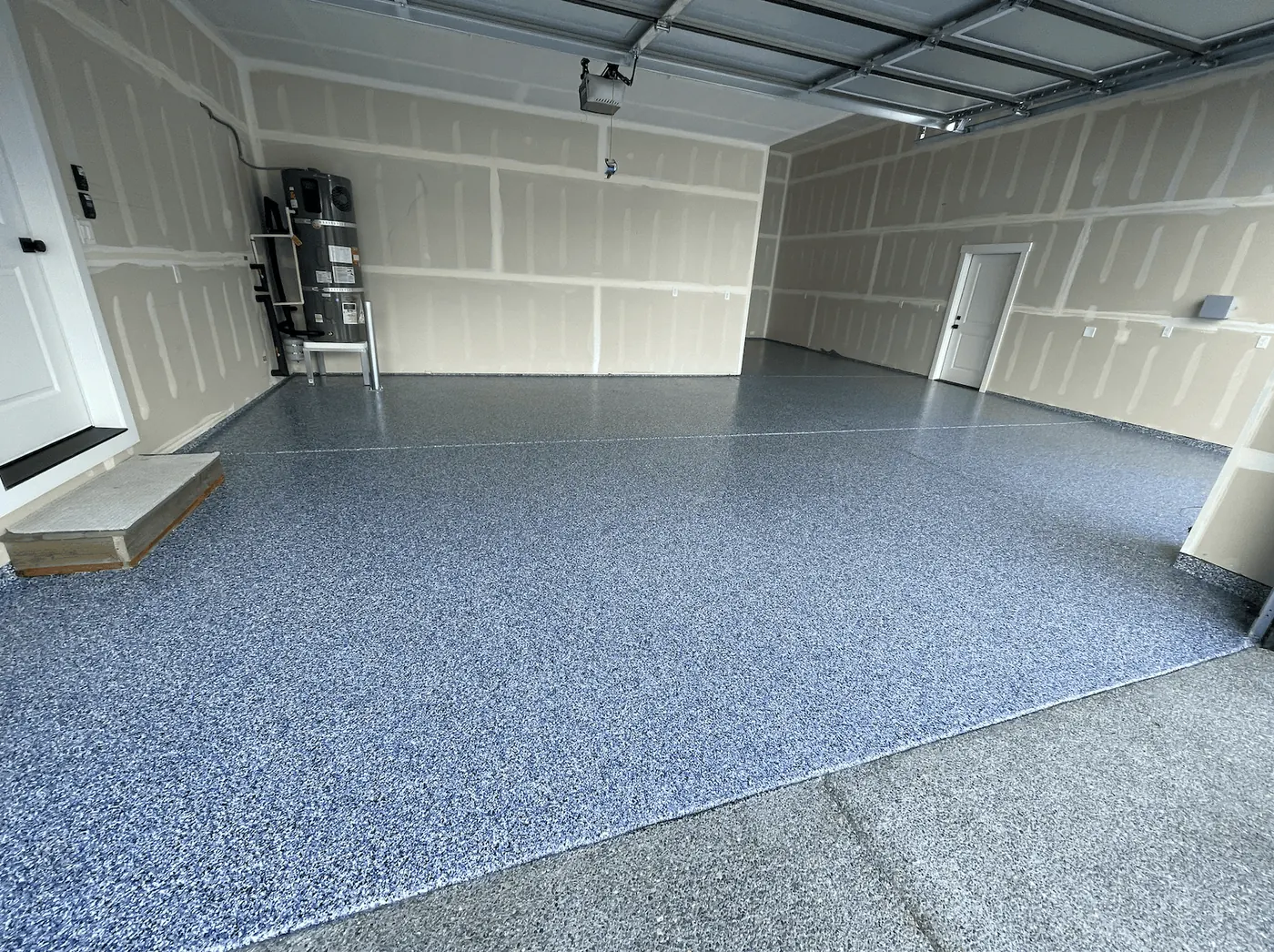
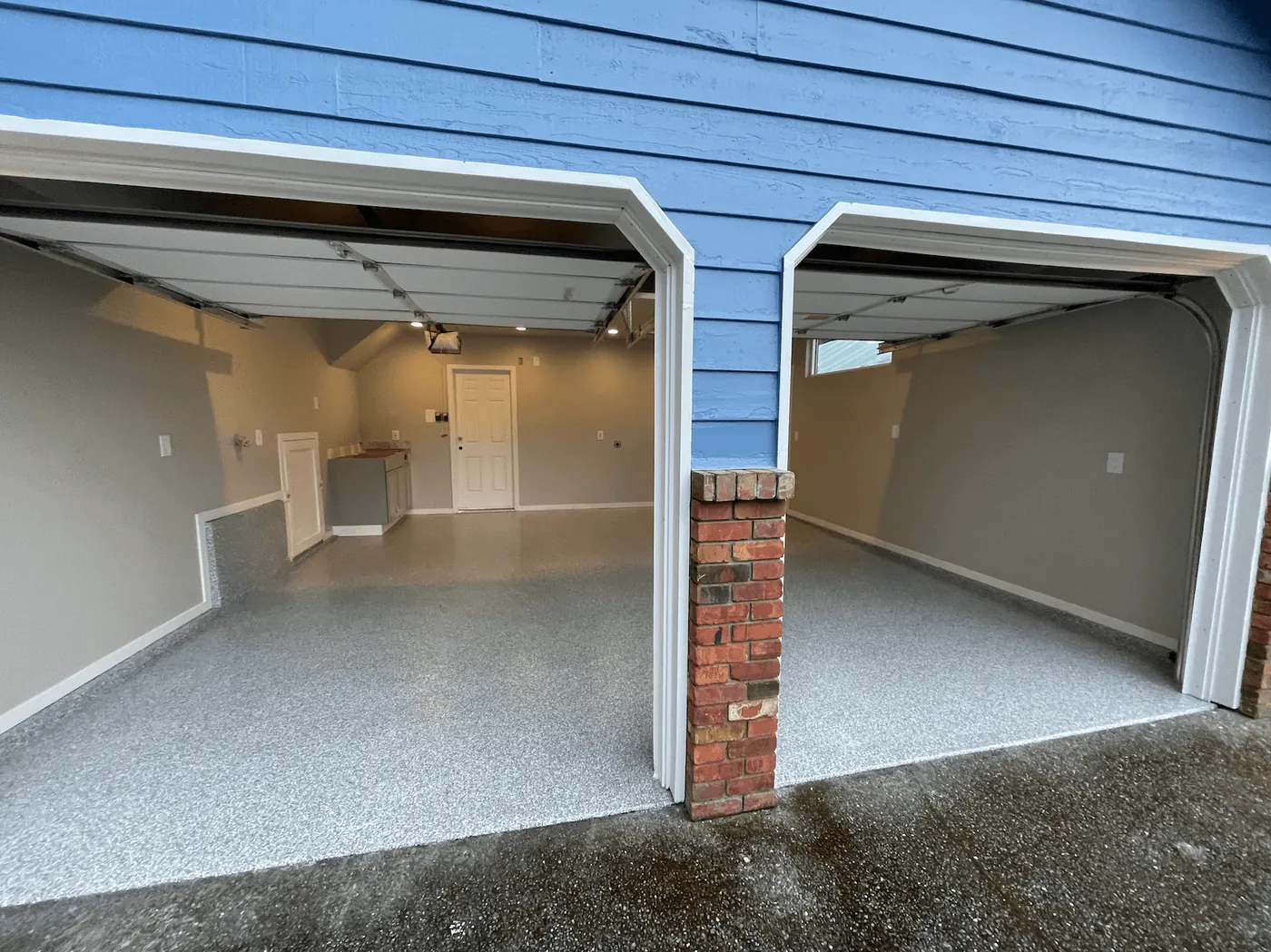
Four differences that matter in a garage
Both are two-part coatings that bond to concrete. Epoxy is a resin and hardener that cures into a hard, rigid shell. Polyaspartic is a kind of polyurea that cures faster and stays a little flexible.
-
Sun
Standard epoxy yellows and chalks in UV light, starting with the strip of floor by the open door. Polyaspartic is aliphatic, so it holds its colour in the sun.
-
Cure time
Plain epoxy usually needs days before a car goes back in. Polyaspartic is walkable in hours, which is how a flake floor can be installed in a single day.
-
Flex
Concrete swells and shrinks with heat and moisture. Polyaspartic moves with it a little; rigid epoxy is more likely to crack or let go under that stress over the years.
-
Price and colours
Epoxy is cheaper up front and comes in a wide range of solid colours, which is why it fills the hardware-store kits.
Is polyaspartic the same as epoxy? And where does polyurea fit?
No, even though the finished floors look alike. Epoxy is an epoxy resin cured with a hardener. Polyaspartic is a type of polyurea: the same family as spray-on truck bed liners, slowed down so a crew can roll it out by hand and make it stay clear in the sun.
Plain polyurea sets very fast and is used as a base coat. Polyaspartic is most often the clear top coat. Polyurethane is the other word you'll see; its UV-stable versions are thin clear coats, like the Rockhard T2000 we use to seal metallic floors.
When a quote says "polyurea floor," "polyaspartic floor" or "epoxy floor," ask which layer it means, and what's on top. The top layer is the one that has to handle the sun. More on the coating itself: polyaspartic floor coating.
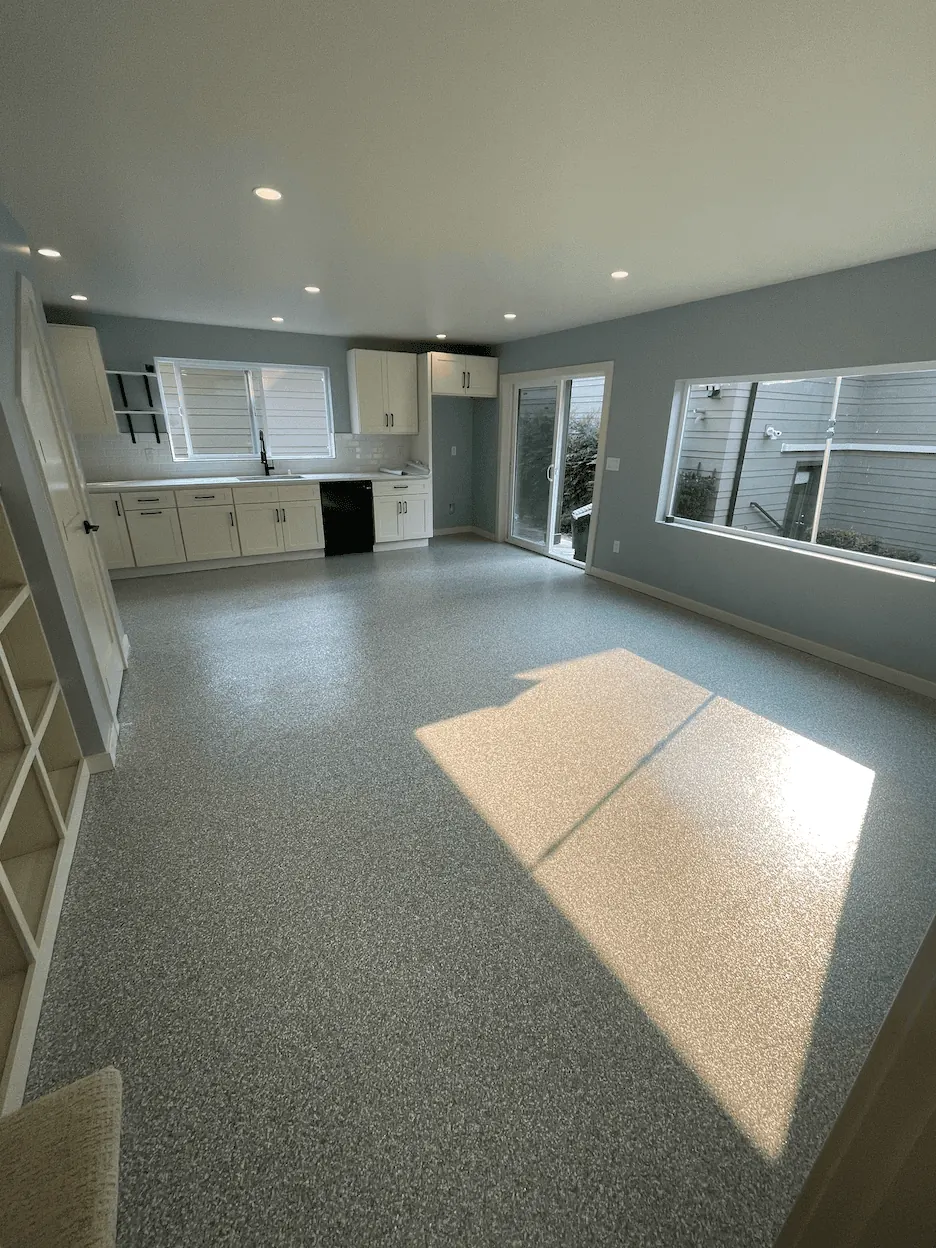
Epoxy vs. polyaspartic, compared
General properties of each coating type. Specific products vary, and the weather on install day changes cure times.
| What matters | Epoxy | Polyaspartic |
|---|---|---|
| What it is | Resin and hardener that cures rigid | A type of polyurea that stays slightly flexible |
| Sunlight | Standard epoxy yellows and chalks | UV-stable; stays clear |
| Cure | Slow; usually days before a car | Fast; walkable in hours |
| Working time once mixed | Long and forgiving | Short, and shorter on a hot, humid day |
| Flex with the slab | Little | Some |
| Spot repairs | Easier to feather in | Can leave a faint edge; flake helps it blend |
| Up-front cost | Lower | Higher material cost |
| Best job in a floor | Build coat, protected from the sun | The clear top coat |
What a Tallahassee garage does to each coating
A cold-climate comparison talks about curing in winter. Here, the fight is sun, heat and humidity.
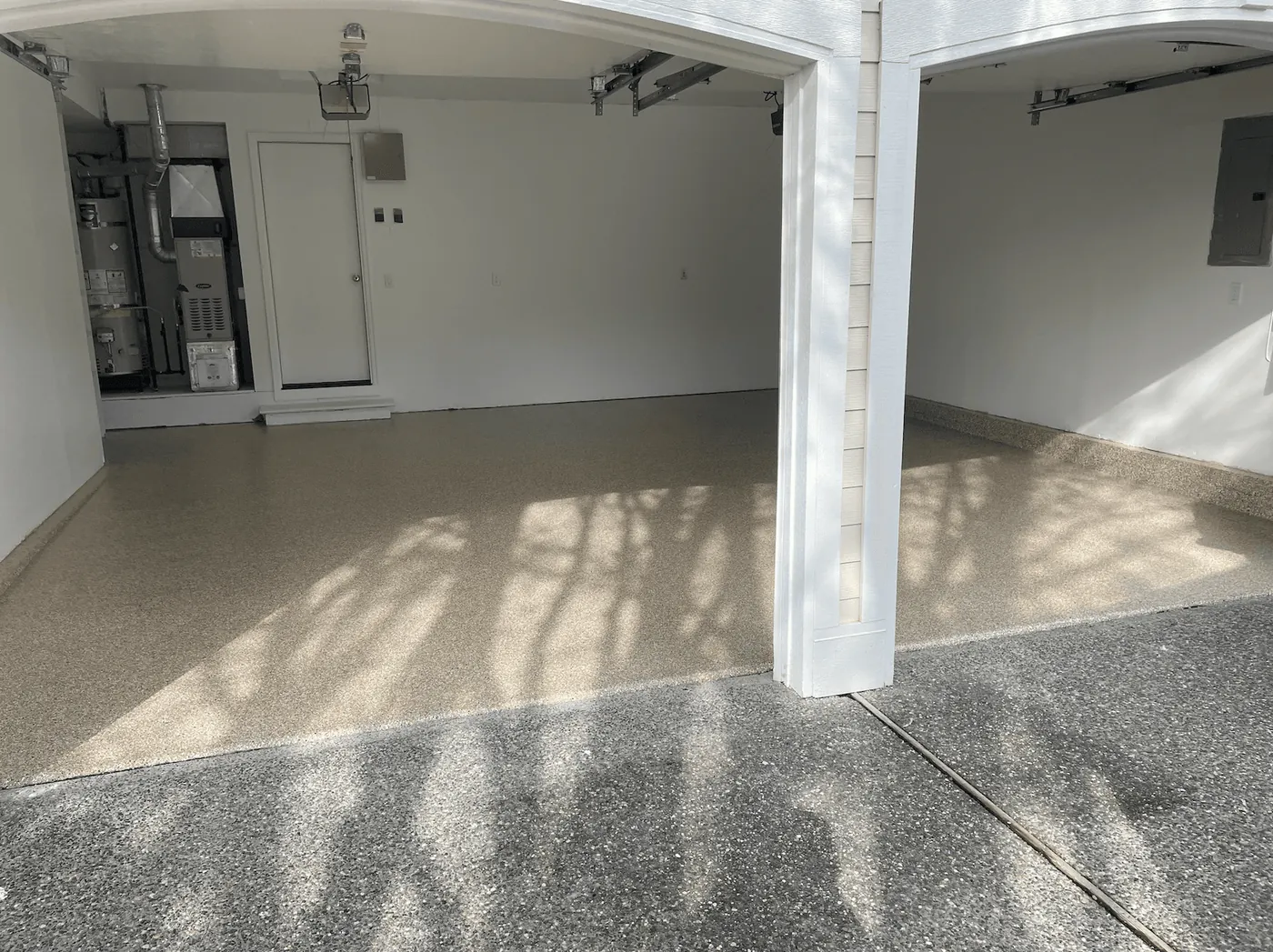 Sun
Sun
Open doors, strong light
Garage doors stand open for yard work and weekend projects, and afternoon light reaches well into the bay. That's where plain epoxy ambers first.
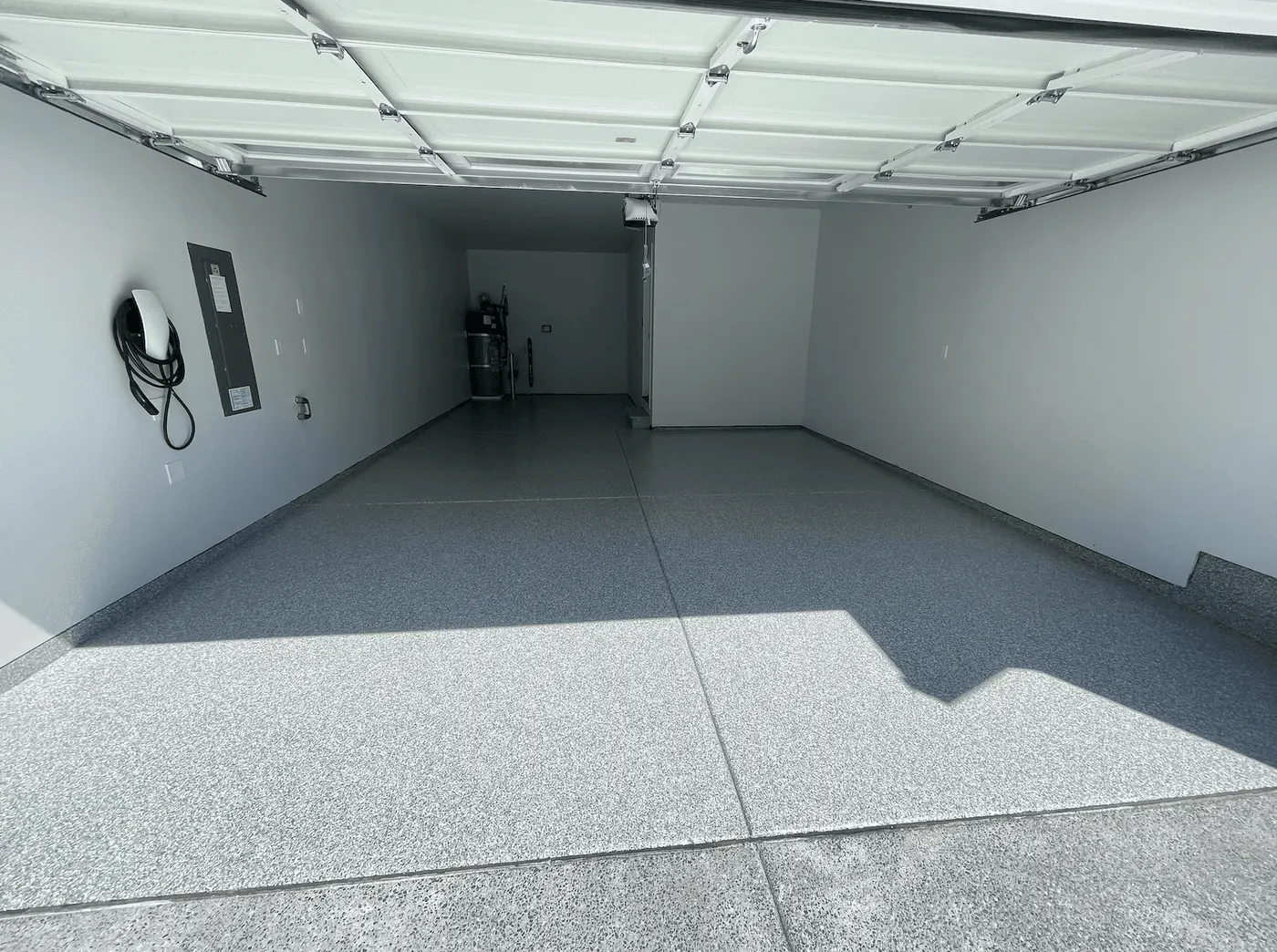 Heat
Heat
Hot tires in summer
Tires come home hot off summer asphalt. Thin, poorly bonded coatings can soften and lift under them. A ground-in bond and a tough wear layer are the defense.
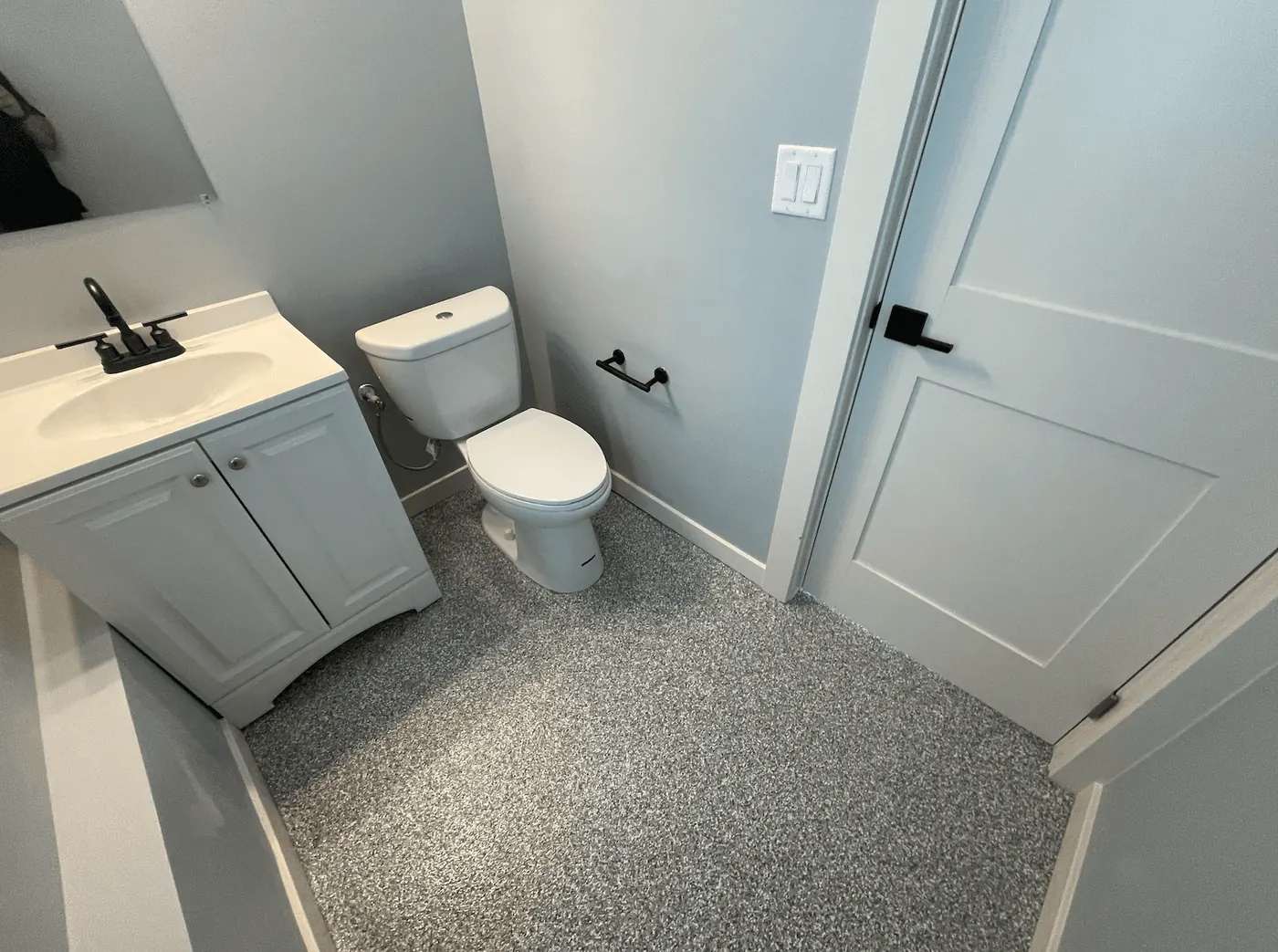 Humidity
Damp air, damp slabs
Humid air shortens polyaspartic's working time and can leave a waxy blush on some epoxies. Moisture rising through the slab affects both, which is why we test every slab with a Wagner C555 meter first.
Hybrid floors and the alternatives to epoxy
Searches for "better than epoxy" usually land on one of these. Here's what each one really is.
- An epoxy base under a poly top coat. A common, legitimate build: epoxy for the body of the floor, a UV-stable top coat for the sun and the wear. The top coat is what makes it work in a sunny garage.
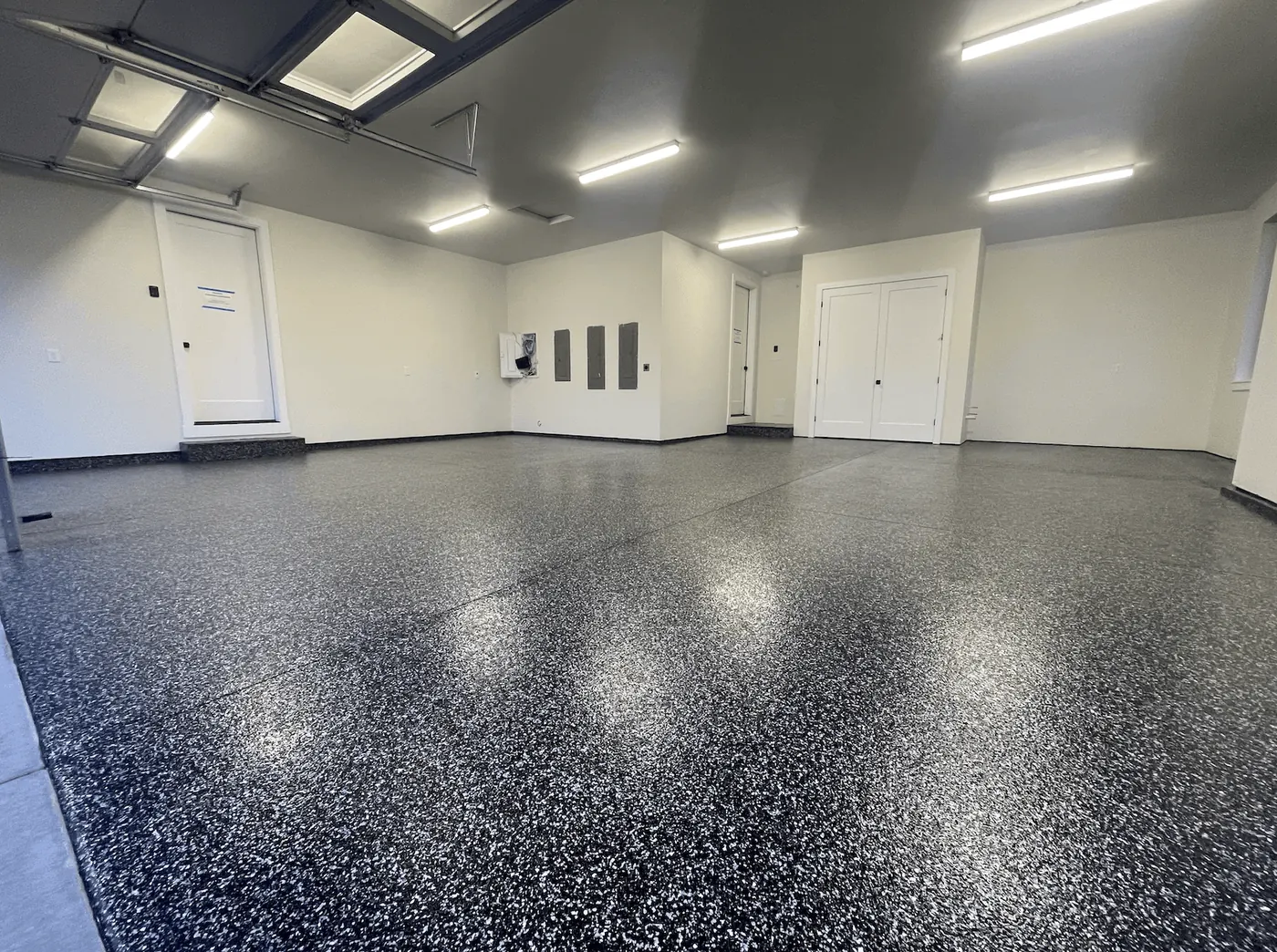
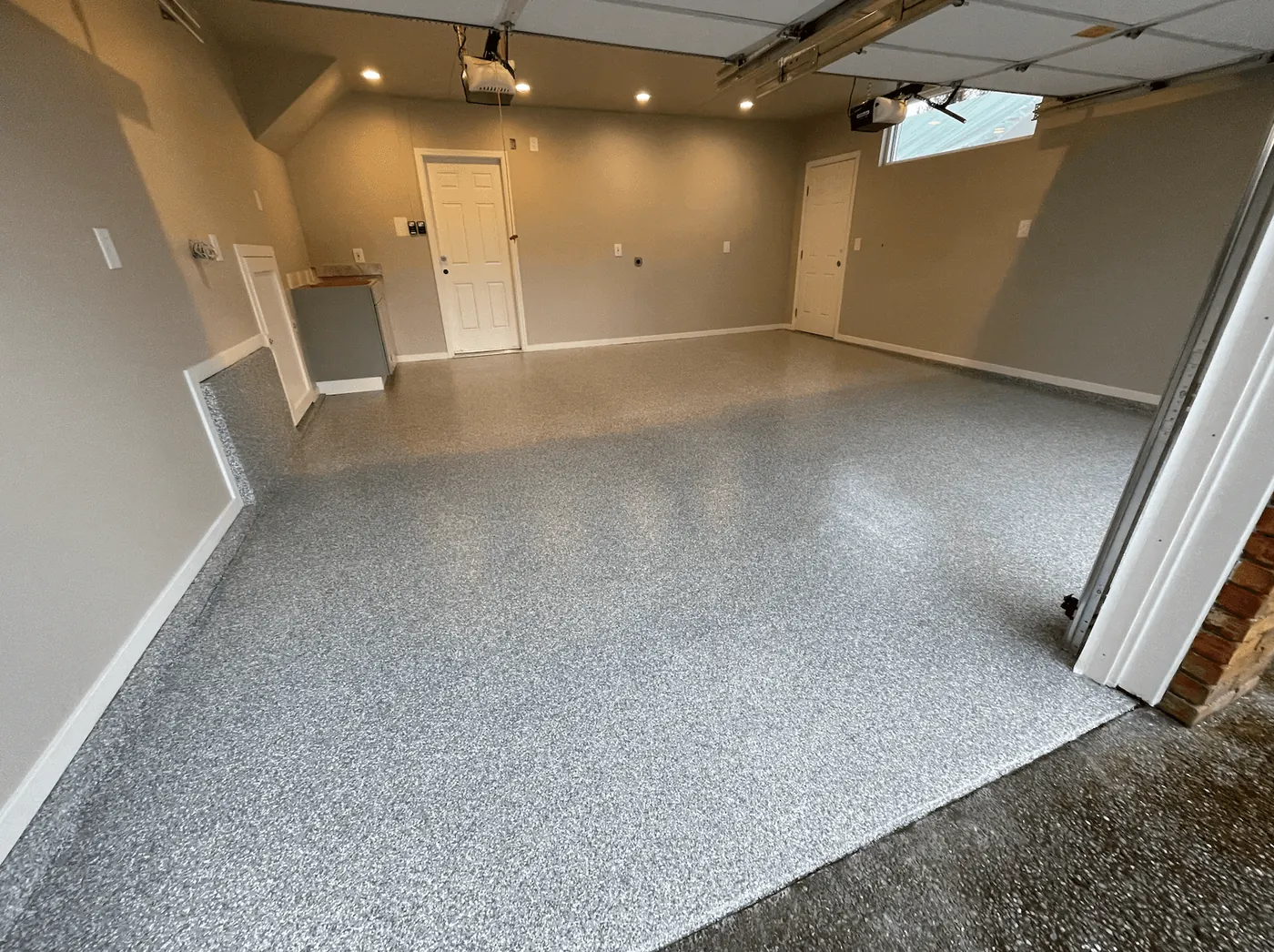
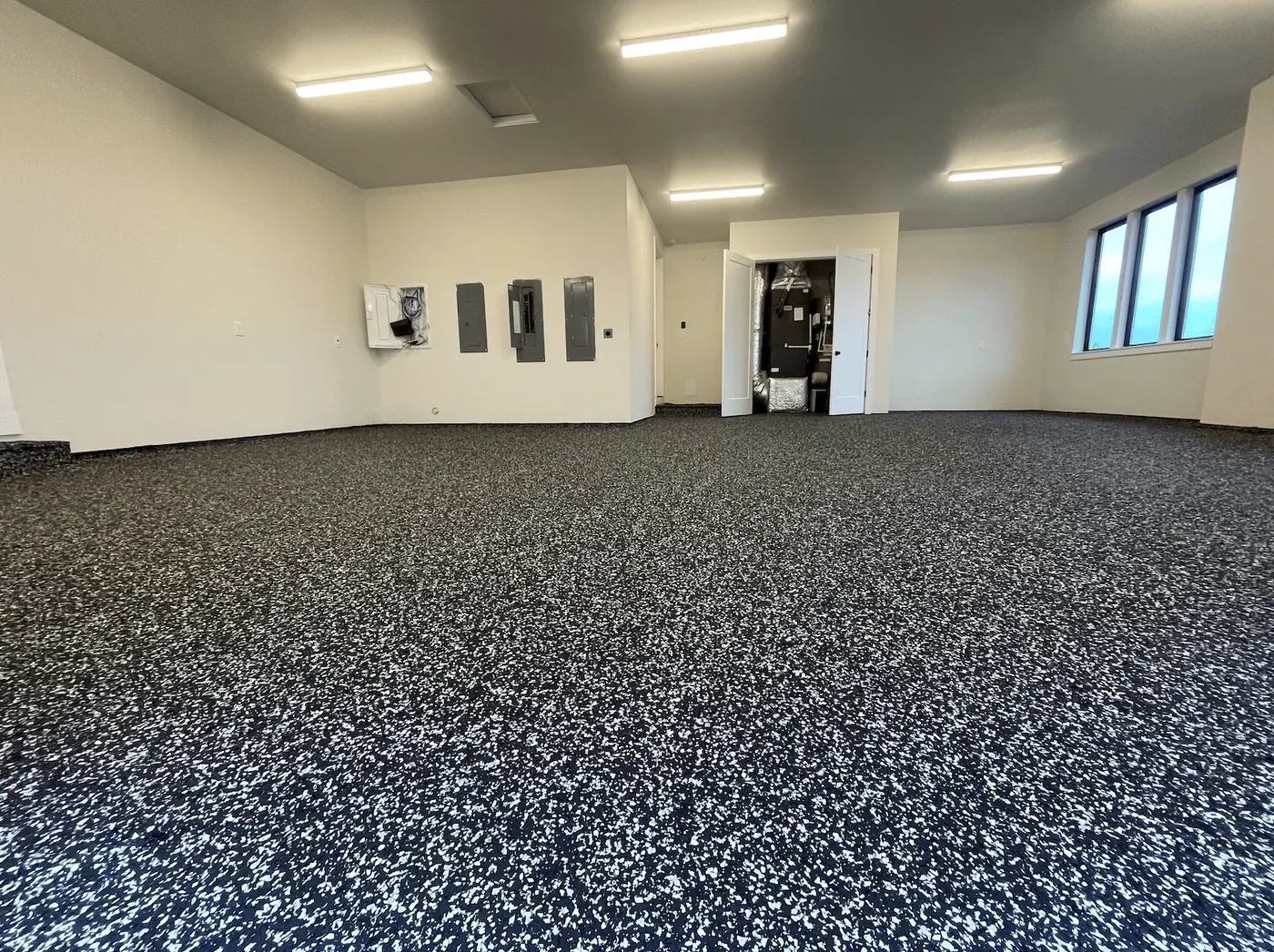
- A flake floor with a polyaspartic top coat. The look people mean by "epoxy floor," finished with a coating that stays clear and cures fast. It's how our flake system is built: four layers, most installed in a day.
- Interlocking tiles. Fast and removable, which is also the weakness: water, dirt and oil get underneath and sit on the bare concrete.
- Roll-out mats. The cheapest cover, with the same problem as tiles. Fine as a parking pad, not as a floor.
- Garage floor paint or a sealer. One thin coat with no grinding and no flake. It wears through in the tire lanes, and hot tires lift it. See paint vs. a professional coating.
Which should you choose?
Most homeowners don't need to pick a chemistry. They need to know which layer faces the sun, and whether the slab was tested and ground first.
A UV-stable poly top coat makes sense when
- The garage door is open often, or the floor gets afternoon sun.
- You park in the garage every day and want it back fast.
- The floor is outdoors: a patio, porch or pool deck.
- You want the floor to keep its colour for years.
Plain epoxy can be fine when
- The room is air-conditioned, dry and out of direct sun.
- It's a storage space you'll redo before long.
- It's a build coat with a UV-stable top coat over it.
Where we land: our flake, solid colour and quartz floors are finished with a UV-stable poly top coat, and our metallic floors are sealed with Rockhard T2000, a UV-stable clear coat made for metallic floors. Not a brand preference, a climate one. All four systems are on the services page.
Epoxy and polyaspartic questions
Which lasts longer, epoxy or polyaspartic?
Prep and moisture decide more than chemistry does: either coating fails early on a slab that wasn't ground and tested. In a sunny, hot garage, plain epoxy's usual problems are yellowing and hot-tire pickup, which a UV-stable poly top coat avoids. That's why every floor we install finishes with one.
Does epoxy yellow over time?
Standard epoxy does. It isn't UV-stable, so sunlight turns it amber and chalky, starting where light comes through the garage door. Polyaspartic is aliphatic and stays clear.
What's the difference between polyurea and polyaspartic?
Polyaspartic is a type of polyurea. Plain polyurea sets very fast and is often used as a base coat; polyaspartic sets more slowly so it can be rolled out by hand, and it stays clear, which makes it a good top coat.
Is polyaspartic the same as epoxy?
No. Epoxy is a resin and hardener that cures rigid and yellows in sunlight. Polyaspartic is a kind of polyurea that cures faster, stays slightly flexible and stays clear. People call any coated garage floor "epoxy," which is why both names show up on quotes.
Which is easier to repair?
Epoxy, if you want a patch to disappear completely; its slow cure lets a repair be feathered in. Polyaspartic cures fast and hard, so a patch can leave a faint edge, though a fresh flake broadcast helps it blend.
Does polyaspartic cost more than epoxy?
The material does. On an installed floor, prep makes the bigger difference: grinding, crack repair, removing an old coating and whether the slab needs a moisture barrier. We give you one clear price in writing after a free visit.
Can you use epoxy on a patio or pool deck?
Not as the top layer. Plain epoxy yellows and chalks in direct sun. Outdoor concrete needs a UV-stable top coat, which is how we build patio and pool deck coatings.
Do you install epoxy floors?
Epoxy is one of the base products we work with, alongside polyaspartic, polyurea and a moisture vapor barrier. Every floor we install is finished with a UV-stable poly top coat, so plain epoxy is never the layer facing the sun.
More coating guides
Questions about warranty, timing or the areas we serve are answered in the FAQ.
Get the right floor for your garage
We'll test the slab, talk through the systems that fit your space and give you one clear price in writing. The visit is free, with no pressure to book.