
Epoxy Garage Floors in Tallahassee, FL
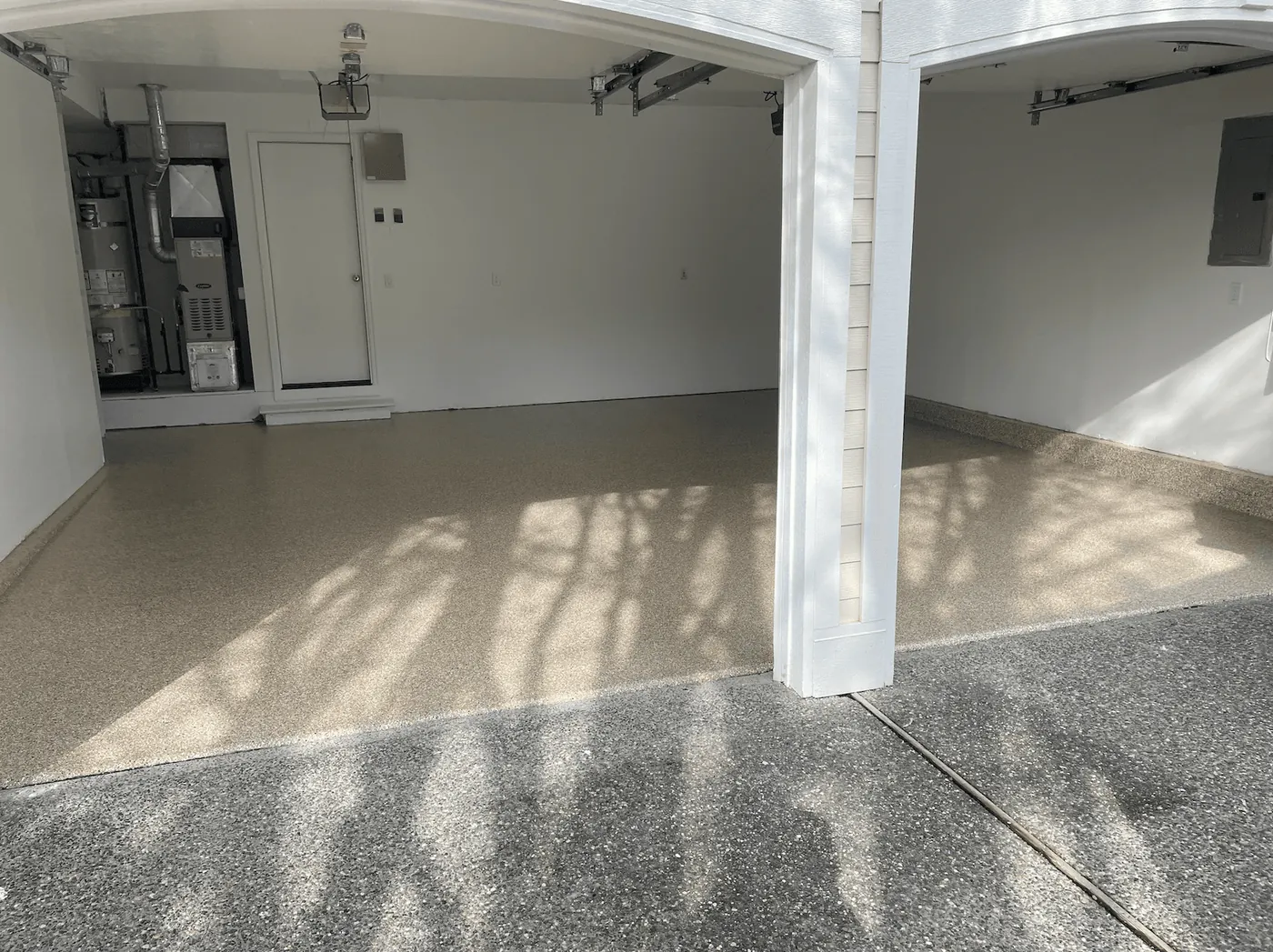
Most people who ask for an epoxy garage floor want a tough, glossy floor that shrugs off oil, hot tires and the Florida sun. Here's what plain epoxy does well, where it struggles in a North Florida garage, and how we build the floor you're picturing.
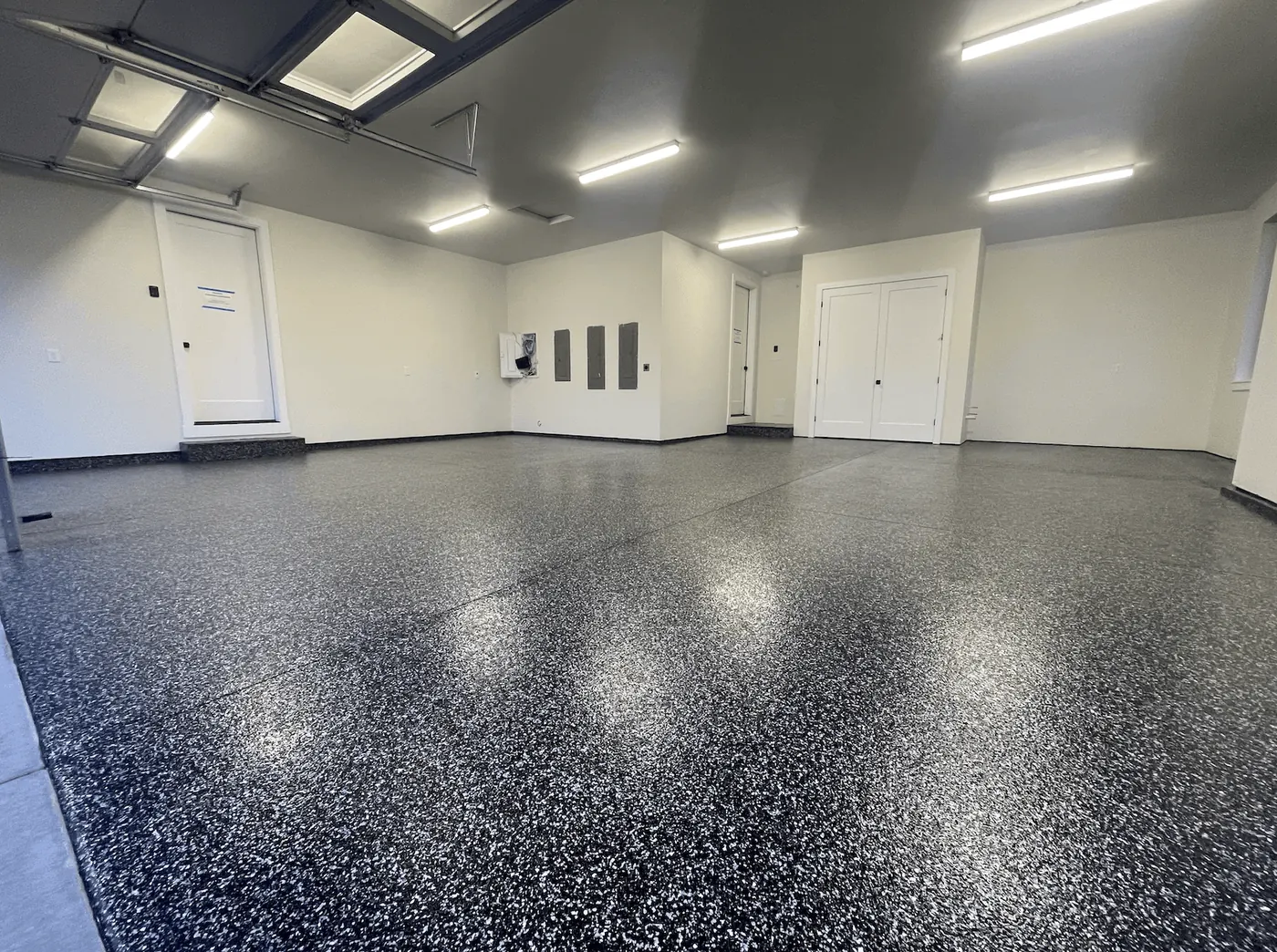
- Every slab moisture-tested
- Diamond-ground, never acid-etched
- UV-stable poly top coat on every floor
- 10-year delamination warranty
Should you put an epoxy floor in a Tallahassee garage?
Plain epoxy can make a good floor in a dry, shaded, air-conditioned room. Most garages around Tallahassee aren't that room. The door stands open to the heat and the afternoon sun, tires roll in hot off summer asphalt, and the slab sits right on the ground.
Epoxy has three weak spots in those conditions. Standard epoxy yellows in sunlight. Thin epoxy coatings can soften and lift under hot tires. And moisture moving up through the slab can push a coating off from below.
So we never leave plain epoxy as the surface you walk and park on. Epoxy is one of the base products we work with, alongside polyaspartic, polyurea and a moisture vapor barrier, and every floor we install is finished with a UV-stable poly top coat. If you've been calling it an epoxy floor, keep calling it that. Everyone does.
Here's how our flake floor is built, and the full epoxy vs. polyaspartic comparison if you want the chemistry.
- 4layers in a flake floor
- 1 dayfor most flake and solid colour floors
- 10 yrswritten delamination warranty
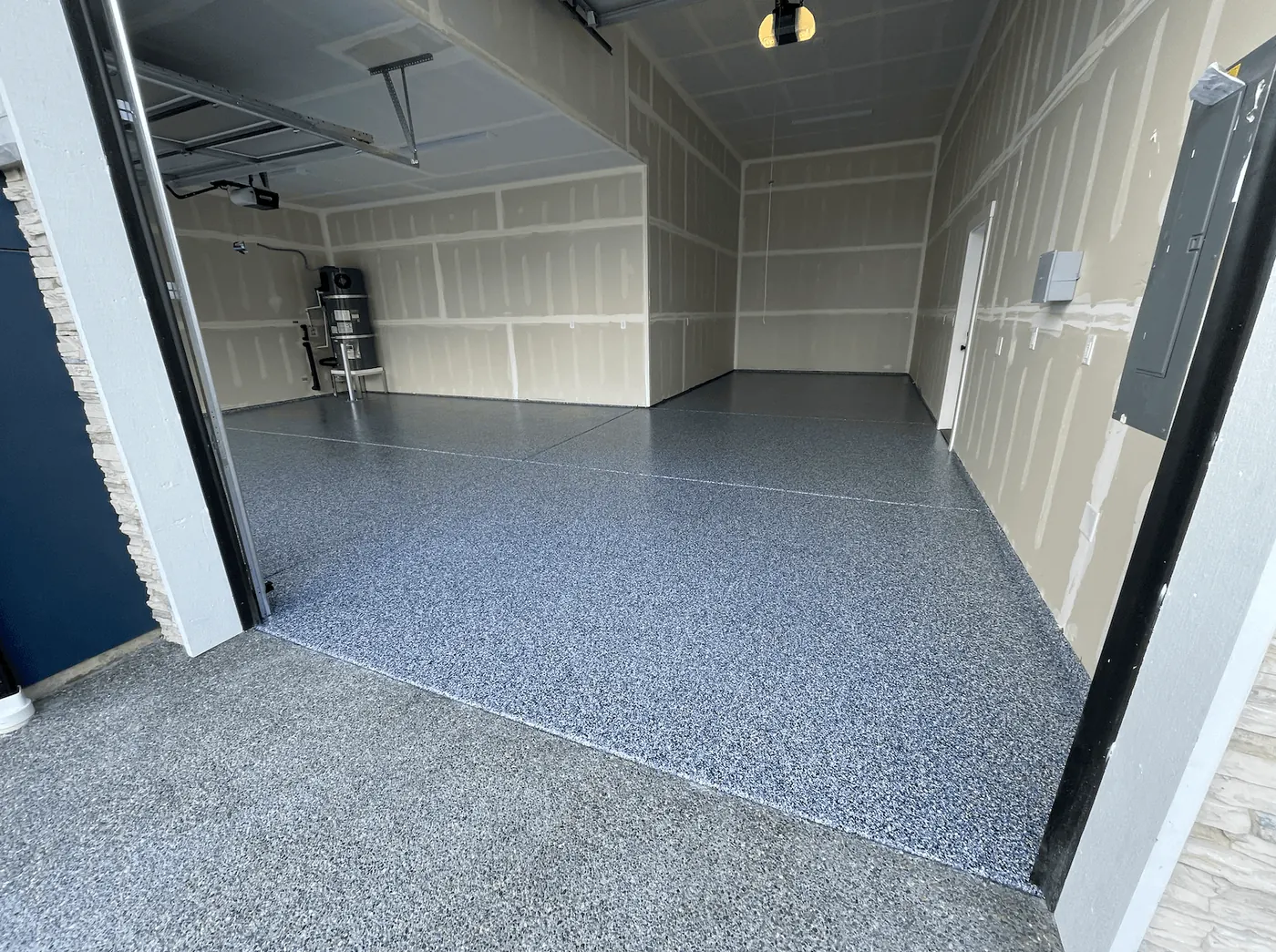
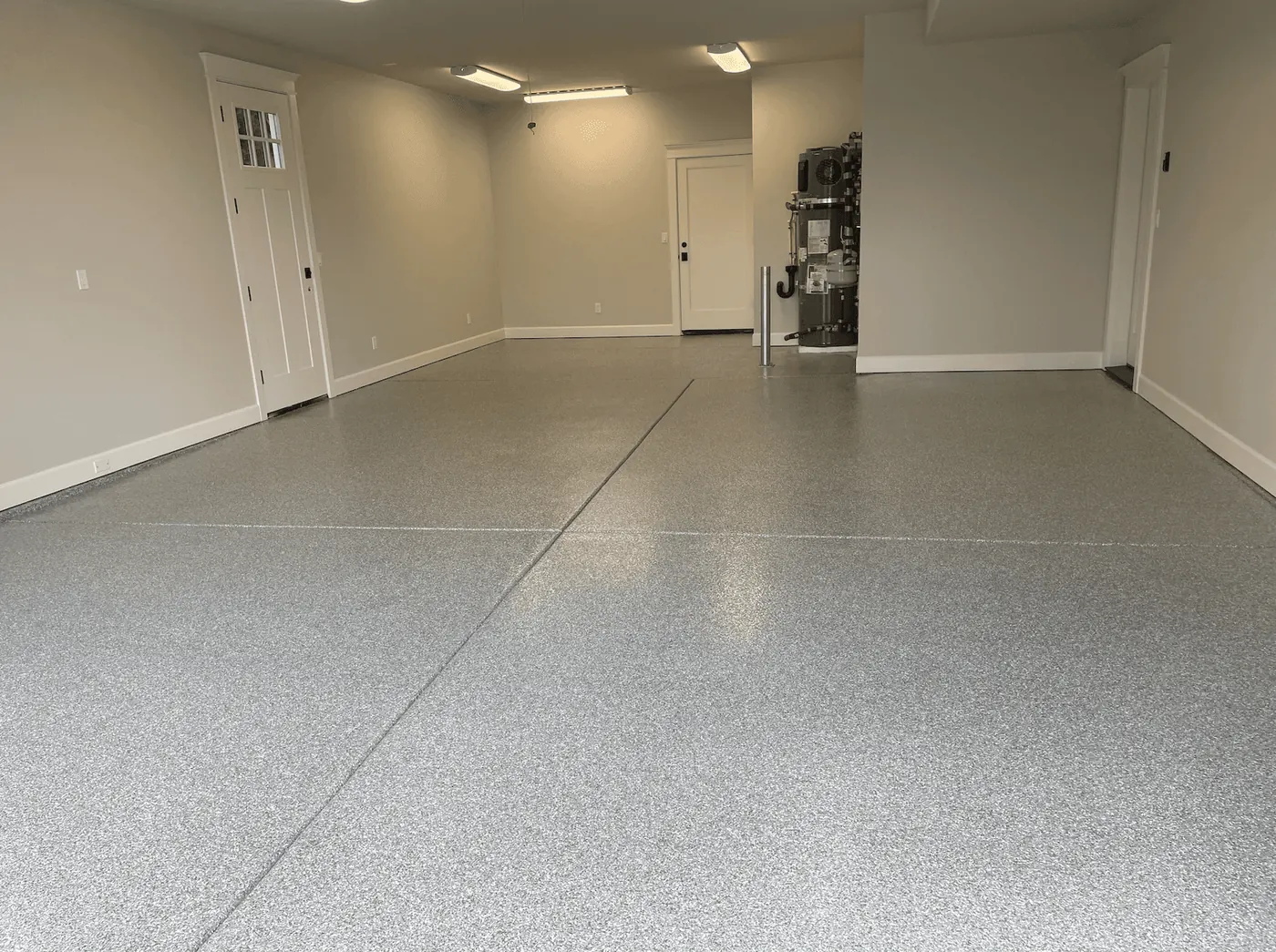
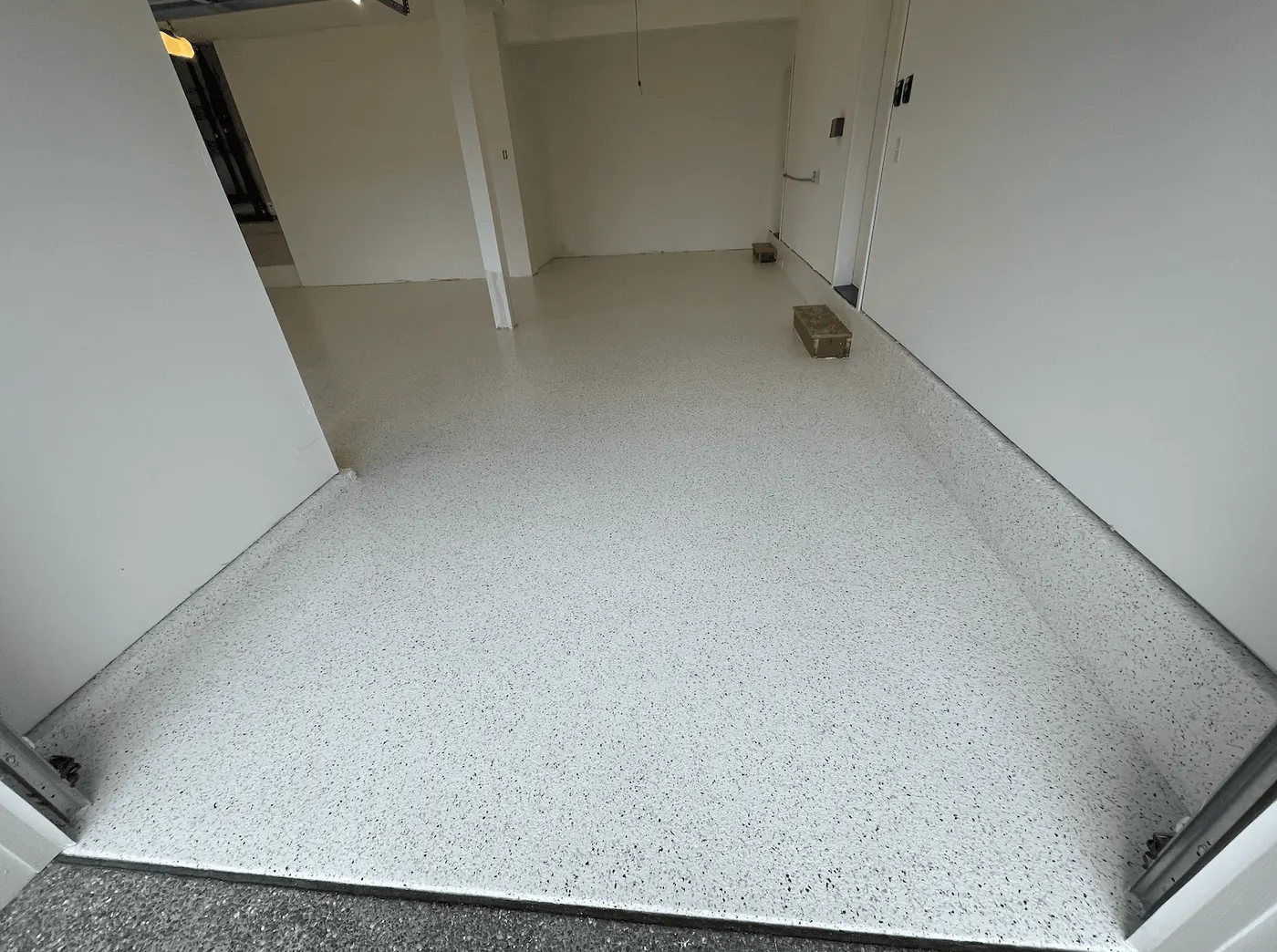
"Epoxy floor" can mean three very different products
The gap between the cheapest thing sold as epoxy and a professional floor is bigger than the gap between epoxy and anything else. Know which one a quote or a kit is talking about.
Paint with a little epoxy in it
Sold by the gallon next to the wall paint, and it rolls on like paint because it mostly is paint. It goes on thin, scuffs easily, and hot tires tend to lift it first. Fine for a storage room. Not a floor you park on.
Real epoxy, spread thin
A genuine two-part epoxy, usually water-based, so each coat dries thin. Most kits rely on an acid etch or a degreaser instead of grinding, which is the most common reason a kit floor peels. And it's plain epoxy on top, so it yellows where the sun hits.
Layers, over ground concrete
Thicker coatings installed over a diamond-ground slab, built up in layers. Epoxy can do good work inside a system like this, but on its own it still yellows in sunlight, which is why a professional floor is finished with a UV-stable top coat.
Why plain epoxy struggles in a Tallahassee garage
None of this is a knock on epoxy. It's what happens when an indoor coating is left as the top layer in a hot, sunny, humid garage. Four things do the damage.
 Sun
Sun
It yellows in daylight
Standard epoxy isn't UV-stable. The strip of floor that gets afternoon sun through an open door turns amber and dull while the back of the garage stays gray. Once it happens, it's in the coating, and the fix is grinding and recoating.
 Heat
Heat
Hot tires can lift it
After a drive on summer asphalt, tires come home hot and soft. On a thin or poorly bonded coating, the tire grips the coating harder than the coating grips the concrete, and it pulls up when you back out. That's hot-tire pickup.
 Moisture
Moisture from below pushes it off
Garage slabs sit on the ground, and moisture moves up through concrete. A coating that seals the top can trap it, and the pressure shows up as blisters or peeling. That's why we test every slab with a Wagner C555 moisture meter before we choose a base coat.
 Prep
Prep
An acid etch gives it little to grip
Kits lean on an acid wash. Diamond grinding opens the surface of the slab so the base coat bonds into the concrete instead of sitting on top of it. We grind every floor we coat. Why grinding beats etching.
How we build the floor people call "epoxy"
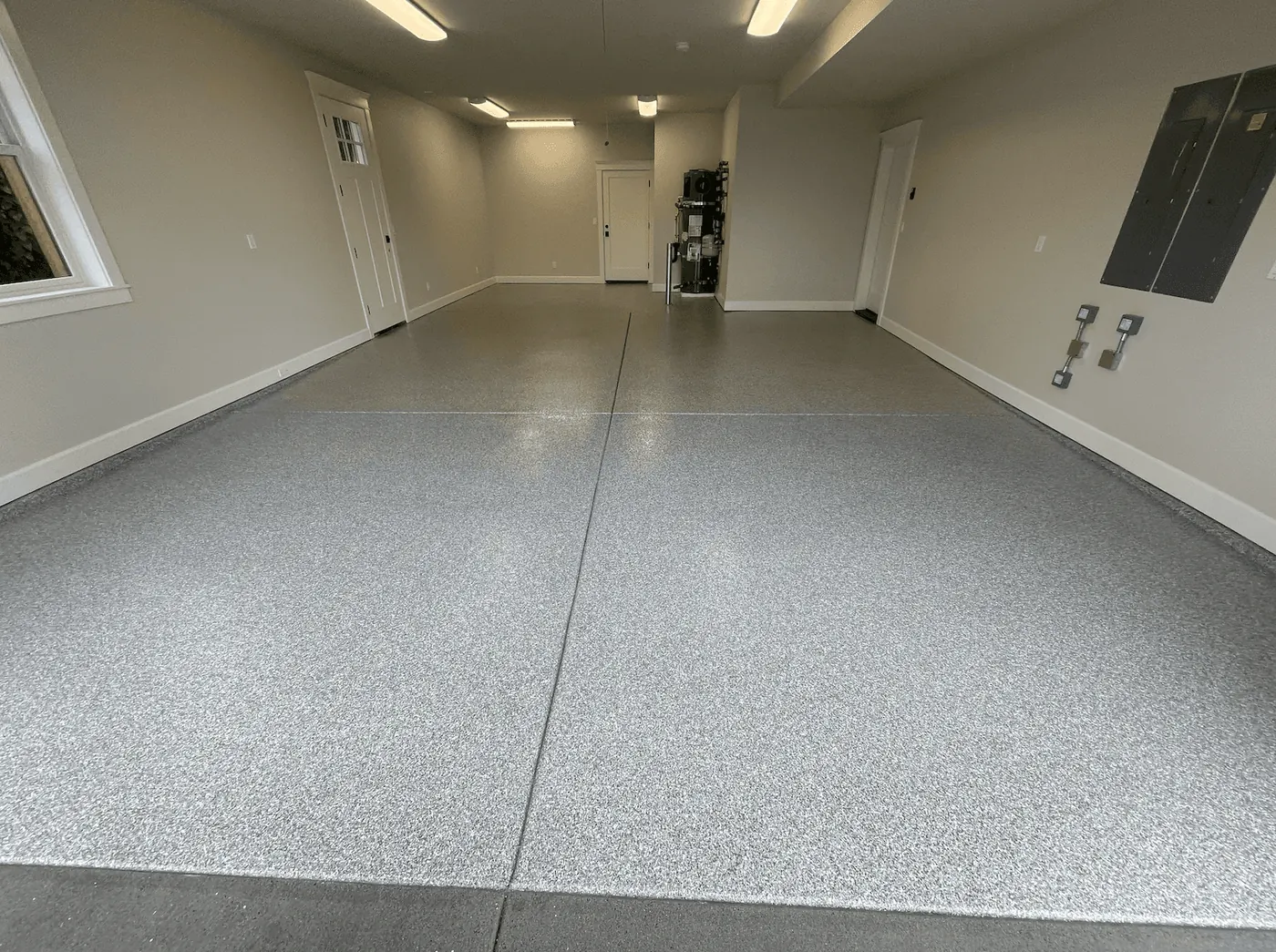
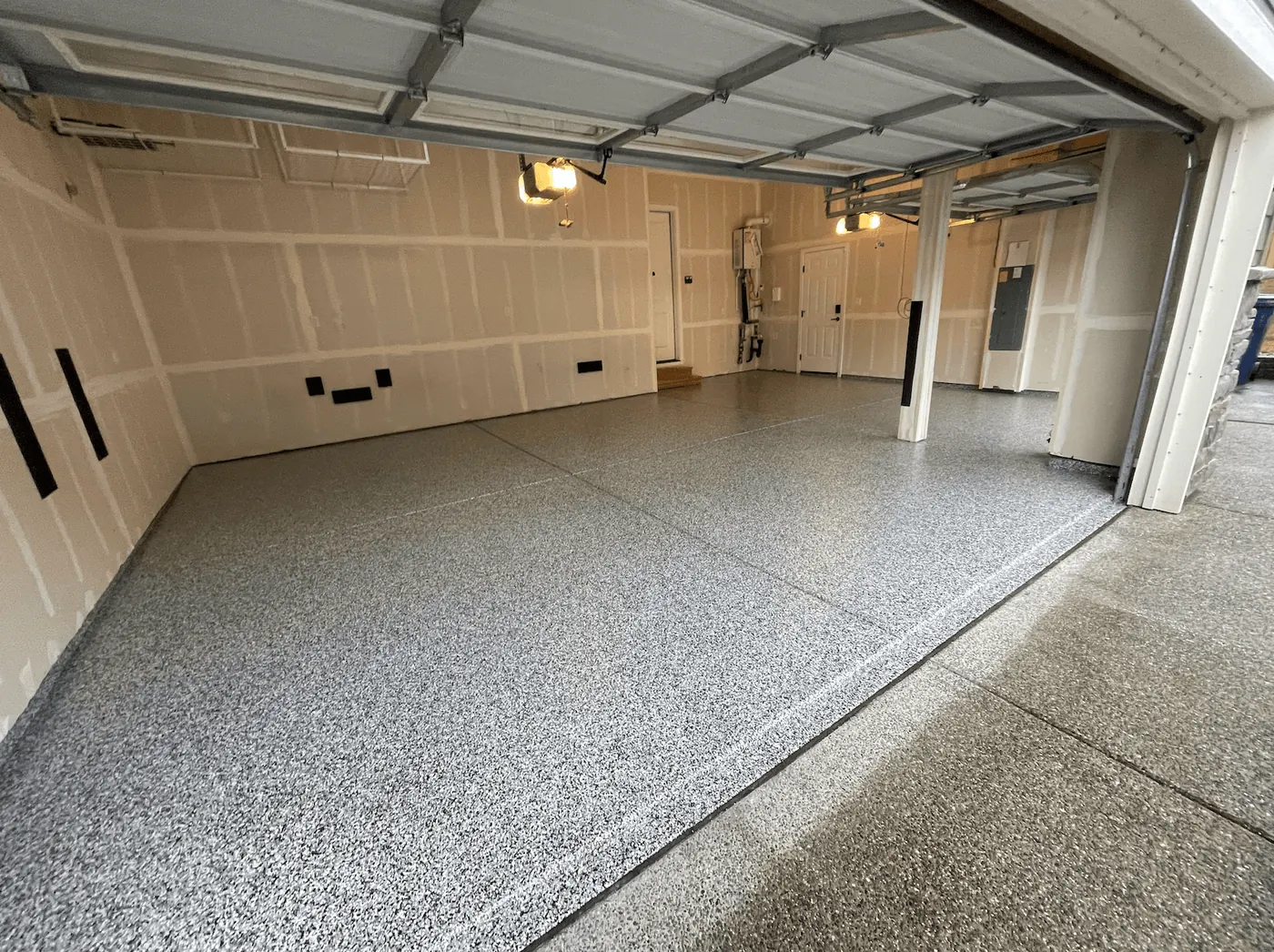
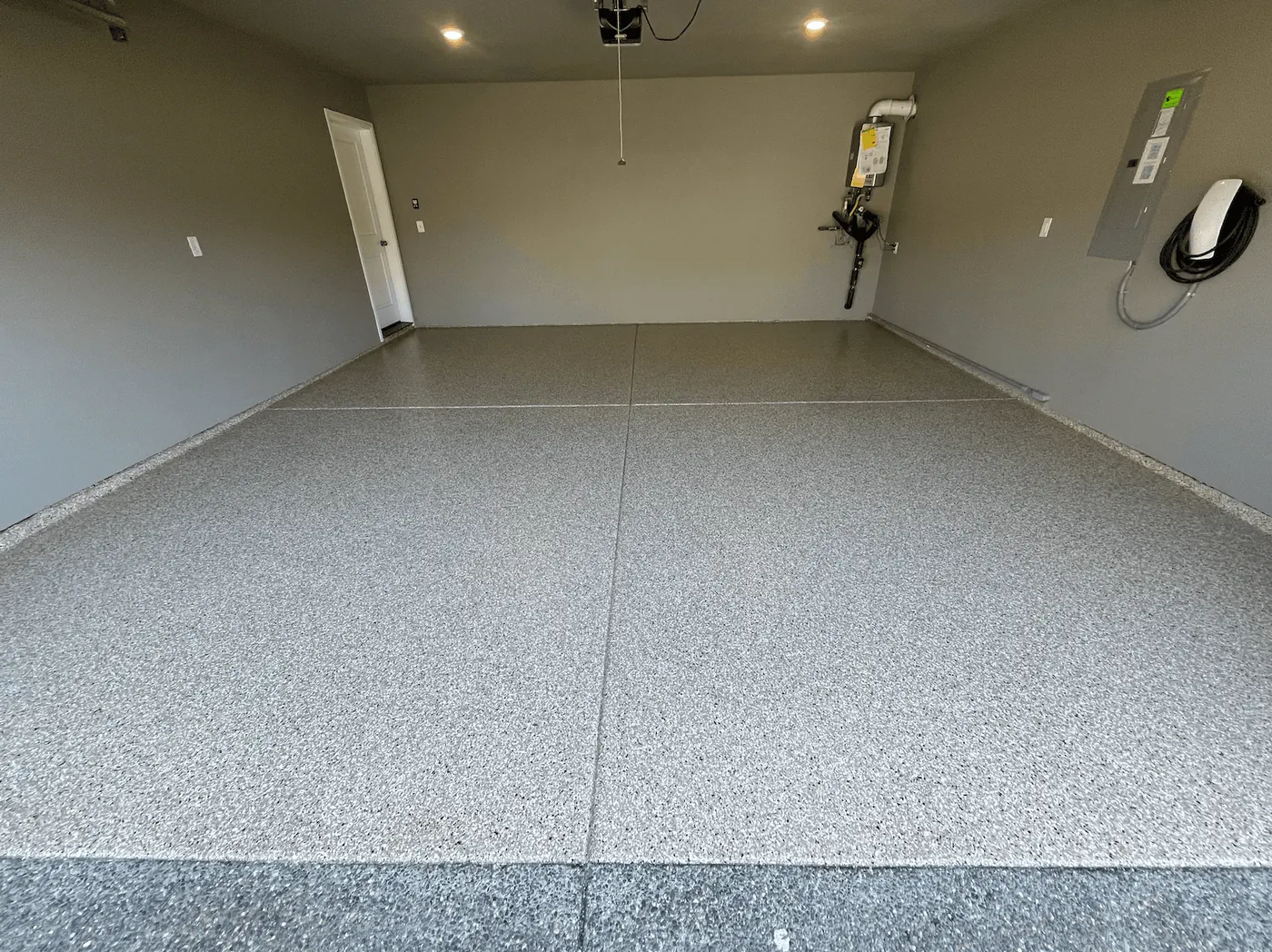
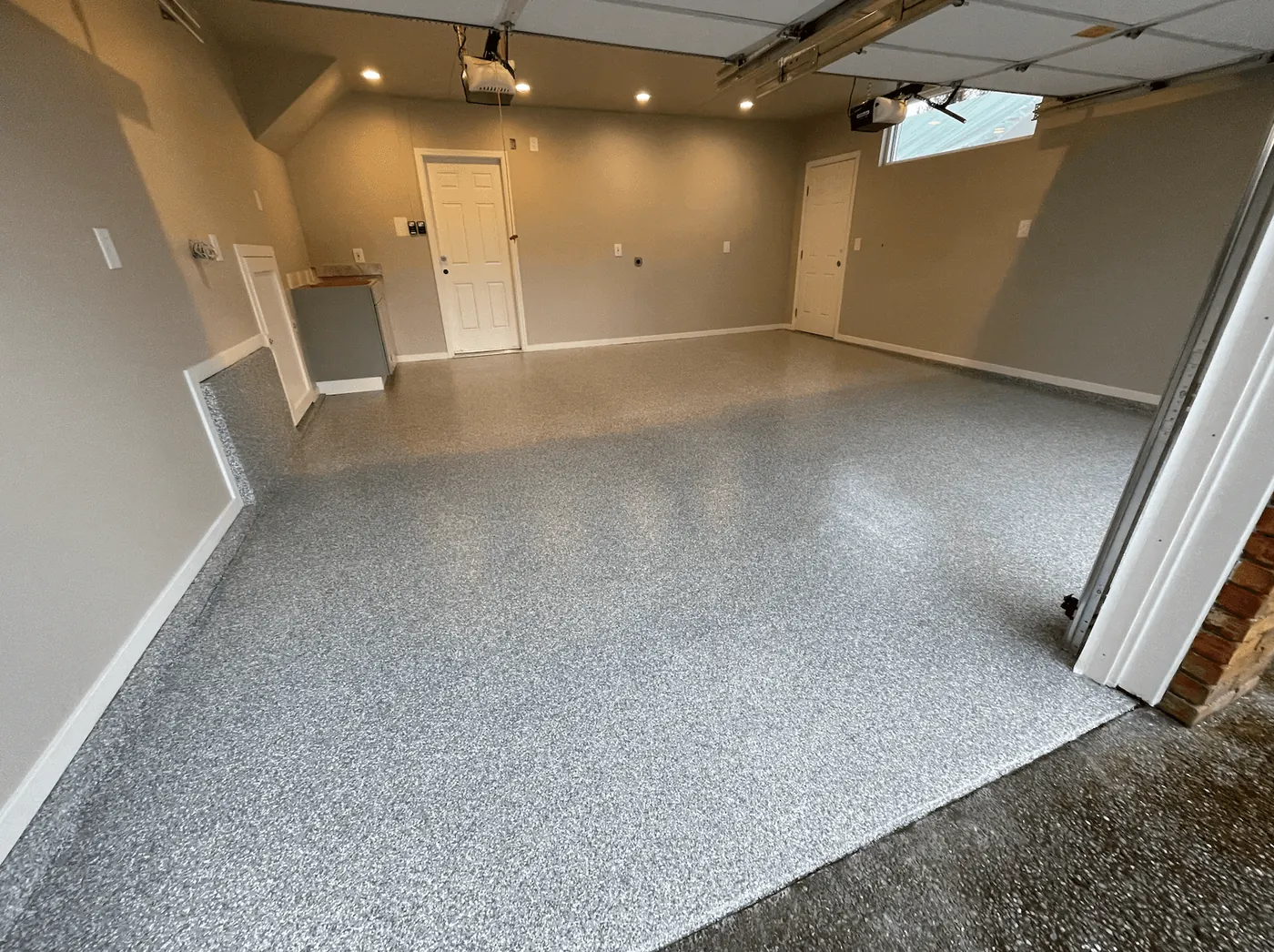
Same glossy, seamless look, built to handle the sun at the door. This is our flake system, from the concrete up.
-
Moisture test and diamond grind
Every slab gets a Wagner C555 reading before we pick a base coat. Then the whole floor is diamond-ground, and cracks are filled and ground flush, so the coating bonds into clean, open concrete.
-
Poly base coat, or MVB where the slab needs it
A poly base coat goes onto the ground concrete. Where the reading or the room calls for it, most often kitchens, bathrooms and outdoor areas, we build on a moisture vapor barrier (MVB) base instead.
-
Colour coat and a full flake broadcast
A poly colour coat, then decorative flake broadcast until the floor won't hold any more. The flake hides small flaws and colour differences in the concrete and gives the surface texture underfoot.
-
UV-stable poly top coat
The clear wear layer your tires and shoes actually touch. It's what keeps the floor from yellowing at the door, and it goes on every floor we install, whatever the system.
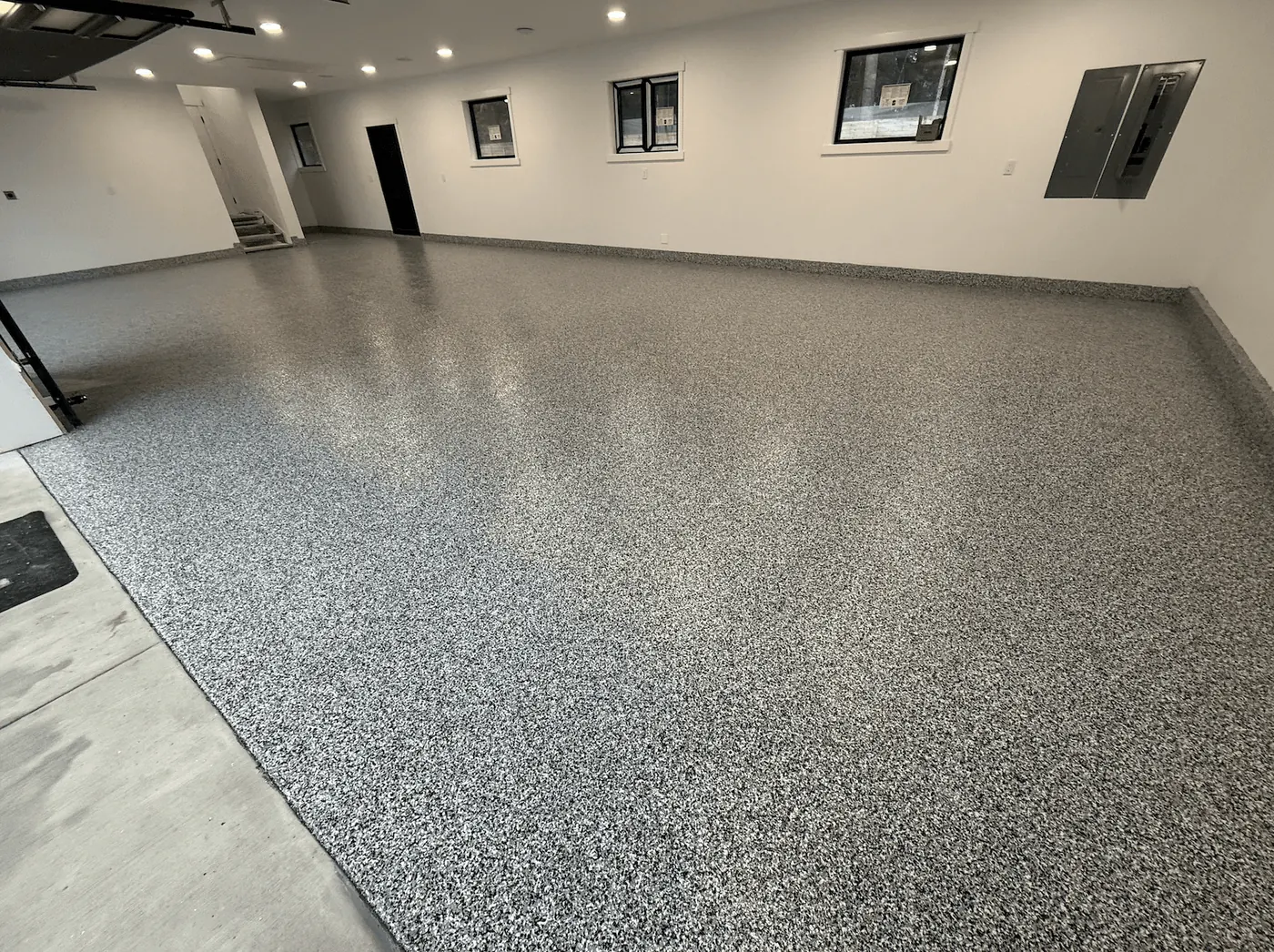
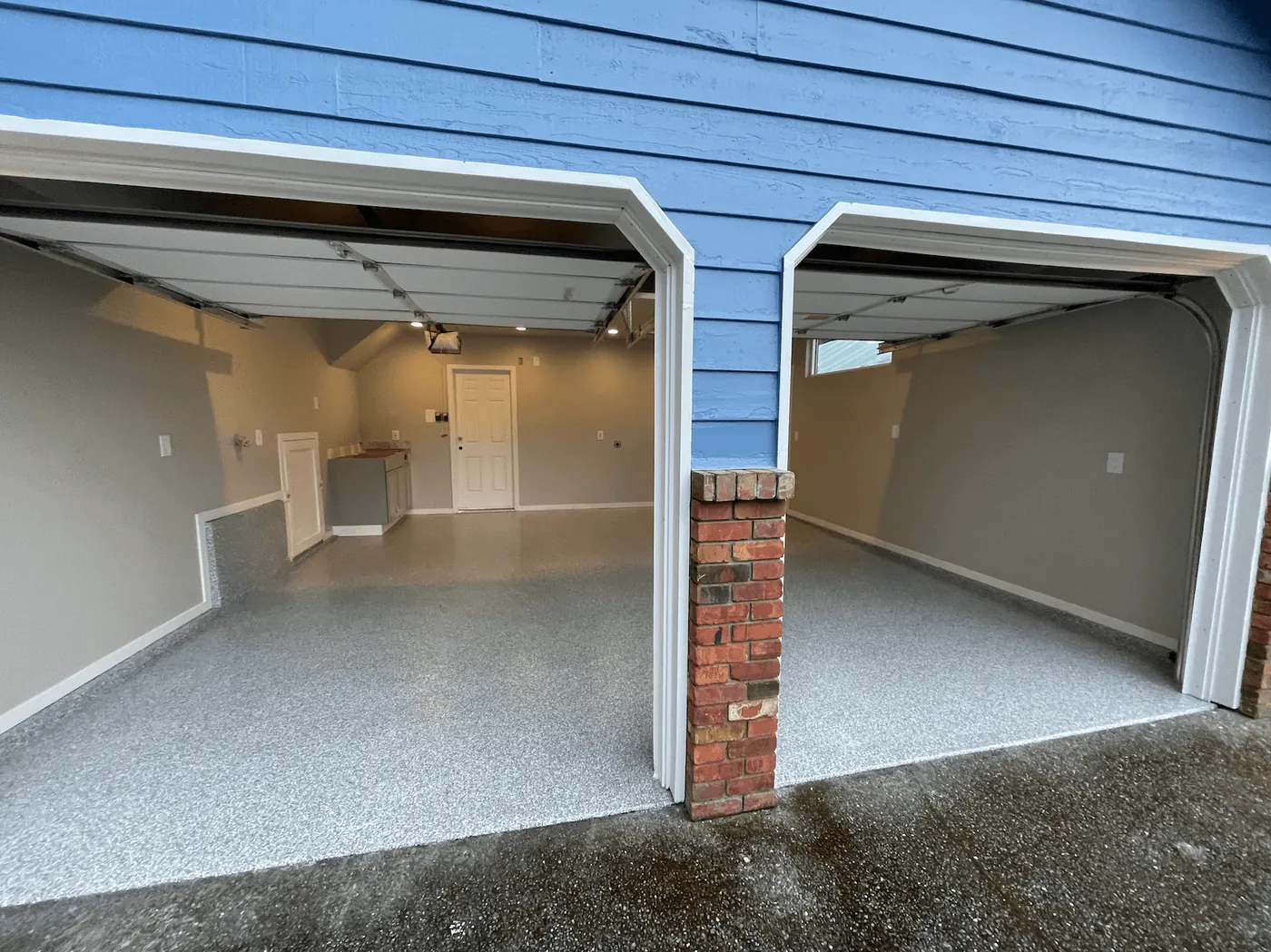
That's four layers, and most flake floors go down in a single day. Prefer a cleaner look? Solid colour floors are a 3-layer system with the same one-day speed. Metallic and quartz floors take a few days. All four systems are on our services page.
Plain epoxy vs. the flake floor we install
What matters in a North Florida garage, and how each one handles it.
| What matters | Plain epoxy | Our flake floor |
|---|---|---|
| The surface you walk and park on | Epoxy | UV-stable poly top coat |
| Afternoon sun at the door | Standard epoxy yellows over time | Top coat is UV-stable |
| Moisture in the slab | Can blister if nobody tests first | Wagner C555 test on every slab, MVB base where needed |
| Surface prep | Kits: acid etch or degreaser | Diamond grinding, cracks filled |
| Install time | Usually several days of cure | Most floors done in a day |
| Warranty | Varies; ask what it covers | Written, 10 years against delamination |
When epoxy makes sense, and when it doesn't
We'd rather tell you straight. Epoxy is a good material in the right place:
- In an air-conditioned interior room that stays dry and out of direct sun.
- As a build coat under a UV-stable top coat. That's how epoxy earns its place in professional systems: strong where it's protected, with a different coating facing the sun.
- As a quick refresh on a floor you're going to replace anyway, as long as you know its limits going in.
A typical attached Tallahassee garage, with the door open on weekends, afternoon sun and hot tires in July, should be finished with a UV-stable top coat, whatever goes underneath it.
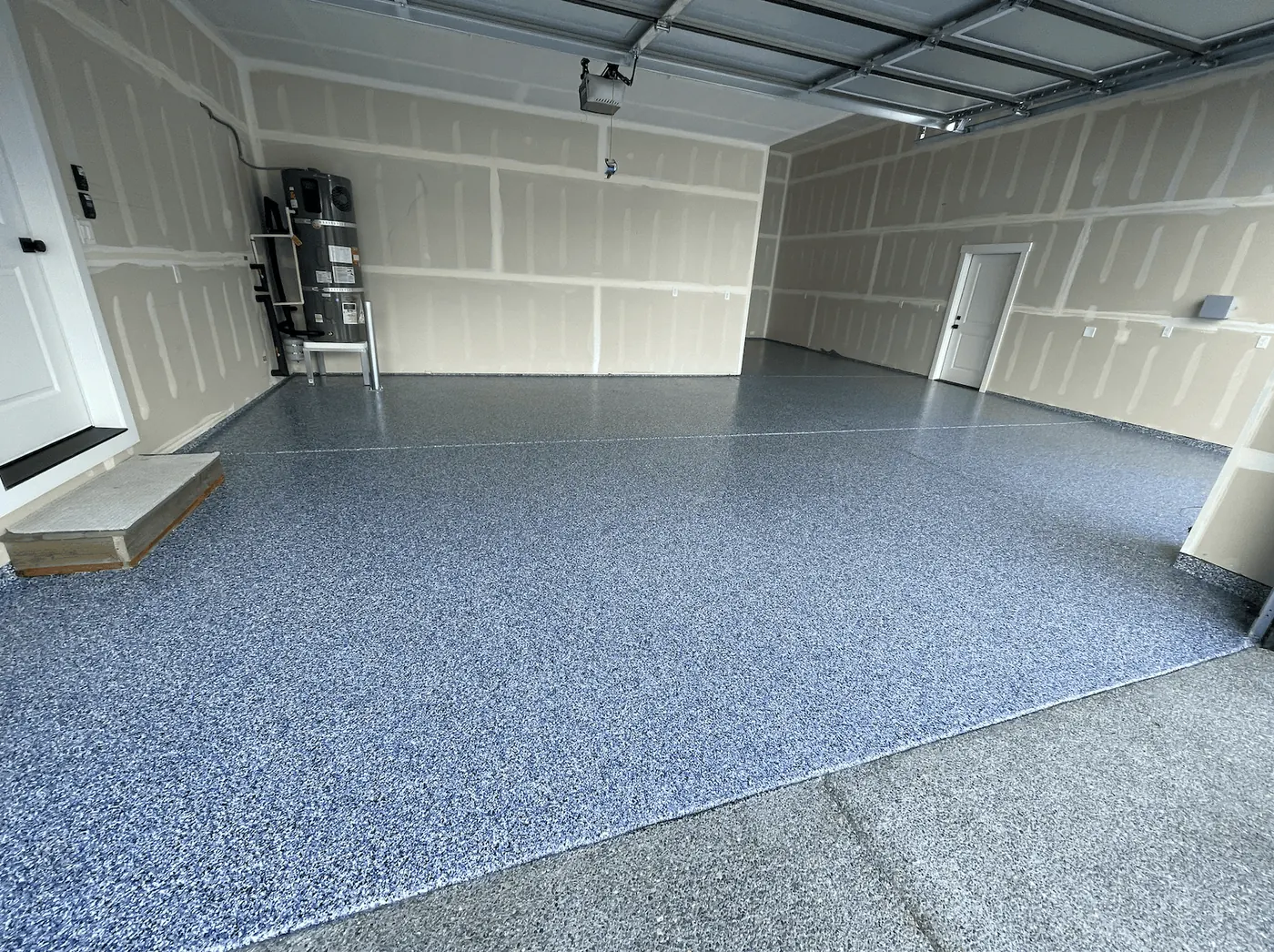
Already have an epoxy floor?
How an old coating is failing tells you what the fix is. We'll look at it with you at a free visit.
Read the failure first
A smooth underside usually means the coating never bonded. A damp or chalky underside points to moisture. Lifting in the tire tracks is hot-tire pickup. Coating over a failing coating just inherits its problems, so loose or peeling coating comes off before anything new goes down.
Recoat or start over
A coating that's still bonded everywhere can sometimes be ground and recoated. One that's lifting anywhere has to come off. Removing an old coating is extra prep, and it's part of the one clear price we put in writing for you.
Epoxy garage floor questions
Do you install epoxy garage floors in Tallahassee?
Yes. Epoxy is one of the base products we work with, alongside polyaspartic, polyurea and a moisture vapor barrier. What we don't do is leave plain epoxy as the top layer: every floor we install is finished with a UV-stable poly top coat, so it holds up to sun through the garage door.
How much does an epoxy garage floor cost?
It depends on the size of the garage, the condition of the concrete and the floor you choose. Cracks, old coatings and extra prep all add work. We measure the space and give you one clear price in writing at a free visit, with no pressure to book.
How long does it take to coat a garage floor?
Most flake and solid colour floors are done in a single day. Metallic and quartz floors take a few days. Before we leave, we'll tell you when you can walk on the floor and when you can park on it.
Will an epoxy floor turn yellow in a Florida garage?
Standard epoxy does. It isn't UV-stable, and daylight through an open door turns it amber over time. That's why every floor we install is finished with a UV-stable poly top coat.
Why do epoxy garage floors peel?
Usually prep or moisture. Coatings rolled over an acid etch or dusty concrete never bond properly, and moisture rising through the slab can push a sealed coating off from below. Hot tires lift thin coatings too. We diamond-grind every floor and test every slab with a Wagner C555 moisture meter first.
Is a DIY epoxy kit worth it?
For a storage room you'll redo anyway, maybe. For a garage you park in, kits go on thin, most rely on an acid etch instead of grinding, and they leave plain epoxy as the top layer. Our guide to garage floor paint vs. a professional coating walks through the trade-offs.
What does your warranty cover?
Every installation comes with a written 10-year warranty against delamination, meaning the coating letting go of the concrete. It doesn't cover concrete failure or surface scratches, and the full terms are set out in your written quote.
Can you coat over my old epoxy floor?
Sometimes. A coating that's still bonded everywhere can sometimes be ground and recoated, but anything that's peeling, blistering or lifting has to come off first. We'll look at it at your free visit and tell you which it is.
More on choosing a garage floor
Every system we install is on the services page, and the FAQ covers warranty, timing and the areas we serve.
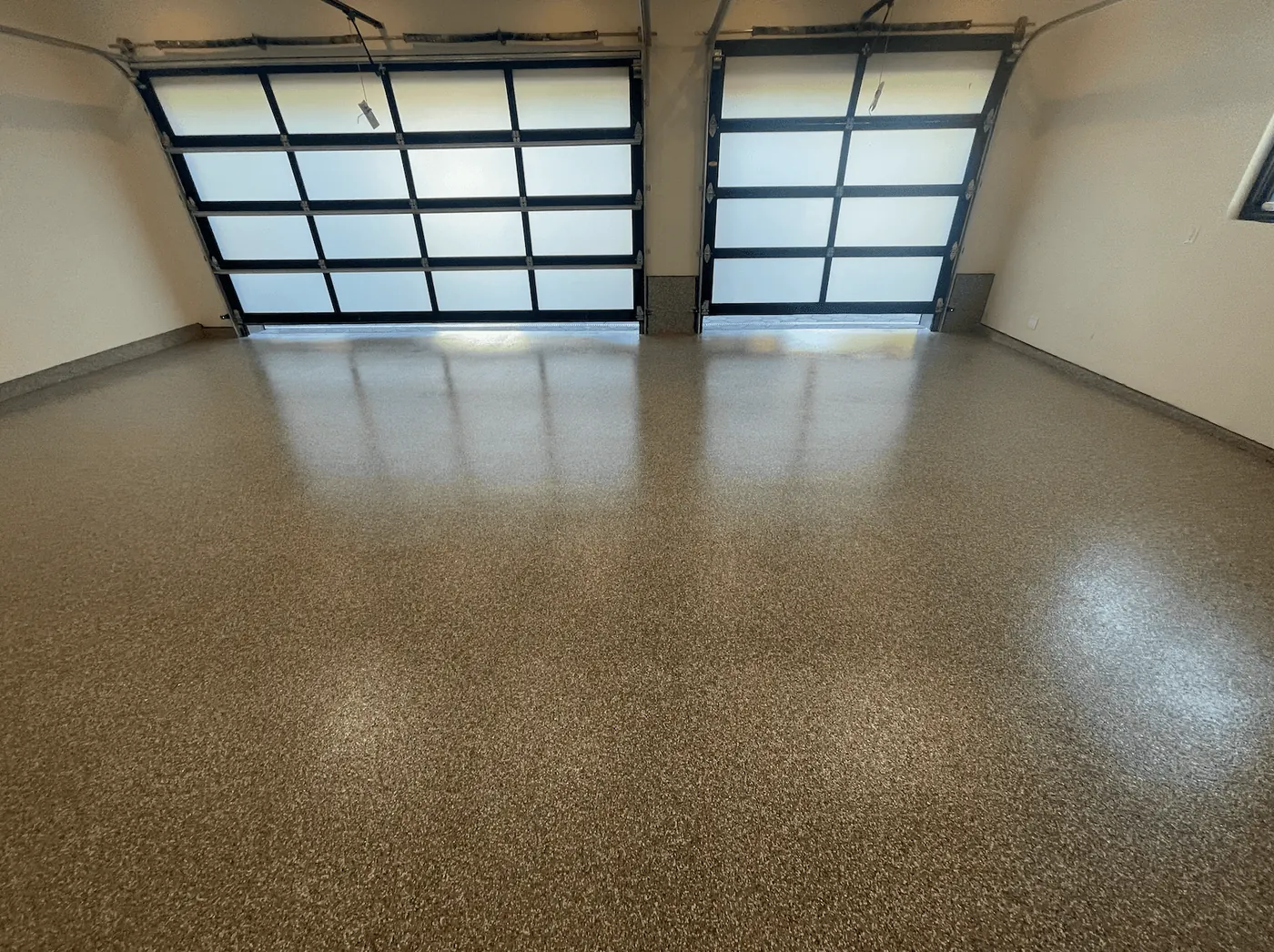
Want the epoxy look without the epoxy problems?
Tell us about your garage. We'll test the slab, help you pick a colour and give you one clear price in writing for a floor finished to handle Tallahassee sun and heat.